

Tradition Institution Iranian traditions
Zoroastrianism
مزدیسنا fa
Iranian religion founded by Zoroaster
- Dated from 1500 BCE
- Also called Zarathustraism, Mazdanism, Magianism
A path that branches,
meets and parts.
Schools and lineages
Branches · 1
Many paths. Shared histories.
What this means
Association and branching, in both directions. Traditions overlap, split and re-merge; this is not a single-origin family tree, and being listed under another tradition is not the same as being recognised by it.
Does not imply a clean single-origin family tree · that the parent recognises the branch
Imported from Wikidata. Nothing here has been read by an editor.
Recorded as a branch of

Attributed founding
Whom the records name as founder
What this means
An attribution, and a contested one in most traditions: it does not mean the tradition began fully formed, nor that later adherents accept the attribution.
Does not imply that the tradition began fully formed · that later adherents accept the attribution
Imported from Wikidata. Nothing here has been read by an editor.
Deities · 5
Gods and divine figures
What this means
Records whose own statements name this tradition — 5 of them. Computed from those statements, not curated here, and ordered by how widely each is linked across Wikipedia — those at home in the tradition’s collection first, and those with a picture first among the leading few — rather than by significance to the tradition.
A god named in a tradition is a figure of its accounts; a picture of one is a work of art, not a likeness.
Imported from Wikidata. Nothing here has been read by an editor.
Figures · 10
Begin with a figure
What this means
Records whose own statements name this tradition — 10 of them. Computed from those statements, not curated here, and ordered by how widely each is linked across Wikipedia — those at home in the tradition’s collection first, and those with a picture first among the leading few — rather than by significance to the tradition.
An affiliation recorded on a person is a third party’s record, often of one period of a life — not that person’s belief at every point in it.
Imported from Wikidata. Nothing here has been read by an editor.
-
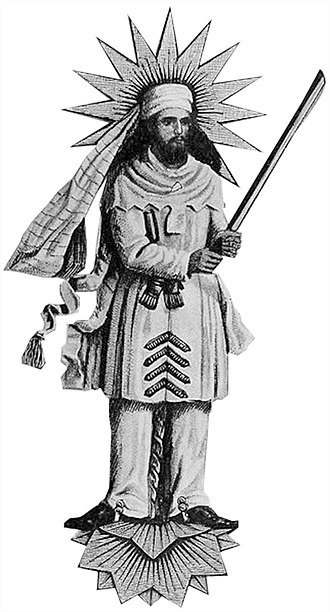 Zoroasterbetween 1500 and 550 BCE – between 1500 and 520 BCE · founder of Zoroastrianism
 -
 Darius I550 BCE – November 486 BCE · The fourth and greatest Achaemenid emperor (522–486 BC)
 -
.JPG/330px-National_Museum_of_Iran_Darafsh_(784).JPG) Xerxes I519 BCE – August 465 BCE · fifth Achaemenid emperor (486–465 BC)
Xerxes I519 BCE – August 465 BCE · fifth Achaemenid emperor (486–465 BC) -
.jpg/330px-Dinar_of_Ardashir_I_(cropped).jpg) Ardashir I180 CE – 242 CE · founder of the Sassanid Empire (r. 224–242)
Ardashir I180 CE – 242 CE · founder of the Sassanid Empire (r. 224–242) -
%2C_Nisa_mint.jpg/330px-Coin_of_Arsaces_I_(1)%2C_Nisa_mint.jpg) Arsaces I of Parthiauntil 217 BCE · first Parthian king (247–217 BC)
Arsaces I of Parthiauntil 217 BCE · first Parthian king (247–217 BC) -
 Bardiyauntil 29 September 522 BCE · Son of Cyrus the Great (died c. 522 BC)
 -
 Alexander Bardfrom 17 March 1961 CE · Swedish musician, author, and activist
 -
 Melchiorone of the Biblical Magi; in 16th-century paintings generally portrayed as an old man with white hair kneeling at the feet of the Madonna & Child
 - Peroz III636 CE – 679 CE · crown prince of Sassanid Empire
- Khosrov II of Armenia3rd century CE – 287 CE · Armenian king from 252 to 258
Texts · 2
Texts and teachings
What this means
Records whose own statements name this tradition — 2 of them. Computed from those statements, not curated here, and ordered by how widely each is linked across Wikipedia — those at home in the tradition’s collection first, and those with a picture first among the leading few — rather than by significance to the tradition.
Where a date is shown it is when the text was written — the source’s clock, never the time of what it tells.
Imported from Wikidata. Nothing here has been read by an editor.


Places · 2
Places and sites
What this means
Records whose own statements name this tradition — 2 of them. Computed from those statements, not curated here, and ordered by how widely each is linked across Wikipedia — those at home in the tradition’s collection first, and those with a picture first among the leading few — rather than by significance to the tradition.
A place that names a tradition may be a temple or a whole province. Either way it is not a count of believers, and not evidence of practice in every period.
Imported from Wikidata. Nothing here has been read by an editor.

Institutions · 1
Houses
What this means
Records whose own statements name this tradition — 1 of them. Computed from those statements, not curated here, and ordered by how widely each is linked across Wikipedia — those at home in the tradition’s collection first, and those with a picture first among the leading few — rather than by significance to the tradition.
A ruling house that names a tradition is a family’s recorded affiliation, not its subjects’ practice; an office is a line of holders, not a family.
Imported from Wikidata. Nothing here has been read by an editor.
Explained
What somebody has argued about Zoroastrianism
Written connections, each with its claim, its citations and what it does not show.
Connections
How Zoroastrianism connects
Grouped by the kind of relationship, because a successor is not a son and a shared symbol is not an influence.
Affiliation 1
What this means
Association with a tradition or school. Traditions branch, overlap and re-merge; this is not a clean single-origin tree.
Does not imply a fixed roster · that every account of the tradition knows this figure
Imported from Wikidata unless a tile says otherwise. Nothing here has been read by an editor.
Documented influence 6
What this means
A transmission argued from evidence. Not shared symbols, and not a short path through a database.
Does not imply shared symbols as evidence · a short path through a database
Imported from Wikidata unless a tile says otherwise. Nothing here has been read by an editor.
- was influenced by Persian mythology traditional legends and stories etc. from the Persian culture
- influenced Āḏar Kayvānī sect and ideology of a Zoroastrian school of ishraqiyyun/Illuminationists heavily influenced by Sufi-Islam
-
 influenced Baháʼí Faith monotheistic religion revealed by Bahāʾullāh
 -
 influenced Manichaeism Persian religion
 -
_and_Cautes_(right)%2C_from_the_Mithraeum_at_Sidon_(Colonia_Aurelia_Pia%2C_Syria)%2C_Louvre_Museum_(9365068428).jpg/120px-Statutory_group_depicting_the_cult_of_Mithras%2C_Mithras_slaying_the_bull_accompagnied_by_his_two_torchbeares_Cautopates_(left)_and_Cautes_(right)%2C_from_the_Mithraeum_at_Sidon_(Colonia_Aurelia_Pia%2C_Syria)%2C_Louvre_Museum_(9365068428).jpg) influenced Mithraic mysteries ancient Iranian religion in Iran and Roman Empire
influenced Mithraic mysteries ancient Iranian religion in Iran and Roman Empire -
 influenced Rodnovery modern religious movement based on Slavic native beliefs
Recorded events and days 1
What this means
Events Wikidata records in a subject’s history, and the day a festival is kept. Not a complete history, and the day a festival falls on is not when it began.
Does not imply that these are all the events in its history · that Wikidata ranks the events by importance
Imported from Wikidata unless a tile says otherwise. Nothing here has been read by an editor.
Sources
Sources and evidence
Where every statement on this page comes from, and how each one stands.
5 statements on this record
- 5 Imported Taken from Wikidata as it stands. Nobody here has read it. 1 of them cite only Wikipedia: one source, counted once.
Only this record’s own statements. What other records say about it is counted on theirs.
Three layers, three licences
- Text
- Wikipedia · CC BY-SA 4.0, quoted, not merged
- Pictures
- Wikimedia Commons · each file’s own terms
Review
Not yet read by an editor here. Every relationship on this page is an import.
Disagreements are kept, not resolved, and a count of sources is not a confidence score.


Keep exploring
More from Iranian traditions
Zoroastrianism, the Mithraic mysteries, Manichaeism, Yazidism and the Mandaeans.