

Tradition Buddhist traditions
Theravāda
𑀣𑁂𑀭𑀯𑀸𑀤 pi ལྷོ་བརྒྱུད་ནང་བསྟན། bo 上座部佛教 zh
Major branch of Buddhism following the Pāli Canon, dominant in Sri Lanka, Cambodia, Laos, Myanmar and Thailand
- Also called Theravada Buddhism, Southern Buddhism, Doctrine of the Elders
A path that branches,
meets and parts.
Schools and lineages
Branches and affiliations
Many paths. Shared histories.
What this means
Association and branching, in both directions. Traditions overlap, split and re-merge; this is not a single-origin family tree, and being listed under another tradition is not the same as being recognised by it.
Does not imply a clean single-origin family tree · that the parent recognises the branch
Imported from Wikidata. Nothing here has been read by an editor.
Recorded as a branch of
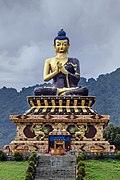

Traditions whose own records say they belong to it
4 traditions name Theravāda as their own — an affiliation, so kept apart from the tree.
Figures · 2
Begin with a figure
What this means
Records whose own statements name this tradition — 2 of them. Computed from those statements, not curated here, and ordered by how widely each is linked across Wikipedia — those at home in the tradition’s collection first, and those with a picture first among the leading few — rather than by significance to the tradition.
An affiliation recorded on a person is a third party’s record, often of one period of a life — not that person’s belief at every point in it.
Imported from Wikidata. Nothing here has been read by an editor.
.jpg/330px-Mahidol_(1).jpg)
.jpg/330px-Prince_Chakrabongse_Bhuvanath_Gold_Robe_(Crop).jpg)
Texts · 2
Texts and teachings
What this means
Records whose own statements name this tradition — 2 of them. Computed from those statements, not curated here, and ordered by how widely each is linked across Wikipedia — those at home in the tradition’s collection first, and those with a picture first among the leading few — rather than by significance to the tradition.
Where a date is shown it is when the text was written — the source’s clock, never the time of what it tells.
Imported from Wikidata. Nothing here has been read by an editor.
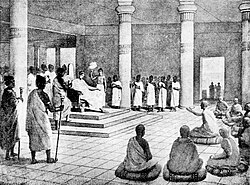
Places · 8
Places and sites
What this means
Records whose own statements name this tradition — 8 of them. Computed from those statements, not curated here, and ordered by how widely each is linked across Wikipedia — those at home in the tradition’s collection first, and those with a picture first among the leading few — rather than by significance to the tradition.
A place that names a tradition may be a temple or a whole province. Either way it is not a count of believers, and not evidence of practice in every period.
Imported from Wikidata. Nothing here has been read by an editor.
-

Wat Phra Kaew
Royal temple complex in Bangkok, Thailand -

Buddha Dhatu Jadi
The largest Theravada Buddhist temple in Bangladesh -

Das Buddhistische Haus
Theravada Buddhist temple complex -

Dhammayangyi Temple
Buddhist temple in Bagan, Myanmar -

Wat Phra That Phanom
Buddhist temple in Nakhon Phanom province, Thailand -

Wat Suan Mokkh
Buddhist temple in Chaiya district, Surat Thani province, Thailand -

Wat Bowon Sathan Suthawat
Buddhist temple in Bangkok, Thailand, also known as Wat Phra Kaew Wang Na -

Mahindarama Buddhist Temple
Theravada Buddhist temple in George Town, Penang, Malaysia
Festivals and practices · 1
Festivals, holy days and practices
What this means
Records whose own statements name this tradition — 1 of them. Computed from those statements, not curated here, and ordered by how widely each is linked across Wikipedia — those at home in the tradition’s collection first, and those with a picture first among the leading few — rather than by significance to the tradition.
A holy day’s day is the one its record states it is observed on. A festival recurs, so it has no date on the historical clock, and one named here is not evidence of when or where it was kept.
Imported from Wikidata. Nothing here has been read by an editor.

The Buddhist traditions collection holds 34 festivals and practices in all; 33 of them do not name Theravāda on their own records. See them in the collection
Institutions · 2
Houses
What this means
Records whose own statements name this tradition — 2 of them. Computed from those statements, not curated here, and ordered by how widely each is linked across Wikipedia — those at home in the tradition’s collection first, and those with a picture first among the leading few — rather than by significance to the tradition.
A ruling house that names a tradition is a family’s recorded affiliation, not its subjects’ practice; an office is a line of holders, not a family.
Imported from Wikidata. Nothing here has been read by an editor.
Connections
How Theravāda connects
Grouped by the kind of relationship, because a successor is not a son and a shared symbol is not an influence.
Affiliation 1
What this means
Association with a tradition or school. Traditions branch, overlap and re-merge; this is not a clean single-origin tree.
Does not imply a fixed roster · that every account of the tradition knows this figure
Imported from Wikidata unless a tile says otherwise. Nothing here has been read by an editor.
Sources
Sources and evidence
Where every statement on this page comes from, and how each one stands.
2 statements on this record
- 2 Imported Taken from Wikidata as it stands. Nobody here has read it.
Only this record’s own statements. What other records say about it is counted on theirs.
Three layers, three licences
- Text
- Wikipedia · CC BY-SA 4.0, quoted, not merged
- Pictures
- Wikimedia Commons · each file’s own terms
Review
Not yet read by an editor here. Every relationship on this page is an import.
Disagreements are kept, not resolved, and a count of sources is not a confidence score.


Keep exploring
More from Buddhist traditions
Theravāda, Mahāyāna and Vajrayāna, their figures, sutras, lineages and monasteries.