
_28_Apr%2C_2013_-_panoramio.jpg/960px-%E6%A1%9C%E3%81%A8%E6%AF%94%E5%8F%A1%E5%B1%B1%E5%BB%B6%E6%9A%A6%E5%AF%BA_(Enryaku-ji_with_Cherry_Blossoms)_28_Apr%2C_2013_-_panoramio.jpg)
Tradition Institution Buddhist traditions
Tendai
日本天台宗 zh 天台宗 ja
School of Mahayana Buddhism from Japan
- Dated from 806 CE
- Also called Tendai-shū
A path that branches,
meets and parts.
Schools and lineages
Branches · 3
Many paths. Shared histories.
3 branches recorded under Tendai, one step down, as the records give them.
What this means
Association and branching, in both directions. Traditions overlap, split and re-merge; this is not a single-origin family tree, and being listed under another tradition is not the same as being recognised by it.
Does not imply a clean single-origin family tree · that the parent recognises the branch
Imported from Wikidata. Nothing here has been read by an editor.
Recorded as a branch of

_28_Apr%2C_2013_-_panoramio.jpg/120px-%E6%A1%9C%E3%81%A8%E6%AF%94%E5%8F%A1%E5%B1%B1%E5%BB%B6%E6%9A%A6%E5%AF%BA_(Enryaku-ji_with_Cherry_Blossoms)_28_Apr%2C_2013_-_panoramio.jpg)
Overview
From Wikipedia, quoted unmodified under CC BY-SA 4.0; the article’s history is its list of authors.
Attributed founding
Whom the records name as founder
What this means
An attribution, and a contested one in most traditions: it does not mean the tradition began fully formed, nor that later adherents accept the attribution.
Does not imply that the tradition began fully formed · that later adherents accept the attribution
Imported from Wikidata. Nothing here has been read by an editor.
Figures · 7
Begin with a figure
What this means
Records whose own statements name this tradition — 7 of them. Computed from those statements, not curated here, and ordered by how widely each is linked across Wikipedia — those at home in the tradition’s collection first, and those with a picture first among the leading few — rather than by significance to the tradition.
An affiliation recorded on a person is a third party’s record, often of one period of a life — not that person’s belief at every point in it.
Imported from Wikidata. Nothing here has been read by an editor.
-
 Eisai15 December 1141 CE – 1 August 1215 CE · Japanese monk
 -
 Saichō15 September 767 CE – 26 June 822 CE · Japanese Buddhist monk, founder of the Japanese Tendai school
 -
 Jien17 May 1155 CE – 28 October 1225 CE · Japanese poet
 -
 Ennin793 CE – 24 February 864 CE · Japanese Buddhist monk (794–864)
 -
 Genshin942 CE – 12 July 1017 CE · Japanese Buddhist monk
 -
.jpg/330px-Chisho_Daishi_(Konzoji_Zentsuji).jpg) Enchin8 April 814 CE – 4 December 891 CE · Buddhist monk and founder of the Jimon school of Tendai Buddhism
Enchin8 April 814 CE – 4 December 891 CE · Buddhist monk and founder of the Jimon school of Tendai Buddhism -
 Jakucho Setouchi15 May 1922 CE – 9 November 2021 CE · Japanese novelist, nun (1922–2021)
Places · 48
Places and sites
What this means
Records whose own statements name this tradition — 48 of them. Computed from those statements, not curated here, and ordered by how widely each is linked across Wikipedia — those at home in the tradition’s collection first, and those with a picture first among the leading few — rather than by significance to the tradition.
A place that names a tradition may be a temple or a whole province. Either way it is not a count of believers, and not evidence of practice in every period.
Imported from Wikidata. Nothing here has been read by an editor.
-

Enryaku-ji Temple
Buddhist temple in Shiga Prefecture, Japan -

Sanjūsangen-dō Temple
Buddhist temple in Kyoto, Japan -

Chūson-ji Temple
Buddhist temple in Iwate Prefecture, Japan -

Rinnō-ji Temple
Buddhist temple in Tochigi Prefecture, Japan -

Hōkō-ji Temple
Buddhist temple in Kyoto, Japan -

Seiganto-ji Temple
Buddhist temple in Wakayama Prefecture, Japan -

Mōtsū-ji Temple
Buddhist temple in Iwate Prefecture, Japan -

Yama-dera Temple
Buddhist temple in Yamagata Prefecture, Japan
Show 40 more
-
 Place Engyō-ji Temple Buddhist temple in Hyōgo Prefecture, Japan
 -
 Place Fudarakusan-ji Temple Buddhist temple in Wakayama Prefecture, Japan
 -
 Place Hōjū-ji Temple Buddhist temple of the Tendai sect dedicated to Acala in Higashiyama-ku, Japan
 -
 Place Kan'ei-ji Temple Buddhist temple in Japan
 -
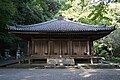 Place Fuki-ji Temple Building in Oita Prefecture, Japan
 -
 Place Kita-in Temple Buddhist temple in Saitama Prefecture, Japan
 -
 Place Sanbutsu-ji Temple Buddhist temple in Tottori Prefecture, Japan
 -
 Place Shōren-in Temple Buddhist temple in Kyoto, Japan
 -
 Place Taisan-ji Temple Buddhist temple in Hyōgo Prefecture, Japan
 -
 Place Dōjō-ji Temple Buddhist temple in Wakayama Prefecture, Japan
 -
 Place Otagi Nenbutsu-ji Temple Buddhist temple in Kyoto, Japan
 -
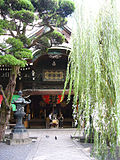 Place Rokkaku-dō Temple Buddhist temple in Kyoto, Japan, said to have been established by Prince Shōtoku, the name comes from its main hall's hexagonal shape, temple is part of the Saigoku Kannon Pilgrimage
 -
 Place Sanzen-in Temple Buddhist temple in Kyoto Prefecture, Japan
 -
 Place Sugimoto-dera Temple Buddhist temple of the Tendai sect dedicated to Eleven-Faced Avalokiteśvara in Nikaidō, Japan
 -
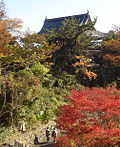 Place Yoshimine-dera Temple Buddhist temple in Kyoto, Japan
 -
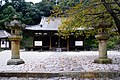 Place Chōhō-ji Temple Buddhist temple in Kainan, Wakayama Prefecture, Japan
 -
 Place Manshu-in Temple Anglican priest
 -
 Place Nison-in Temple Building in Ukyo-ku, Kyoto Prefecture, Japan
 -
 Place Rozan-ji Temple Tendai Buddhist temple in Kamigyō-ku
 -
 Place Tachibana-dera Temple Buddhist temple in Asuka, Nara, Japan
 -
 Place Tennō-ji Temple Building in Tokyo, Japan
 -
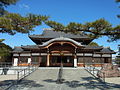 Place Arako Kannon Temple Buddhist temple in Nakagawa-ku, Nagoya
 -
 Place Daisen-ji Temple Buddhist temple in Tottori Prefecture, Japan
 -
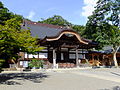 Place Jindai-ji Temple Temple of Tendai Buddhism in Tokyo, Japan
 -
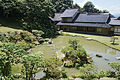 Place Kannon-in Temple Buddhist temple in Tottori Prefecture, Japan
 -
_hondou.JPG/120px-Kanzeonji_(Dazaifu)_hondou.JPG) Place Kanzeon-ji Temple Buddhist temple in Dazaifu, Fukuoka prefecture, Japan
Place Kanzeon-ji Temple Buddhist temple in Dazaifu, Fukuoka prefecture, Japan -
 Place Kiyomizu-dera Temple Buddhist temple in Chiba Prefecture, Japan
 -
 Place Myōhō-in Temple Buddhist temple of the Tendai sect dedicated to Samantabhadra in Higashiyama-ku, Japan
 -
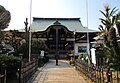 Place Nōfuku-ji Temple Buddhist temple in Hyōgo Prefecture, Japan
 -
 Place Saimyō-ji Temple Building in Kora, Shiga Prefecture, Japan
 -
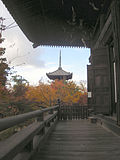 Place Shinshōgokuraku-ji Temple Japanese Buddhist temple
 -
 Place Chōju-ji Temple Buddhist temple in Konan, Shiga prefecture, Japan
 -
 Place Chūzen-ji Temple Building in Nikko, Tochigi Prefecture, Japan
 -
.JPG/120px-Jionji_Temple_(Saitama_city).JPG) Place Jion-ji Temple (Saitama) Buddhist temple in Saitama city, Japan
Place Jion-ji Temple (Saitama) Buddhist temple in Saitama city, Japan -
 Place Kabusan-ji Temple Buddhist temple in Takatsuki, Osaka prefecture, Japan
 -
 Place Kongōrin-ji Temple Buddhist temple in Shiga Prefecture, Japan
 -
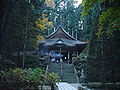 Place Kōzen-ji Temple Buddhist temple
 -
 Place Ōya-ji Temple Buddhist temple in Tochigi Prefecture, Japan
 -
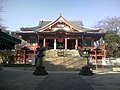 Place Ryūsen-ji Temple Building in Shimo-Meguro, Tokyo, Japan
 -
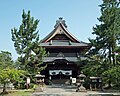 Place Shinano Kokubun-ji Temple Buddhist temple in in Ueda, Nagano prefecture, Japan
Festivals and practices · 1
Festivals, holy days and practices
What this means
Records whose own statements name this tradition — 1 of them. Computed from those statements, not curated here, and ordered by how widely each is linked across Wikipedia — those at home in the tradition’s collection first, and those with a picture first among the leading few — rather than by significance to the tradition.
A holy day’s day is the one its record states it is observed on. A festival recurs, so it has no date on the historical clock, and one named here is not evidence of when or where it was kept.
Imported from Wikidata. Nothing here has been read by an editor.
Sources
Sources and evidence
Where every statement on this page comes from, and how each one stands.
3 statements on this record
- 3 Imported Taken from Wikidata as it stands. Nobody here has read it.
Only this record’s own statements. What other records say about it is counted on theirs.
Three layers, three licences
- Text
- Wikipedia · CC BY-SA 4.0, quoted, not merged
- Pictures
- Wikimedia Commons · each file’s own terms
Review
Not yet read by an editor here. Every relationship on this page is an import.
Disagreements are kept, not resolved, and a count of sources is not a confidence score.


Keep exploring
More from Buddhist traditions
Theravāda, Mahāyāna and Vajrayāna, their figures, sutras, lineages and monasteries.