
_(1).jpg/960px-Taoist_ceremony_at_Xiao_ancestral_temple_in_Chaoyang%2C_Shantou%2C_Guangdong_(daoshi)_(1).jpg)
Tradition Institution East Asian traditions
Taoism
道教 zh 도교 ko
Religious or philosophical tradition of Chinese origin
- Also called Daoism, Taoist
A path that branches,
meets and parts.
Schools and lineages
Branches · 11
Many paths. Shared histories.
11 branches recorded under Taoism, one step down, as the records give them.
What this means
Association and branching, in both directions. Traditions overlap, split and re-merge; this is not a single-origin family tree, and being listed under another tradition is not the same as being recognised by it.
Does not imply a clean single-origin family tree · that the parent recognises the branch
Imported from Wikidata. Nothing here has been read by an editor.
Recorded as a branch of
_(1).jpg/120px-Taoist_ceremony_at_Xiao_ancestral_temple_in_Chaoyang%2C_Shantou%2C_Guangdong_(daoshi)_(1).jpg)
-
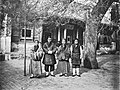 Quanzhen School School of Taoism founded by Wang Chongyang in 12th century Shandong during the Jin dynasty 1 branch of its own
 - Way of the Five Pecks of Rice Chinese Taoist movement founded in 142 CE
-
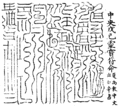 Lingbao School Daoist school that emerged in China in between the Jin Dynasty and the Liu Song Dynasty in the early fifth century CE; lasted for about two hundred years until it was absorbed into the Shangqing and Zhengyi currents during the Tang Dynasty
 -
 Zhengyi Dao School of Taoism
 - Way of the Celestial Masters Religious school of Taoism
- Taiping Taoism Taoist movement founded by Zhang Jue during the Eastern Han Dynasty, participating in the Yellow Turban Rebellion of 184; after the rebellion's suppression, the movement died soon afterwards
-
 Yao Taoism Ethnic religion of the Yao people in China, heavily based on Taoism since the 13th century, similar to the communitarian Taoism in the earliest Taoist movements in China proper
 - Maoshan School
- Wuliupai School of Taoism with main focus on internal alchemy
-
%E9%96%AD%E5%B1%B1%E6%B4%BE%E6%B3%95%E5%B8%AB%E7%89%8C%E4%BD%8D.jpg/120px-%E6%BE%8E%E6%B9%96%E6%B9%96%E8%A5%BF%E5%A4%A9%E5%90%8E%E5%AE%AE_(9)%E9%96%AD%E5%B1%B1%E6%B4%BE%E6%B3%95%E5%B8%AB%E7%89%8C%E4%BD%8D.jpg) Lushan School School of Taoism
Lushan School School of Taoism -
 Taoism in Malaysia
Attributed founding
Whom the records name as founder
What this means
An attribution, and a contested one in most traditions: it does not mean the tradition began fully formed, nor that later adherents accept the attribution.
Does not imply that the tradition began fully formed · that later adherents accept the attribution
Imported from Wikidata. Nothing here has been read by an editor.
Deities · 7
Gods and divine figures
What this means
Records whose own statements name this tradition — 7 of them. Computed from those statements, not curated here, and ordered by how widely each is linked across Wikipedia — those at home in the tradition’s collection first, and those with a picture first among the leading few — rather than by significance to the tradition.
A god named in a tradition is a figure of its accounts; a picture of one is a work of art, not a likeness.
Imported from Wikidata. Nothing here has been read by an editor.
-
 Lü Dongbin796 CE – c. 870 CE · Chinese Taoist scholar and poet during the Tang Dynasty
 -
.jpg/330px-Xihe(deity).jpg "Picture: lead image of the English Wikipedia article") XiheSun goddess in ancient Chinese mythology, mother of the three-legged ravens
XiheSun goddess in ancient Chinese mythology, mother of the three-legged ravens -
 Wong Tai Sin328 CE – 386 CE · Taoist god
 -
.jpg/330px-Ping_Sien_Si_-_129_Wenshu_Guang_Fa_Tianzun_(16758454421).jpg) Wenshu Guangfa TianzunInvestiture of the Gods character
Wenshu Guangfa TianzunInvestiture of the Gods character -
.jpg/330px-Ping_Sien_Si_-_049_Pu_Xian_Zhenren_(16140594543).jpg "Picture: lead image of the English Wikipedia article") Puxian ZhenrenInvestiture of the Gods character
Puxian ZhenrenInvestiture of the Gods character - Hei DiChinese deity, member of the Wufang Shangdi
- TaiyiTaoist concept and deity
Not their own pictures Xihe — lead image of the English Wikipedia article Puxian Zhenren — lead image of the English Wikipedia article
Figures · 7
Begin with a figure
What this means
Records whose own statements name this tradition — 7 of them. Computed from those statements, not curated here, and ordered by how widely each is linked across Wikipedia — those at home in the tradition’s collection first, and those with a picture first among the leading few — rather than by significance to the tradition.
An affiliation recorded on a person is a third party’s record, often of one period of a life — not that person’s belief at every point in it.
Imported from Wikidata. Nothing here has been read by an editor.
-
.jpg/330px-Zhang_Lu-Laozi_Riding_an_Ox_(cropped).jpg) Laozi6th century BCE – 1st millennium BCE · 6th-century BC semi-legendary Chinese philosopher, founder of Taoism
Laozi6th century BCE – 1st millennium BCE · 6th-century BC semi-legendary Chinese philosopher, founder of Taoism -
 Emperor Gaozu of Han256 BCE – 1 June 195 BCE · founding emperor of the Han dynasty (256–195 BC)
 -
.JPG/330px-Q7221_-_%E4%BA%B2%E5%B0%9D%E6%B1%A4%E8%8D%AF_(cropped).JPG) Emperor Wen of Han203 BCE – 6 July 157 BCE · emperor of the Han dynasty
Emperor Wen of Han203 BCE – 6 July 157 BCE · emperor of the Han dynasty -
 Zhang Daoling34 CE – 156 CE · legendary Han dynasty Chinese Taoist leader, grandfather of Zhang Lu
 -
 Qiu Chuji10 February 1148 CE – 30 July 1227 CE · founder of the Longmen school of Quanzhen Taoism
 -
 Zhang Jue2nd century CE – 184 CE · Chinese Yellow Turban Rebellion leader (died 184)
 - Princess Taiping665 CE – 6 August 713 CE · Chinese princess (665-713)
Places · 15
Places and sites
What this means
Records whose own statements name this tradition — 15 of them. Computed from those statements, not curated here, and ordered by how widely each is linked across Wikipedia — those at home in the tradition’s collection first, and those with a picture first among the leading few — rather than by significance to the tradition.
A place that names a tradition may be a temple or a whole province. Either way it is not a count of believers, and not evidence of practice in every period.
Imported from Wikidata. Nothing here has been read by an editor.
-

A-Ma Temple
Temple in Macau -

White Cloud Temple
Sacred architecture -

Wong Tai Sin Temple
Temple in Hong Kong -

Beiyue Temple
Building in China -

Na Tcha Temple
Temple in Macau, China -

Beijing Dongyue Temple
Building in Chaoyang District, China -

Xuanmiao Temple
Building in Suzhou, China -

Wong Tai Sin Temple
Temple in Guangzhou
Show 7 more
-
 Place Zhongyue temple Building in Dengfeng, China
 -
 Place Louguantai Building in Louguantai, China
 -
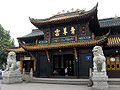 Place Azure Ram Temple
 -
 Place Chunyang Temple Building in Chunyang Temple, China
 -
 Place Sanyuan Palace Three Great Emperor-Officials temple in Guangzhou, Guangdong, China
 -
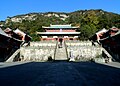 Place Zixiao Palace Building in Hubei, China
 -
.jpg/120px-89185-Guilin_(49041005217).jpg) Place Sun and Moon Pagodas Twin pagodas in Guilin, Guangxi
Place Sun and Moon Pagodas Twin pagodas in Guilin, Guangxi
Festivals and practices · 4
Festivals, holy days and practices
What this means
Records whose own statements name this tradition — 4 of them. Computed from those statements, not curated here, and ordered by how widely each is linked across Wikipedia — those at home in the tradition’s collection first, and those with a picture first among the leading few — rather than by significance to the tradition.
A holy day’s day is the one its record states it is observed on. A festival recurs, so it has no date on the historical clock, and one named here is not evidence of when or where it was kept.
Imported from Wikidata. Nothing here has been read by an editor.
-

neidan
Esoteric doctrines and physical, mental, and spiritual practices in Taoism -

Cheung Chau Bun Festival
Folk festival on the island of Cheung Chau in Hong Kong, a Taoist ritual event -
Taoist meditation
Associated with the Chinese philosophy and religion of Taoism -
bigu
Daoist's or Shugenja's fasting technique associated with achieving transcendence/immortality, avoiding grain
The East Asian traditions collection holds 12 festivals and practices in all; 8 of them do not name Taoism on their own records. See them in the collection
Institutions · 7
Pantheons and houses
What this means
Records whose own statements name this tradition — 7 of them. Computed from those statements, not curated here, and ordered by how widely each is linked across Wikipedia — those at home in the tradition’s collection first, and those with a picture first among the leading few — rather than by significance to the tradition.
A ruling house that names a tradition is a family’s recorded affiliation, not its subjects’ practice; an office is a line of holders, not a family.
Imported from Wikidata. Nothing here has been read by an editor.
- House
Nguyen dynasty
Imperial Vietnamese dynasty, 1802-1945 -
 House
HouseLy dynasty
Vietnam's monarch that ruled from 1009 to 1226. -
 House
HouseWestern Han
The first half of the Han dynasty of imperial China -
 Pantheon
Three Great Officials
Three of the highest deities of Taoism: the Heavenly Official, the Earthly Official, and the Water Official -
 House
HouseTran dynasty
Imperial Vietnamese dynasty (1225–1400) - House
Tây Sơn dynasty
Peasant rebellion then the decentralized imperial dynasty in Vietnam, 1778 to 1802
Connections
How Taoism connects
Grouped by the kind of relationship, because a successor is not a son and a shared symbol is not an influence.
Documented influence 2
What this means
A transmission argued from evidence. Not shared symbols, and not a short path through a database.
Does not imply shared symbols as evidence · a short path through a database
Imported from Wikidata unless a tile says otherwise. Nothing here has been read by an editor.


Sources
Sources and evidence
Where every statement on this page comes from, and how each one stands.
3 statements on this record
- 3 Imported Taken from Wikidata as it stands. Nobody here has read it.
Only this record’s own statements. What other records say about it is counted on theirs.
Three layers, three licences
- Text
- Wikipedia · CC BY-SA 4.0, quoted, not merged
- Pictures
- Wikimedia Commons · each file’s own terms
Review
Not yet read by an editor here. Every relationship on this page is an import.
Disagreements are kept, not resolved, and a count of sources is not a confidence score.


Keep exploring
More from East Asian traditions
Daoism, Confucian practice, Chinese folk religion, Shinto and Korean tradition.