

Tradition Institution East Asian traditions
Shinto
神道教 zh 神道 ja 신토 ko
A polytheistic and animistic religion originating in Japan
- Also called Shintoism, Shintō, Shindo
A path that branches,
meets and parts.
Schools and lineages
Branches · 11
Many paths. Shared histories.
11 branches recorded under Shinto, one step down, as the records give them.
What this means
Association and branching, in both directions. Traditions overlap, split and re-merge; this is not a single-origin family tree, and being listed under another tradition is not the same as being recognised by it.
Does not imply a clean single-origin family tree · that the parent recognises the branch
Imported from Wikidata. Nothing here has been read by an editor.
Recorded as a branch of

-
 shinbutsu-shūgō Japanese syncretism of Shinto and Buddhism 3 branches of its own
 -
 State Shinto Official religion of the Japanese Empire, emphasizing the divinity of the Japanese emperor
 -
 koshintō Original animism of Japan which is the alleged basis of modern Shinto
 -
 Fukko Shinto Shinto movement
 - Yoshida Shintō A prominent sect of Shintō that arose during the Sengoku period
- Confucian Shinto Syncretic religious tradition combining elements of Confucianism and Shinto 1 branch of its own
- Shrine Shinto Mainstream non-doctrinal Shinto
- Ryōbu Shintō Japanese religious syncretism that blends Shintō with Shingon Buddhism
- Sannō Shintō Syncretic Shinto group
- Tenjin faith
- Ise Shintō
Traditions whose own records say they belong to it
3 traditions name Shinto as their own — an affiliation, so kept apart from the tree.
Figures · 9
Begin with a figure
What this means
Records whose own statements name this tradition — 9 of them. Computed from those statements, not curated here, and ordered by how widely each is linked across Wikipedia — those at home in the tradition’s collection first, and those with a picture first among the leading few — rather than by significance to the tradition.
An affiliation recorded on a person is a third party’s record, often of one period of a life — not that person’s belief at every point in it.
Imported from Wikidata. Nothing here has been read by an editor.
-
 Hirohito29 April 1901 CE – 7 January 1989 CE · emperor of Japan from 1926 to 1989
 -
.jpg/330px-Emperor_Akihito_(2016).jpg) Akihitofrom 23 December 1933 CE · Emperor of Japan from 1989 to 2019
Akihitofrom 23 December 1933 CE · Emperor of Japan from 1989 to 2019 -
 Emperor Meiji3 November 1852 CE – 30 July 1912 CE · Emperor of Japan from 1867 until 1912
 -
 Toyotomi Hideyoshi17 March 1537 CE – 18 September 1598 CE · Japanese samurai and daimyo (1537–1598)
 -
 Emperor Taishō31 August 1879 CE – 25 December 1926 CE · Emperor of Japan from 1912 until 1926
 -
 Itō Hirobumi16 October 1841 CE – 26 October 1909 CE · 1st, 5th, 7th and 10th Prime Minister of Japan (1841–1909)
 -
.jpg/330px-%E5%AD%9D%E6%98%8E%E5%A4%A9%E7%9A%87%E5%AE%B8%E5%BD%B1_(cropped).jpg) Emperor Kōmei22 July 1831 CE – 30 January 1867 CE · Emperor of Japan from 1846 to 1867
Emperor Kōmei22 July 1831 CE – 30 January 1867 CE · Emperor of Japan from 1846 to 1867 -
 Kōjun6 March 1903 CE – 16 June 2000 CE · Japanese empress
 -
 Eishō11 January 1835 CE – 11 January 1897 CE · Japanese empress (1835-1897)
Texts · 1
Texts and teachings
What this means
Records whose own statements name this tradition — 1 of them. Computed from those statements, not curated here, and ordered by how widely each is linked across Wikipedia — those at home in the tradition’s collection first, and those with a picture first among the leading few — rather than by significance to the tradition.
Where a date is shown it is when the text was written — the source’s clock, never the time of what it tells.
Imported from Wikidata. Nothing here has been read by an editor.

Places · 46
Places and sites
What this means
Records whose own statements name this tradition — 46 of them. Computed from those statements, not curated here, and ordered by how widely each is linked across Wikipedia — those at home in the tradition’s collection first, and those with a picture first among the leading few — rather than by significance to the tradition.
A place that names a tradition may be a temple or a whole province. Either way it is not a count of believers, and not evidence of practice in every period.
Imported from Wikidata. Nothing here has been read by an editor.
-

Meiji Jingū
Shinto shrine in Tokyo, Japan -

Kasuga-taisha
Shinto shrine in Nara Prefecture, Japan -

Heian Jingū
Shinto shrine in Kyoto Prefecture, Japan -

Atsuta Jingū
Shinto shrine in Aichi Prefecture, Japan -

Tsurugaoka Hachimangū
Shinto shrine in Kanagawa Prefecture, Japan -

Asakusa Shrine
Shinto shrine in Tokyo, Japan -

Kashima Jingū
Shinto shrine in Kashima, Ibaraki prefecture, Japan -

Usa Jingū
Shinto shrines in Ōita Prefecture, Japan
Show 38 more
-
 Place Kumano Hayatama Taisha Shinto shrine in Wakayama Prefecture, Japan
 -
 Place Hokkaidō Jingū Shinto shrine in Chūō-ku, Sapporo, Hokkaidō, Japan
 -
 Place Chōsen Jingū 1925–1945 Shinto shrine in Seoul, Korea
 -
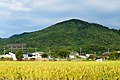 Place Mount Miwa Mountain in Nara Prefecture, Japan
 -
 Place Kashihara Jingū Shinto shrine in Nara Prefecture, Japan
 -
 Place Kibitsu Shrine Shinto shrine in Kibitsu, Kita-ku, Okayama, Japan
 -
 Place Tatsuta Shrine Shinto shrine in Nara Prefecture, Japan
 -
 Place Yoshimizu Shrine Shinto shrine in Nara Prefecture, Japan
 -
 Place Iwa Shrine Shinto shrine in Ichinomiya-chō Sugyōme, Shisō, Hyōgo prefecture, Japan
 -
 Place Kinpu Shrine Shinto shrine in Nara Prefecture, Japan
 -
 Place Aoi Aso Shrine Shinto shrine in Kumamoto Prefecture, Japan
 -
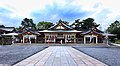 Place Hiroshima Gokoku Shrine Shinto shrine in Naka-ku, Hiroshima, Japan
 -
 Place Hōfu Tenmangū Shinto shrines in Yamaguchi Prefecture, Japan
 -
 Place Kenkun Shrine Shinto shrine in Kyoto, Japan
 -
_haiden.JPG/120px-Kono-jinja_(Miyazu)_haiden.JPG) Place Kono Shrine Shinto shrine in Miyazu, Kyōto prefecture, Japan
Place Kono Shrine Shinto shrine in Miyazu, Kyōto prefecture, Japan -
 Place Kumano Shrine Shinto shrine in Yamagata Prefecture, Japan
 -
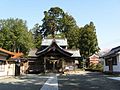 Place Omura Shrine Shinto shrine in Kōchi Prefecture, Japan
 -
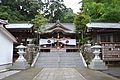 Place Sasamuta Shrine Shinto shrine in Oita Prefecture, Japan
 -
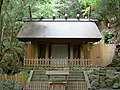 Place Tado Taisha Shinto shrine in Mie Prefecture, Japan
 -
 Place Taga Taisha Shinto shrine in Shiga Prefecture, Japan
 -
 Place Kagoshima Jingū Shinto shrine in Hayato-chō Uchi, Kirishima, Kagoshima prefecture, Japan
 -
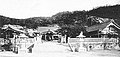 Place Keijō Shrine 1898–1945 Shinto shrine in Seoul, Korea
 -
 Place Kotohiki Hachimangū Shinto shrine in Kagawa Prefecture, Japan
 -
 Place Morioka Hachimangū Shinto shrine in Iwate Prefecture, Japan
 -
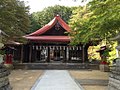 Place Ryōzen Shrine Shinto shrine in Fukushima Prefecture, Japan
 -
 Place Samukawa Shrine Shinto shrine in Kanagawa Prefecture, Japan
 -
 Place Saruga Shrine Shinto shrine in Aomori Prefecture, Japan
 -
 Place Tōzan Shrine Shinto shrine in Arita, Saga, Japan
 -
 Place Uda Mikumari Shrine Shinto shrine in Nara Prefecture, Japan
 -
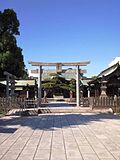 Place Yatsushiro-gū Shinto shrine in Kumamoto Prefecture, Japan
 -
 Place Yoshino Jingū Shinto shrine in Nara Prefecture, Japan
 -
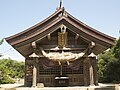 Place Hakuto Shrine Shinto shrine in Tottori Prefecture, Japan
 -
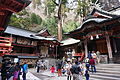 Place Haruna Shrine Shinto shrine in Gunma Prefecture, Japan
 -
_%E7%94%9F%E9%A7%92%E5%B8%82%E5%A3%B1%E5%88%86%E7%94%BA_Ikoma-ni-imasu-ikomatsuhiko-jinja_(Ikoma-taisha)_2013.8.28_-_panoramio_(1).jpg/120px-%E5%BE%80%E9%A6%AC%E5%9D%90%E4%BC%8A%E5%8F%A4%E9%BA%BB%E9%83%BD%E6%AF%94%E5%8F%A4%E7%A5%9E%E7%A4%BE(%E5%BE%80%E9%A6%AC%E5%A4%A7%E7%A4%BE)_%E7%94%9F%E9%A7%92%E5%B8%82%E5%A3%B1%E5%88%86%E7%94%BA_Ikoma-ni-imasu-ikomatsuhiko-jinja_(Ikoma-taisha)_2013.8.28_-_panoramio_(1).jpg) Place Ikoma Shrine Shinto shrine in Nara Prefecture, Japan
Place Ikoma Shrine Shinto shrine in Nara Prefecture, Japan -
 Place Isasumi Shrine Shinto shrine in Fukushima Prefecture, Japan
 -
 Place Kotonomama Hachimangū Shinto shrine in Kakegawa, Shizuoka prefecture, Japan
 -
 Place Ōasahiko Shrine Shinto shrine in Naruto, Tokushima prefecture, Japan
 -
 Place Ōhi Shrine Shinto shrine in Chiba Prefecture, Japan
Institutions · 1
Houses
What this means
Records whose own statements name this tradition — 1 of them. Computed from those statements, not curated here, and ordered by how widely each is linked across Wikipedia — those at home in the tradition’s collection first, and those with a picture first among the leading few — rather than by significance to the tradition.
A ruling house that names a tradition is a family’s recorded affiliation, not its subjects’ practice; an office is a line of holders, not a family.
Imported from Wikidata. Nothing here has been read by an editor.

Connections
How Shinto connects
Grouped by the kind of relationship, because a successor is not a son and a shared symbol is not an influence.
Documented influence 7
What this means
A transmission argued from evidence. Not shared symbols, and not a short path through a database.
Does not imply shared symbols as evidence · a short path through a database
Imported from Wikidata unless a tile says otherwise. Nothing here has been read by an editor.
-
 was influenced by Abrahamic religion category of religions considered as coming from the legacy of Abraham
 -
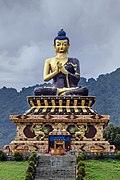 was influenced by Buddhism Indian religion
 -
 was influenced by Confucianism Chinese ethical and philosophical system
 -
 was influenced by Hinduism religion widely practiced in the Indian subcontinent
 - was influenced by koshintō original animism of Japan which is the alleged basis of modern Shinto
-
_(1).jpg/120px-Taoist_ceremony_at_Xiao_ancestral_temple_in_Chaoyang%2C_Shantou%2C_Guangdong_(daoshi)_(1).jpg) was influenced by Taoism religious or philosophical tradition of Chinese origin
was influenced by Taoism religious or philosophical tradition of Chinese origin -
 influenced Kōshin folk religion
Sources
Sources and evidence
Where every statement on this page comes from, and how each one stands.
7 statements on this record
- 7 Imported Taken from Wikidata as it stands. Nobody here has read it. 6 of them cite only Wikipedia: one source, counted once.
Only this record’s own statements. What other records say about it is counted on theirs.
Three layers, three licences
- Text
- Wikipedia · CC BY-SA 4.0, quoted, not merged
- Pictures
- Wikimedia Commons · each file’s own terms
Review
Not yet read by an editor here. Every relationship on this page is an import.
Disagreements are kept, not resolved, and a count of sources is not a confidence score.


Keep exploring
More from East Asian traditions
Daoism, Confucian practice, Chinese folk religion, Shinto and Korean tradition.