
Tradition Islam
Shia Islam
الشيعة ar شیعه fa
Second-most populous Islamic denomination
- Also called Shīa Islam, Shiism, Shiah Islam
A path that branches,
meets and parts.
Schools and lineages
Branches · 6
Many paths. Shared histories.
6 branches recorded under Shia Islam, one step down, as the records give them.
What this means
Association and branching, in both directions. Traditions overlap, split and re-merge; this is not a single-origin family tree, and being listed under another tradition is not the same as being recognised by it.
Does not imply a clean single-origin family tree · that the parent recognises the branch
Imported from Wikidata. Nothing here has been read by an editor.
Recorded as a branch of


Traditions whose own records say they belong to it
6 traditions name Shia Islam as their own — an affiliation, so kept apart from the tree.
- Belongs to it
Zaidism
Branch of Shia Islam -
 Belongs to it
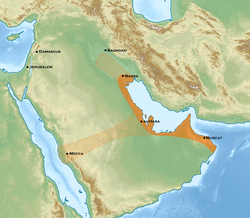
Qarmatians
Religious group - Belongs to it
Safavid order
Sufi Shi'a order (tariqah) founded by Safi-ad-din Ardabili - Belongs to it
Book of Fatimah
Book written for Fatimah according to Shi'te tradition - Belongs to it
Jarudiyya
Branch of Zaydi Islam - Belongs to it
Saba’īyyah
Figures · 57
Begin with a figure
What this means
Records whose own statements name this tradition — 57 of them. Computed from those statements, not curated here, and ordered by how widely each is linked across Wikipedia — those at home in the tradition’s collection first, and those with a picture first among the leading few — rather than by significance to the tradition.
An affiliation recorded on a person is a third party’s record, often of one period of a life — not that person’s belief at every point in it.
Imported from Wikidata. Nothing here has been read by an editor.
-
 Ali Khamenei19 April 1939 CE – 28 February 2026 CE · Supreme Leader of Iran from 1989 to 2026
 -
 Hassan Rouhanifrom 12 November 1948 CE · President of Iran from 2013 to 2021
 -
 Farabic. 870 CE – 951 CE · 10th century Persian philosopher and jurist
 -
 Jabir ibn Hayyan721 CE – 815 CE · 8th-century Islamic alchemist and author
 -
 Mojtaba Khameneifrom 8 September 1969 CE · 3rd Supreme Dictator of Iran since 2026
 -
 Akbar Hashemi Rafsanjani25 August 1934 CE – 8 January 2017 CE · Iranian politician (1934–2017)
 -
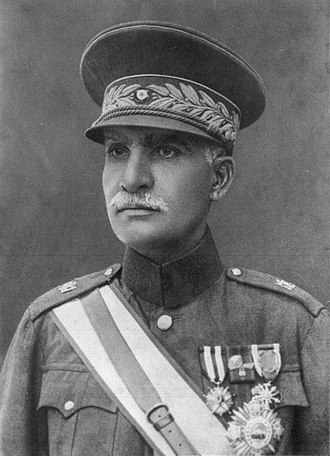 Reza Shah15 March 1878 CE – 26 July 1944 CE · Shah of Iran from 1925 to 1941 and founder of the Pahlavi Dynasty
 -
 Fath-Ali Shah Qajar5 August 1772 CE – 23 October 1834 CE · second Qajar shah of Iran (1797–1834).
 -
 Nasir Khusraw3 September 1004 CE – c. 1088 CE · 11th-century Persian Isma'ili poet, scholar, philosopher, and missionary
 -
 Muhammad al-Mahdifrom 29 July 869 CE · twelfth and last Imam in Shia Twelver of Islam
 -
 Hussein-Ali Montazeri22 September 1922 CE – 20 December 2009 CE · cleric and Deputy Supreme Leader of Iran from 1985 to 1989
 -
 Al-Musta'li24 August 1076 CE – 10 December 1101 CE · Fatimid caliph and imam (1074–1101)
Show 45 more
- Figure Reza Hosseini Nassab Iranian grand ayatollah
-
 Figure Al-Mustansir Egyptian caliph from 1036 to 1094/95
 -
.JPG/120px-Gholam-Hossein_Mohseni-Eje'i_in_a_press_conference_(1).JPG) Figure Gholam-Hossein Mohseni-Eje'i Chief Justice of the Islamic Republic of Iran and former Co-Interim Supreme Leader of Iran in 2026
Figure Gholam-Hossein Mohseni-Eje'i Chief Justice of the Islamic Republic of Iran and former Co-Interim Supreme Leader of Iran in 2026 - Figure Zayd ibn Ali Alid political and religious leader (c.695–740)
-
 Figure Al-Hafiz Fatimid Dynasty caliph from 1132 to 1149
 -
 Figure Mohammad Beheshti Iranian cleric, one of the leading figures of the 1979 Iranian Revolution (1928–1981)
 -
 Figure 'Adud al-Dawla Buyid dynasty emir (936-983)
 -
_(cropped).jpg/120px-Imam_Musa_Sadr_(19)_(cropped).jpg) Figure Al Sayed Musa al-Sadr Lebanese Shiite jurist and political activist
Figure Al Sayed Musa al-Sadr Lebanese Shiite jurist and political activist - Figure Al-Waqidi Muslim historian and biographer of Muhammad (c.747-823)
-
 Figure Muhammad Husayn Tabatabaei Iranian Shia cleric, philosopher, jurist and mystic
 -
 Figure Al-Amir bi-Ahkam Allah Fatimid caliph and imam (1096–1130)
 -
 Figure Shaykh Saduq Buyid shiite scholar
 -
 Figure Bahāʾ al-dīn al-ʿĀmilī Iranian Shia Islamic scholar, philosopher, architect, mathematician, astronomer and poet
 - Figure Al-Shaykh Al-Mufid Iraqi Twelver Shia theologian (c. 948–1022)
-
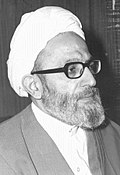 Figure Mohammad-Reza Mahdavi Kani Iranian Ayatollah (1931–2014)
 - Figure Hussein al-Houthi Yemeni Zaidi religious leader (1959–2004)
-
 Figure Mahmoud Hashemi Shahroudi Iranian Ayatollah (1948–2018)
 -
_(crop_of_Sadeq_Larijani).jpg/120px-Sixth_International_Conference_in_Support_of_the_Palestinian_Intifada%2C_Tehran_(15)_(crop_of_Sadeq_Larijani).jpg) Figure Sadegh Larijani Iranian cleric and politician (born 1963)
Figure Sadegh Larijani Iranian cleric and politician (born 1963) -
 Figure Sharif Radhi Iraqi poet and Shia Muslim scholar (970 – 1015)
 -
 Figure Shaykh Tusi Iranian scholar
 -
_portrait.jpg/120px-Grand_Ayatollah_Hossein_Borujerd_(1875-1961)_portrait.jpg) Figure Hossein Borujerdi Iranian Grand Ayatollah (1875-1961)
Figure Hossein Borujerdi Iranian Grand Ayatollah (1875-1961) -
 Figure Mohammad Baqir al-Hakim Iraqi Shia Islamic scholar and politician (1939–2003)
 -
 Figure Sheikh Fazlollah Noori Iranian Shi'a theologian (1843–1909)
 -
_in_Imam_Khomeini's_Hussainiyeh_14_(cropped).png/120px-1447_AH_The_mourning_ceremony_of_the_martyrdom_of_Hazrat_Aba_Abdullah_al-Husayn_(peace_be_upon_him)_in_Imam_Khomeini's_Hussainiyeh_14_(cropped).png) Figure Hassan Khomeini Iranian cleric (born 1972)
Figure Hassan Khomeini Iranian cleric (born 1972) -
 Figure Sayyida Nafisa Muslim scholar
 -
 Figure Shaykh Junayd The fifth leader of the Safavid order (1447–1460)
 -
 Figure Ali Meshkini Iranian cleric (1922-2007)
 -
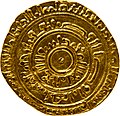 Figure Nizar Fatimid prince and Nizari imam (1045–1095)
 -
.jpg/120px-Portrait_of_Ahmad_Khomeini_-_1995_(cropped).jpg) Figure Ahmad Khomeini Iranian politician
Figure Ahmad Khomeini Iranian politician -
 Figure Sahib ibn Abbad Grand vizier of the Buyid dynasty
 -
 Figure Mohammad-Taqi Bahjat Foumani Iranian Grand Ayatollah
 -
 Figure Abdolkarim Haeri Yazdi Iranian Grand Ayatollah (1859–1937)
 - Figure Ibn Nusayr Shi'a scholar
-
 Figure Ja'far Sobhani Iranian cleric
 - Figure Lady Amin Jurisprudent and theologian
- Figure Abu'l-Qasim al-Tayyib Last known imam of the Tayyibi Isma'ilis (born 1130)
- Figure Khadijeh Saqafi Iranian revolutionary and Ruhollah Khomeini's wife
-
 Figure Mohammad Fazel Lankarani Iranian grand ayatollah (1931–2007)
 -
.jpg/120px-Mohsen_Araki_(cropped).jpg) Figure Mohsen Araki Shia Islamic cleric
Figure Mohsen Araki Shia Islamic cleric -
 Figure Mostafa Khamenei Iranian cleric
 -
 Figure Sharif al-Murtadha Islamic Shiite scholar, 965-1044
 -
 Figure Abd-Allah ibn Muhammad ibn al-Hanafiyyah Alid religious leader (died c.716)
 -
 Figure Hadi Khamenei Iranian politician
 -
.jpg/120px-Hassan_Modarres%2C_c._1930s_(cropped).jpg) Figure Hassan Modarres Prime Minister of Iran (1870-1937)
Figure Hassan Modarres Prime Minister of Iran (1870-1937) -
 Figure Mostafa Mohaqeq Damad Iranian cleric
Places · 13
Places and sites
What this means
Records whose own statements name this tradition — 13 of them. Computed from those statements, not curated here, and ordered by how widely each is linked across Wikipedia — those at home in the tradition’s collection first, and those with a picture first among the leading few — rather than by significance to the tradition.
A place that names a tradition may be a temple or a whole province. Either way it is not a count of believers, and not evidence of practice in every period.
Imported from Wikidata. Nothing here has been read by an editor.
-

Sheikh Safi al-Din Khānegāh and Shrine Ensemble
Mausoleum in Ardabil, Iranian national heritage site -

Imam Reza Shrine
Shrine in Mashhad, Iranian national heritage site -

Imam Husayn Mausoleum
Burial site of Husayn ibn Ali, the third Imam of Islam, in the city of Karbala, Iraq -
.jpg/330px-Iran_IMG_3429_Tehran_(2864793031).jpg)
imam Khomeini Mausoleum
Mausoleum in metropolitan Tehran, Iran -
.jpg/330px-%D8%A7%D9%84%D8%B9%D8%AA%D8%A8%D8%A9_%D8%A7%D9%84%D9%83%D8%A7%D8%B8%D9%85%D9%8A%D8%A9_(4).jpg)
Al-Kadhimiya Mosque
Mosque in Iraq -

Fatima Masumeh Shrine
Imamzadeh in Qom, Iranian national heritage site -
.jpg/330px-Kufa_Mosque_(4).jpg)
Great Mosque of Kufa
Mosque in Iraq -

Sayyidah Zaynab Mosque
Islamic Shrine in Damascus, Syria
Show 5 more
-
.jpg/120px-Masdjed-e_Vakil_central_court_(1).jpg) Place Vakil Mosque Mosque in Shiraz, Iranian national heritage site
Place Vakil Mosque Mosque in Shiraz, Iranian national heritage site -
 Place Imam Ali Mosque Mosque in Järfälla Municipality, Stockholm County, Sweden
 -
 Place Amin al-Din Jebrail Mausoleum Mausoleum in Ardabil, Iranian national heritage site
 -
fakhrul_islam_and_rukn_al_din_Amuli.JPG/120px-Tomb_Mausoleum_Mir_sayyed_Heydar_Amuli_(Seyyed_3_tan)fakhrul_islam_and_rukn_al_din_Amuli.JPG) Place Haydar Amuli Mausoleum Mausoleum tower in Amol, Iranian national heritage site
Place Haydar Amuli Mausoleum Mausoleum tower in Amol, Iranian national heritage site -
 Place Ya'qub ibn al-Layth Mausoleum Mausoleum in Jondishapur, Iranian national heritage site
Festivals and practices · 4
Festivals, holy days and practices
What this means
Records whose own statements name this tradition — 4 of them. Computed from those statements, not curated here, and ordered by how widely each is linked across Wikipedia — those at home in the tradition’s collection first, and those with a picture first among the leading few — rather than by significance to the tradition.
A holy day’s day is the one its record states it is observed on. A festival recurs, so it has no date on the historical clock, and one named here is not evidence of when or where it was kept.
Imported from Wikidata. Nothing here has been read by an editor.

The Islam collection holds 29 festivals and practices in all; 25 of them do not name Shia Islam on their own records. See them in the collection
Institutions · 4
Offices and houses
What this means
Records whose own statements name this tradition — 4 of them. Computed from those statements, not curated here, and ordered by how widely each is linked across Wikipedia — those at home in the tradition’s collection first, and those with a picture first among the leading few — rather than by significance to the tradition.
A ruling house that names a tradition is a family’s recorded affiliation, not its subjects’ practice; an office is a line of holders, not a family.
Imported from Wikidata. Nothing here has been read by an editor.
Connections
How Shia Islam connects
Grouped by the kind of relationship, because a successor is not a son and a shared symbol is not an influence.
Affiliation 1
What this means
Association with a tradition or school. Traditions branch, overlap and re-merge; this is not a clean single-origin tree.
Does not imply a fixed roster · that every account of the tradition knows this figure
Imported from Wikidata unless a tile says otherwise. Nothing here has been read by an editor.
Sources
Sources and evidence
Where every statement on this page comes from, and how each one stands.
2 statements on this record
- 2 Imported Taken from Wikidata as it stands. Nobody here has read it.
Only this record’s own statements. What other records say about it is counted on theirs.
Three layers, three licences
- Text
- Wikipedia · CC BY-SA 4.0, quoted, not merged
Review
Not yet read by an editor here. Every relationship on this page is an import.
Disagreements are kept, not resolved, and a count of sources is not a confidence score.


Keep exploring
More from Islam
Schools of law and theology, the scholars who transmitted them, and the places they taught.