

Tradition Institution Christianity
Reformed Christianity
Calvinismus la
Branch of Protestantism
- Dated from 1 January 1519 CE
- Also called Reformed Protestantism, Reformed faith, Reformed tradition
A path that branches,
meets and parts.
Schools and lineages
Branches · 8
Many paths. Shared histories.
8 branches recorded under Reformed Christianity, one step down, as the records give them.
What this means
Association and branching, in both directions. Traditions overlap, split and re-merge; this is not a single-origin family tree, and being listed under another tradition is not the same as being recognised by it.
Does not imply a clean single-origin family tree · that the parent recognises the branch
Imported from Wikidata. Nothing here has been read by an editor.
Recorded as a branch of

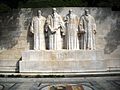
-
 Puritans Subclass of English Reformed Protestants
 - Presbyterianism Branch of Protestant Christianity using presbyterian church government and originating in the British Isles 2 branches of its own
- Continental Reformed Protestantism Part of the Calvinist tradition within Protestantism originating in continental Europe 2 branches of its own
-
 Congregational churches Protestant Reformed churches which are congregationally governed 1 branch of its own
 - Christian reconstructionism Christian fundamentalist Reformed theonomic movement, founded by Rousas Rushdoony, Greg Bahnsen and Gary North and influential in the U.S., that advocates theonomy and the restoration of certain biblical laws said to have continuing applicability
- Neo-Calvinism Dutch theological movement
- New Calvinism 20th- and 21st-century theological movement
- Dutch Reformed Christianity in South Africa Christian theological tradition in a country
Traditions whose own records say they belong to it
18 traditions name Reformed Christianity as their own — an affiliation, so kept apart from the tree.
-
 Belongs to it
Waldensians
Mediaval Christian movement - Belongs to it
Evangelical Church of Czech Brethren
Christian Denomination - Belongs to it
Reformed Church in Hungary
Protestant church in Hungary -
.jpg/250px-Biserica_Reformat%C4%83_de_pe_Uli%C5%A3a_Lupilor%2C_Cluj-Napoca_(2).jpg) Belongs to it
Belongs to itReformed Church in Romania
Organization of the Calvinist church in Romania - Belongs to it
United Reformed Church
Christian church organisation in the United Kingdom - Belongs to it
Presbyterian Church of Wales
Christian denomination in Wales, formerly the Calvinistic Methodists (1811–) - Belongs to it
Reformed Christian Church in Slovakia
- Belongs to it
United Protestant Church of Alsace and Lorraine
French protestant organisation
Show 10 more
-
 Belongs to it Polish Reformed Church Reformed Protestant church in Poland established in the 16th century
 -
 Belongs to it Mission Covenant Church of Sweden Swedish Reformed free church
 - Belongs to it Hungarian Reformed Church in America Reformed Protestant church in the U.S.
-
 Belongs to it Evangelical Reformed Churches in Brazil
 -
 Belongs to it Free Church of England UK Christian denomination, 1844-
 -
 Belongs to it Protestant Reformed Christian Church in Croatia Reformed Episcopal diocese in Croatia
 - Belongs to it Reformed Christian Calvinist Church in Croatia Protestant Christian denomination
- Belongs to it Countess of Huntingdon's Connexion Welsh Christian denomination, 1783-
- Belongs to it Federation of Reformed Churches American Christian denomination (1990-)
- Belongs to it Protestant Church of Neuchâtel
Figures · 23
Begin with a figure
What this means
Records whose own statements name this tradition — 23 of them. Computed from those statements, not curated here, and ordered by how widely each is linked across Wikipedia — those at home in the tradition’s collection first, and those with a picture first among the leading few — rather than by significance to the tradition.
An affiliation recorded on a person is a third party’s record, often of one period of a life — not that person’s belief at every point in it.
Imported from Wikidata. Nothing here has been read by an editor.
-
 John Calvin10 July 1509 CE – 27 May 1564 CE · French Protestant reformer (1509–1564)
 -
 Huldrych Zwingli1 January 1484 CE – 11 October 1531 CE · Protestant Reformation leader in Switzerland, Swiss Reformed Church founder (1484-1531)
 -
 William the Silent24 April 1533 CE – 10 July 1584 CE · Dutch statesman and revolt leader (1533-1584)
 -
 Frederick William III of Prussia3 August 1770 CE – 7 June 1840 CE · King of Prussia from 1797 to 1840
 -
.jpg/330px-Frederick_William_II_(1744-1797).jpg) Friedrich Wilhelm II of Prussia25 September 1744 CE – 16 November 1797 CE · King of Prussia from 1786 to 1797 (1744–1797)
Friedrich Wilhelm II of Prussia25 September 1744 CE – 16 November 1797 CE · King of Prussia from 1786 to 1797 (1744–1797) -
 Adolphe, Grand Duke of Luxembourg24 July 1817 CE – 17 November 1905 CE · Duke of Nassau (1839–1866), later Grand Duke of Luxembourg (1890–1905)
 -
.jpg/330px-Jonathan_Edwards_(Princeton_Portrait).jpg) Jonathan Edwards5 October 1703 CE – 22 March 1758 CE · Christian preacher, philosopher, and theologian (1703-1758)
Jonathan Edwards5 October 1703 CE – 22 March 1758 CE · Christian preacher, philosopher, and theologian (1703-1758) -
.jpg/330px-Abraham_Kuyper_1905_(1).jpg) Abraham Kuyper29 October 1837 CE – 8 November 1920 CE · Prime Minister of the Netherlands (1837-1920)
Abraham Kuyper29 October 1837 CE – 8 November 1920 CE · Prime Minister of the Netherlands (1837-1920) -
 William IV, Grand Duke of Luxembourg22 April 1852 CE – 25 February 1912 CE · Grand Duke of Luxembourg from 1905 to 1912
 -
.jpg/330px-Religious_denominations_of_the_world_-_comprising_a_general_view_of_the_origin%2C_history%2C_and_condition_of_the_various_sects_of_Christians%2C_the_Jews%2C_and_Mahometans%2C_as_well_as_the_pagan_forms_of_(14598189978).jpg) Roger Williamsc. 21 December 1603 CE – 1 April 1683 CE · English Baptist theologian and author (1603–1683)
Roger Williamsc. 21 December 1603 CE – 1 April 1683 CE · English Baptist theologian and author (1603–1683) -
.jpg/330px-George_Whitefield_(head).jpg) George Whitefield16 December 1714 CE – 29 September 1770 CE · English minister and preacher
George Whitefield16 December 1714 CE – 29 September 1770 CE · English minister and preacher -
 George William, Elector of Brandenburg3 November 1595 CE (Old Style) – 1 December 1640 CE · Elector and Margrave of Brandenburg, Duke of Prussia
Show 11 more
-
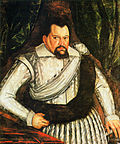 Figure John Sigismund, Elector of Brandenburg Prince-elector of the Margraviate of Brandenburg
 -
 Figure Elisabeth of the Palatinate German princess, philosopher, and Calvinist (1618–1680)
 -
.jpg/120px-Guillielmus_Farellus_(BM_1874%2C1212.456).jpg) Figure William Farel French evangelist
Figure William Farel French evangelist -
 Figure Timothy J. Keller American pastor (1950–2023)
 -
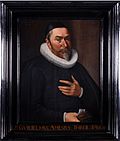 Figure William Ames English Protestant divine, philosopher, and controversialist
 -
 Figure William Louis, Count of Nassau-Dillenburg Count of Nassau-Dillenburg and stadtholder of Friesland, Groningen and Drenthe (1560–1620)
 -
 Figure Robert Moffat Scottish missionary (1795-1883)
 -
 Figure John Gill English Baptist pastor, biblical scholar and theologian (1697-1771)
 -
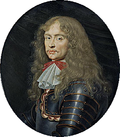 Figure Bogusław Radziwiłł Polish-Lithuanian noble (1620-1669)
 -
_c_1652_by_S%C3%A9bastien_Bourdon.jpg/120px-Gustav_of_Wasaborg_(1616)_c_1652_by_S%C3%A9bastien_Bourdon.jpg) Figure Count Gustav of Vasaborg, 1st Count of Nystad Swedish military personnel (1616-1653)
Figure Count Gustav of Vasaborg, 1st Count of Nystad Swedish military personnel (1616-1653) -
 Figure Wayne Grudem American theologian
Texts · 1
Texts and teachings
What this means
Records whose own statements name this tradition — 1 of them. Computed from those statements, not curated here, and ordered by how widely each is linked across Wikipedia — those at home in the tradition’s collection first, and those with a picture first among the leading few — rather than by significance to the tradition.
Where a date is shown it is when the text was written — the source’s clock, never the time of what it tells.
Imported from Wikidata. Nothing here has been read by an editor.
Places · 2
Places and sites
What this means
Records whose own statements name this tradition — 2 of them. Computed from those statements, not curated here, and ordered by how widely each is linked across Wikipedia — those at home in the tradition’s collection first, and those with a picture first among the leading few — rather than by significance to the tradition.
A place that names a tradition may be a temple or a whole province. Either way it is not a count of believers, and not evidence of practice in every period.
Imported from Wikidata. Nothing here has been read by an editor.


Institutions · 1
Institutions
What this means
Records whose own statements name this tradition — 1 of them. Computed from those statements, not curated here, and ordered by how widely each is linked across Wikipedia — those at home in the tradition’s collection first, and those with a picture first among the leading few — rather than by significance to the tradition.
A ruling house that names a tradition is a family’s recorded affiliation, not its subjects’ practice; an office is a line of holders, not a family.
Imported from Wikidata. Nothing here has been read by an editor.
Connections
How Reformed Christianity connects
Grouped by the kind of relationship, because a successor is not a son and a shared symbol is not an influence.
Affiliation 1
What this means
Association with a tradition or school. Traditions branch, overlap and re-merge; this is not a clean single-origin tree.
Does not imply personal belief at every point in a life · the practice of a population
Imported from Wikidata unless a tile says otherwise. Nothing here has been read by an editor.

Sources
Sources and evidence
Where every statement on this page comes from, and how each one stands.
2 statements on this record
- 2 Imported Taken from Wikidata as it stands. Nobody here has read it.
Only this record’s own statements. What other records say about it is counted on theirs.
Three layers, three licences
- Text
- Wikipedia · CC BY-SA 4.0, quoted, not merged
- Pictures
- Wikimedia Commons · each file’s own terms
Review
Not yet read by an editor here. Every relationship on this page is an import.
Disagreements are kept, not resolved, and a count of sources is not a confidence score.


Keep exploring
More from Christianity
Its branches, councils, saints, offices and buildings — and where they stopped recognising each other.