

Text Tradition Islam
Qur’an
القرآن ar قرآن fa
Foundational Islamic religious text
- Dated from 631 CE
- Written 631 CE
- Also called Holy Qur'an, the Holy Koran, Korân
A path that branches,
meets and parts.
Schools and lineages
Overview
From Wikipedia, quoted unmodified under CC BY-SA 4.0; the article’s history is its list of authors.
Nothing in this collection names Qur’an yet — no branches, figures, texts or places. A zero, not a claim that there are none.
Connections
How Qur’an connects
Grouped by the kind of relationship, because a successor is not a son and a shared symbol is not an influence.
Affiliation 1
What this means
Association with a tradition or school. Traditions branch, overlap and re-merge; this is not a clean single-origin tree.
Does not imply a closed canon · the same status in every branch
Imported from Wikidata unless a tile says otherwise. Nothing here has been read by an editor.

Identification 1
What this means
One figure treated as another in some context. Not literal identity in all contexts, and usually a claim by a third party.
Does not imply literal identity in all contexts · that either tradition made the identification
Imported from Wikidata unless a tile says otherwise. Nothing here has been read by an editor.
Text 32
What this means
A work, its editions and its witnesses are distinct; their dates are not interchangeable.
Does not imply that the work is the only account · that the work is contemporary with what it describes
Imported from Wikidata unless a tile says otherwise. Nothing here has been read by an editor.
-
 features Aaron male human biblical and quranic figure, brother of Moses
 -
 features Abraham foundational legendary figure among adherents of the eponymous Abrahamic religions
 -
 features Abraham in Islām forefather of the Abrahamic religions from the Islamic perspective
 -
 features Adam in Islam first man and Prophet in Islam
 - features Amram human biblical character in Exodus, husband of Jochebed and father of Aaron, Moses and Miriam
-
 features David in Islam prophet and king in Islam
 -
 features Dhu'l-Qarnayn figure in the Quran
 -
 features Eid al-Adha Islamic holiday on the tenth day of Dhu al-Hijja
 -
 features Elijah Biblical prophet
Show all 32
-
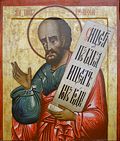 features Elisha Biblical Prophet who came after Elijah
 -
 features Eve the first woman in the story of Genesis
 -
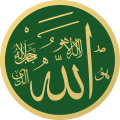 features God in Islam Islamic conception of God
 -
_-_Hagar_and_the_Angel_-_GLAHA-51972_-_Hunterian_Museum_and_Art_Gallery.jpg/120px-John_Runciman_(1744-1768)_-_Hagar_and_the_Angel_-_GLAHA-51972_-_Hunterian_Museum_and_Art_Gallery.jpg "Picture: Hagar and the Angel, painting") features Hagar biblical character, Egyptian handmaid of Sarah, wife of Abraham
features Hagar biblical character, Egyptian handmaid of Sarah, wife of Abraham - features Haman in Islam Islamic portrayal of Biblical Haman
-
.jpg/120px-Mus%C3%A9e_Unterlinden_-_chapiteau_de_l'%C3%A9glise_abbatiale_d'Alspach_-_les_Justes_dans_le_sein_d'Abraham_(XIIe_si%C3%A8cle).jpg) features Isaac Biblical character; son of Abraham
features Isaac Biblical character; son of Abraham -
 features Ismail Abraham's first son, who was to be offered as a sacrifice; later, an ancestor to Muhammad
 -
 features Jacob in Genesis, a son of Isaac, also known as Israel; the patriarch of the Israelites
 -
.jpg/120px-Spas_vsederzhitel_sinay_(cropped1).jpg) features Jesus Christ central figure of Christianity (c. 6 or 4 BC – AD 30 or 33)
features Jesus Christ central figure of Christianity (c. 6 or 4 BC – AD 30 or 33) -
 features Jesus in Islam penultimate prophet and eschatological figure in Islam
 -
 features Job biblical figure
 -
 features Joseph Biblical figure, son of Jacob and Rachel and governor of Egypt during the late Hyksos dynasty
 -
 features Lot in Islam Islamic prophet mentioned in the Qurʼān
 -
 features Lot's wife person mentioned in the biblical Book of Genesis
 -
 features monotheism in Islam Islam's central monotheistic concept of a single, indivisible God
 -
.jpg/120px-Seleznikha_church_-_prophet_Moses_(18_c.).jpg) features Moses Abrahamic prophet said to have led the Israelites out of Egypt
features Moses Abrahamic prophet said to have led the Israelites out of Egypt -
 features Moses in Islam one of the most important prophets in Islam
 -
 features Noah biblical prophet, son of Lamech, major figure in the Book of Genesis
 -
 features Solomon king of Israel and son of David
 -
 features Solomon in Islam prophet, king and son of David in Islam
 -
 features Talut character in Qur'an, identified with Saul
 - features Yaghuth a god in the era of Noah, according to the Koran
-
 features Yunus prophet of Islam
Sources
Sources and evidence
Where every statement on this page comes from, and how each one stands.
2 statements on this record
- 2 Imported Taken from Wikidata as it stands. Nobody here has read it.
Only this record’s own statements. What other records say about it is counted on theirs.
Three layers, three licences
- Text
- Wikipedia · CC BY-SA 4.0, quoted, not merged
- Pictures
- Wikimedia Commons · each file’s own terms
Review
Not yet read by an editor here. Every relationship on this page is an import.
Disagreements are kept, not resolved, and a count of sources is not a confidence score.


Keep exploring
More from Islam
Schools of law and theology, the scholars who transmitted them, and the places they taught.