

Tradition Institution South Asian traditions
Jainism
जैनदर्शनम् sa जैन धर्म hi ஜைனம் ta
Indian religion
- Dated from 5th century BCE
- Also called nirgrantha, Jain dharma, Jainatva
A path that branches,
meets and parts.
Schools and lineages
Branches and affiliations
Many paths. Shared histories.
What this means
Association and branching, in both directions. Traditions overlap, split and re-merge; this is not a single-origin family tree, and being listed under another tradition is not the same as being recognised by it.
Does not imply a clean single-origin family tree · that the parent recognises the branch
Imported from Wikidata. Nothing here has been read by an editor.
Recorded as a branch of


Traditions whose own records say they belong to it
1 tradition names Jainism as its own — an affiliation, so kept apart from the tree.
Attributed founding
Whom the records name as founder
What this means
An attribution, and a contested one in most traditions: it does not mean the tradition began fully formed, nor that later adherents accept the attribution.
Does not imply that the tradition began fully formed · that later adherents accept the attribution
Imported from Wikidata. Nothing here has been read by an editor.
Deities · 27
Gods and divine figures
What this means
Records whose own statements name this tradition — 27 of them. Computed from those statements, not curated here, and ordered by how widely each is linked across Wikipedia — those at home in the tradition’s collection first, and those with a picture first among the leading few — rather than by significance to the tradition.
A god named in a tradition is a figure of its accounts; a picture of one is a work of art, not a likeness.
Imported from Wikidata. Nothing here has been read by an editor.
-
.jpg/330px-Worship_of_a_Jain_tirthankara%3B_below-_a_mounted_lanceman_attacks_the_mahout_of_(6124520599).jpg "Picture: Worship of a Jain tirthankara; below- a mounted lanceman attacks the mahout of, painting") Tirthankarain Jainism, a saviour and spiritual teacher of the dharma
Tirthankarain Jainism, a saviour and spiritual teacher of the dharma -
%2C_xii_secolo.jpg/330px-Karnataka%2C_jaina_tirthankara_parshavanatha_col_cappuccio_di_serpenti_seduto_in_meditazione_(dhyanamudra)%2C_xii_secolo.jpg) Parshvanatha23rd Tirthankara in Jainism
Parshvanatha23rd Tirthankara in Jainism -
 BahubaliJain deity/god/saint
 -
 Neminātha22nd Jain Tirthankara
 -
 SambhavanāthaTirthankara of Jainism
 -
 Ajitanātha2nd Jain Tirthankara
 -
 Naminātha21st Jain Tirthankara
 -
 Sumatinātha5th Tirthankara in Jainism
 -
 Anantanātha14th Tirthankara of the present age of Jainism
 -
 Mallinātha19th Jain Tirthankara
 -
 Puṣpadanta9th Jain Tirthankara
 -
 Shitalanatha10th Jain Tirthankara
Not its own picture Tirthankara — Worship of a Jain tirthankara; below- a mounted lanceman attacks the mahout of, painting
Show 15 more
-
 Deity Supārśvanātha 7th Jain Tirthankara
 -
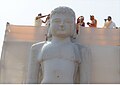 Deity Vasupujya 12th Jain Tirthankara
 -
 Deity Vimalanātha 13th Jain Tirthankara
 -
 Deity Abhinandananātha 4th Tirthankara in Jainism
 -
 Deity Chandraprabha 8th Jain Tirthankara
 -
 Deity Śāntinātha 16th Jain Tirthankara
 -
 Deity Aranātha 18th Jain Tirthankara
 -
 Deity Dharmanātha 15th Jain Tirthankara
 -
 Deity Kunthunātha 17th Jain Tirthankara
 -
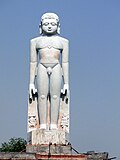 Deity Munisuvrata 20th Jain Tirthankara
 -
 Deity Padmaprabha Sixth Jain Tirthankar
 -
 Deity Śreyānsanātha 11th Jain Tirthankara
 -
 Deity Nabhi Father of Rishabhanatha
 -
 Deity Suswani Mata Kuldevi of Dugar , Surana & Sankhla Gotras.
 -
 Deity Marudevi Mother of Rishabhanatha
Figures · 8
Begin with a figure
What this means
Records whose own statements name this tradition — 8 of them. Computed from those statements, not curated here, and ordered by how widely each is linked across Wikipedia — those at home in the tradition’s collection first, and those with a picture first among the leading few — rather than by significance to the tradition.
An affiliation recorded on a person is a third party’s record, often of one period of a life — not that person’s belief at every point in it.
Imported from Wikidata. Nothing here has been read by an editor.
-
 Mahavirac. 599 BCE – c. 527 BCE · Indian religious leader
 -
_(cropped).JPG/330px-Chandragupt_maurya_Birla_mandir_6_dec_2009_(31)_(cropped).JPG) Chandragupta Maurya340 BCE – 297 BCE · founder of the Maurya Empire (350–295 BCE)
Chandragupta Maurya340 BCE – 297 BCE · founder of the Maurya Empire (350–295 BCE) -
 ṚṣabhanāthaFounder of Jainism and first Tirthankara
 -
 Hemachandra1088 CE – 1172 CE · 12th-century Jain scholar, grammarian, poet, writer, and mathematician
 -
 Sampratiuntil 215 BCE · Mauryan emperor
 -
 SagaraLegendary Indian king
 -
 Bhadrabahu432 BCE – 356 BCE · Indian Jain monk
 -
 BharataJain deity and chakravartin emperor
Texts · 5
Texts and teachings
What this means
Records whose own statements name this tradition — 5 of them. Computed from those statements, not curated here, and ordered by how widely each is linked across Wikipedia — those at home in the tradition’s collection first, and those with a picture first among the leading few — rather than by significance to the tradition.
Where a date is shown it is when the text was written — the source’s clock, never the time of what it tells.
Imported from Wikidata. Nothing here has been read by an editor.


%3B_Text_(verso)%3B_Folio_from_an_Uttaradhyayanasutra_LACMA_AC1993.225.1.jpg/250px-A_King_and_a_Monk_(recto)%3B_Text_(verso)%3B_Folio_from_an_Uttaradhyayanasutra_LACMA_AC1993.225.1.jpg)
Places · 1
Places and sites
What this means
Records whose own statements name this tradition — 1 of them. Computed from those statements, not curated here, and ordered by how widely each is linked across Wikipedia — those at home in the tradition’s collection first, and those with a picture first among the leading few — rather than by significance to the tradition.
A place that names a tradition may be a temple or a whole province. Either way it is not a count of believers, and not evidence of practice in every period.
Imported from Wikidata. Nothing here has been read by an editor.

Festivals and practices · 3
Festivals, holy days and practices
What this means
Records whose own statements name this tradition — 3 of them. Computed from those statements, not curated here, and ordered by how widely each is linked across Wikipedia — those at home in the tradition’s collection first, and those with a picture first among the leading few — rather than by significance to the tradition.
A holy day’s day is the one its record states it is observed on. A festival recurs, so it has no date on the historical clock, and one named here is not evidence of when or where it was kept.
Imported from Wikidata. Nothing here has been read by an editor.

_celebrations%2C_New_York_City_Jain_temple_2.JPG/250px-Das_Lakshana_(Paryusana)_celebrations%2C_New_York_City_Jain_temple_2.JPG)
.jpg/250px-Pawapuri_-_001_Temple_marking_Mahavira's_Passing_(9243092471).jpg)
The South Asian traditions collection holds 46 festivals and practices in all; 43 of them do not name Jainism on their own records. See them in the collection
Institutions · 1
Houses
What this means
Records whose own statements name this tradition — 1 of them. Computed from those statements, not curated here, and ordered by how widely each is linked across Wikipedia — those at home in the tradition’s collection first, and those with a picture first among the leading few — rather than by significance to the tradition.
A ruling house that names a tradition is a family’s recorded affiliation, not its subjects’ practice; an office is a line of holders, not a family.
Imported from Wikidata. Nothing here has been read by an editor.

Connections
How Jainism connects
Grouped by the kind of relationship, because a successor is not a son and a shared symbol is not an influence.
Documented influence 2
What this means
A transmission argued from evidence. Not shared symbols, and not a short path through a database.
Does not imply shared symbols as evidence · a short path through a database
Imported from Wikidata unless a tile says otherwise. Nothing here has been read by an editor.
Recorded events and days 1
What this means
Events Wikidata records in a subject’s history, and the day a festival is kept. Not a complete history, and the day a festival falls on is not when it began.
Does not imply that these are all the events in its history · that Wikidata ranks the events by importance
Imported from Wikidata unless a tile says otherwise. Nothing here has been read by an editor.
Sources
Sources and evidence
Where every statement on this page comes from, and how each one stands.
7 statements on this record
- 2 Has references The statement cites something outside Wikimedia. That citation has not been checked here.
- 5 Imported Taken from Wikidata as it stands. Nobody here has read it.
Only this record’s own statements. What other records say about it is counted on theirs.
Three layers, three licences
- Text
- Wikipedia · CC BY-SA 4.0, quoted, not merged
- Pictures
- Wikimedia Commons · each file’s own terms
Review
Not yet read by an editor here. Every relationship on this page is an import.
Disagreements are kept, not resolved, and a count of sources is not a confidence score.
.jpeg/960px-UgrataraTemple2_(cropped).jpeg)
.jpeg)
Keep exploring
More from South Asian traditions
Hinduism and its schools, Jainism, Sikhism, and the Vedic material behind them.