

Tradition Institution South Asian traditions
Hinduism
हिन्दूधर्मः sa हिन्दू धर्म hi இந்து சமயம் ta
Religion widely practiced in the Indian subcontinent
- Also called Hindu Dharma, Hindu religion
A path that branches,
meets and parts.
Schools and lineages
Branches · 4
Many paths. Shared histories.
4 branches recorded under Hinduism, one step down, as the records give them.
What this means
Association and branching, in both directions. Traditions overlap, split and re-merge; this is not a single-origin family tree, and being listed under another tradition is not the same as being recognised by it.
Does not imply a clean single-origin family tree · that the parent recognises the branch
Imported from Wikidata. Nothing here has been read by an editor.
Recorded as a branch of



Traditions whose own records say they belong to it
26 traditions name Hinduism as their own — an affiliation, so kept apart from the tree.
-
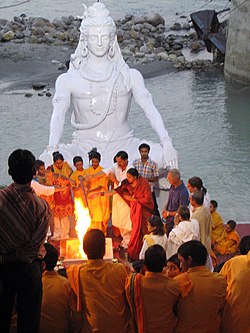 Belongs to it
Shaivism
Major tradition of Hinduism that reveres Shiva as the Supreme Being - Belongs to it
Nyaya
One of six schools of Hindu philosophy - Belongs to it
Smartha Tradition
Tradition in Hinduism linked to Advaita Vedanta - Belongs to it
Śruti
Authoritative scripture of Hinduism, created by Rishis (sages), after inspired creativity -
 Belongs to it
Ramakrishna Math
Religious organizational movement related to Indian saint Ramakrishna Paramahamsa - Belongs to it
Gaudiya Vaishnavism
Hindu religious movement inspired by Chaitanya Mahaprabhu -
 Belongs to it
Bishnoi
Environmental Friendly Hindu Community in India - Belongs to it
Ganapatya
Denomination of Hinduism that worships Ganesha
Show 18 more
- Belongs to it Warkari Krishnaite Vaishnava tradition
- Belongs to it Sri Vidya Hindu tantric religious system
- Belongs to it Swaminarayan Hinduism Hindu sampradaya founded in 1801 by Sahajanand Swami
- Belongs to it Ekasarana Dharma A panentheistic religion propagated by Srimanta Sankardeva in the 15th-16th century in the Indian state of Assam
- Belongs to it Hindu reform movements Several contemporary Hindu groups
-
 Belongs to it Bochasanwasi Shri Akshar Purushottam Swaminarayan Sanstha Hindu denomination within the Swaminarayan Sampradaya
 - Belongs to it Kaumaram Hindu sect worshiping Kartikeya
- Belongs to it Pushtimarg Vaishnav sect of the Hinduism, founded by Vallabhacharya
- Belongs to it Saura Denomination of Hinduism, originating as a Vedic tradition, considering Surya as primary deity
- Belongs to it Mahanubhava Krishnaite Vaishnava denomination
- Belongs to it Sadh Religious community
- Belongs to it Madhva tradition Major Vaishnava Sampradaya
- Belongs to it Vaishnava-Sahajiya Hindu Tantric tradition
- Belongs to it Hindu views on monotheism Different traditions of Hinduism have different theistic views
- Belongs to it Mahanam Sampraday Famous Religious tradition of Bengal
- Belongs to it Shirdi Sai Baba movement Religious movement of devotees of Indian saint Sai Baba of Shirdi
-
.jpg/120px-Nagendra_Math_and_Nagendra_Mission_(Sanatan_Dharma_Pracharini_Sabha).jpg) Belongs to it Sree Sree Nagendra Math and Nagendra Mission Religious organizational movement related to Indian spiritual teacher and hatha yogi Nagendranath Bhaduri
Belongs to it Sree Sree Nagendra Math and Nagendra Mission Religious organizational movement related to Indian spiritual teacher and hatha yogi Nagendranath Bhaduri - Belongs to it Bhakti movement Religious movement during the Medieval period of the Indian Subcontinent
Deities · 26
Gods and divine figures
What this means
Records whose own statements name this tradition — 26 of them. Computed from those statements, not curated here, and ordered by how widely each is linked across Wikipedia — those at home in the tradition’s collection first, and those with a picture first among the leading few — rather than by significance to the tradition.
A god named in a tradition is a figure of its accounts; a picture of one is a work of art, not a likeness.
Imported from Wikidata. Nothing here has been read by an editor.
-
 Krishnamajor deity in Hinduism, worshipped as the eighth avatar of Vishnu and also as the Supreme god in his own right
 -
 KālīHindu goddess associated with death and destruction, in the 21st century adopted as symbol of feminine empowerment
 -
 Varunadeity associated with waters in Hinduism, Buddhism
 -
 Yamagod of death in Hinduism, Buddhism, and various Indo-European mythologies
 -
 Kumarimanifestations of the divine female energy or devi in Hindu religious traditions
 -
 NatarajaHindu God Shiva depicted as Lord of the Dance
 -
 Swaminarayan3 April 1781 CE – 1 June 1830 CE · Founder and deity of the Swaminarayan sect
 -
 Dattatreyac. 4th century BCE – c. 3rd century BCE · Hindu deity and combined avatar of the Trimurti (Brahma, Vishnu, and Shiva)
 -
 MarichiHindu sage
 -
 KātyāyanīHindu goddess of power
 -
.jpg/330px-Kala_Head%2C_Bali_(9694721203).jpg) Kāladeity and concept in Hinduism
Kāladeity and concept in Hinduism -
.jpg/330px-Shree_Santoshi_Mata_(cropped).jpg) Santoṣī MātāHindu goddess
Santoṣī MātāHindu goddess
Show 14 more
-
 Deity Jhulelal Community God of Indian and Pakistani Sindhi people
 -
 Deity Lakshmi Narayan Manifestation of Vishnu in Hinduism
 -
.jpg/120px-Maisigandi_Maisamma_Temple_(Left_Side).jpg) Deity Maisamma Hindu folk goddess
Deity Maisamma Hindu folk goddess -
 Deity Lakulish Hindu deity
 -
 Deity Ratih Hindu lunar goddess
 -
 Deity Suswani Mata Kuldevi of Dugar , Surana & Sankhla Gotras.
 - Deity Dhatri Hindu god, son of Aditi
-
 Deity Baba Balak Nath Hindu saint
 - Deity Chandbibi Hindu goddess
- Deity Thirty-two forms of Ganesha Verious forms of God Ganesha of Hinduism
- Deity Ajgaibibi Hindu goddess
- Deity Birupakshya Form of Lord Shiva
- Deity Mashika Hindu animal
- Deity Pataneswari Regional Hindu goddess
Figures · 55
Begin with a figure
What this means
Records whose own statements name this tradition — 55 of them. Computed from those statements, not curated here, and ordered by how widely each is linked across Wikipedia — those at home in the tradition’s collection first, and those with a picture first among the leading few — rather than by significance to the tradition.
An affiliation recorded on a person is a third party’s record, often of one period of a life — not that person’s belief at every point in it.
Imported from Wikidata. Nothing here has been read by an editor.
-
 Mahatma Gandhi2 October 1869 CE – 30 January 1948 CE · Indian independence activist (1869–1948)
 -
 Swami Vivekananda12 January 1863 CE – 4 July 1902 CE · Indian Hindu monk and philosopher (1863–1902)
 -
 Ramagreatest and seventh incarnation of God, hero of the Ramayana, protector of Dharma
 -
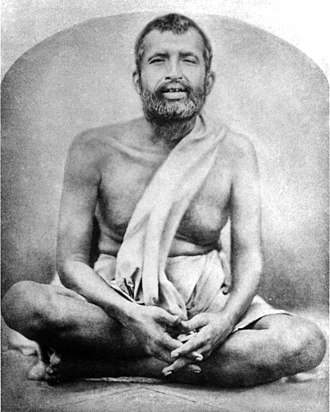 Ramakrishna18 February 1836 CE – 16 August 1886 CE · Indian mystic and religious preacher (1836–1886)
 -
 Aurobindo Ghosh15 August 1872 CE – 5 December 1950 CE · Indian Bengali philosopher, yogi, maharishi, poet and nationalist (1872–1950)
 -
 Ādi Shankarac. 788 CE – c. 820 CE · An Indian philosopher and theologian who consolidated the doctrine of Advaita Vedanta and revitalized Sanskrit scholasticism.
 -
.jpg/330px-Kabir_(postage_stamp).jpg) Kabir1440 CE – 1518 CE · 15th-century Indian mystic poet and saint
Kabir1440 CE – 1518 CE · 15th-century Indian mystic poet and saint -
 Paramahansa Yogananda5 January 1893 CE – 7 March 1952 CE · Yogi, Kriya Yoga guru and founder of Self-Realization Fellowship (1893-1952)
 -
 A. C. Bhaktivedanta Swami Prabhupada1 September 1896 CE – 14 November 1977 CE · Indian spiritual teacher and founder of the ISKCON
 -
 Sathya Sai Baba23 November 1926 CE – 24 April 2011 CE · Indian spiritual guru (1926–2011)
 -
.jpg/330px-Dr._Timothy_Leary_(1970_AP_Photo).jpg) Timothy Leary22 October 1920 CE – 31 May 1996 CE · American psychologist (1920–1996)
Timothy Leary22 October 1920 CE – 31 May 1996 CE · American psychologist (1920–1996) -
 Meera1498 CE – 1546 CE · 16th-century Hindu mystic poet, saint and devotee of the god Krishna
Show 43 more
-
 Figure Chinmoy Kumar Ghose Indian writer and spiritual teacher (1931–2007)
 -
 Figure Draupadī Main female character in the Hindu epic Mahabharata
 -
 Figure Madhvacharya 13th-century Hindu Dvaita philosopher
 - Figure Manu First human being in Hindu tradition
-
 Figure Dayananda Saraswati Indian social reformer (1824-1883)
 -
 Figure Suśruta Ancient Indian physician, father of surgery
 -
 Figure Kapila Vedic sage in Hindu tradition
 -
 Figure Sai Baba of Shirdi Indian saint
 -
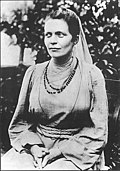 Figure Sister Nivedita Scots-Irish social worker, author, teacher and disciple of Swami Vivekananda
 -
 Figure Mahavatar Babaji Hindu Yogi
 -
 Figure Gurudev Sri Sri Ravi Shankar Indian guru and spiritual leader (born 1956)
 -
 Figure Mata Amritanandamayi Indian spiritual leader and guru
 -
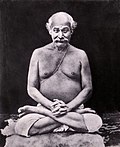 Figure Shyama Charan Lahiri Indian yogi and guru (1828–1895)
 -
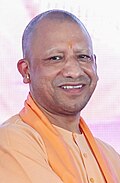 Figure Yogi Adityanath 21st Chief Minister of Uttar Pradesh
 -
.png/120px-Prithvi_Narayan_Shah_1960_(restoration).png) Figure Prithvi Narayan Shah King of Nepal
Figure Prithvi Narayan Shah King of Nepal -
 Figure Vasiṣṭha Ancient Indian sage
 - Figure Droṇa Guru of Kauravas and Pāṇḍavas
-
.jpg/120px-Divine-mother_(mirra_alfassa).jpg) Figure Mirra Alfassa Spiritual Leader, occultist and collaborator of Sri Aurobindo (1878–1973)
Figure Mirra Alfassa Spiritual Leader, occultist and collaborator of Sri Aurobindo (1878–1973) -
 Figure Viśvāmitra Ancient Indian sage
 -
 Figure Alice Coltrane American jazz musician
 -
 Figure Rambhadracharya Hindu religious leader
 -
 Figure Sankardev Founder of Baishnav dharma, literary poet
 -
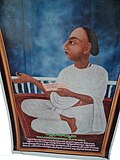 Figure Vallabha Hindu philosopher and founder of Pushtimarg, a Vaishnav Hindu sect
 -
 Figure Ram Dass American spiritual teacher, author and psychologist
 -
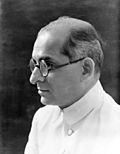 Figure Kanaiyalal Maneklal Munshi Indian independence movement activist, politician, writer and educationist (1887-1971)
 -
 Figure Andal Tamil poet-saint
 -
 Figure Chinmayananda Saraswati Indian Hindu spiritual teacher (1916-1993)
 -
 Figure Matsyendranath The guru of Gorakshanath, one of the eighty-four Mahasiddhas.
 -
.JPG/120px-Nimbarkacharya's_holy_icon_at_the_Ukhra_Nimbarka_Peeth_Mahanta_Asthal(West_Bengal).JPG) Figure Nimbarkacharya Indian guru
Figure Nimbarkacharya Indian guru -
.jpg/120px-Pulikesin_II%2C_the_Chalukhaya%2C_receives_envoys_from_Persia_(1).jpg) Figure Pulakeshi II Indian king from Chalukya dynasty of Vatapi
Figure Pulakeshi II Indian king from Chalukya dynasty of Vatapi -
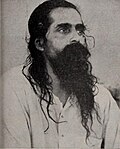 Figure M. S. Golwalkar Second Sarsanghchalak of the Rashtriya Swayamsevak Sangh
 -
.jpg/120px-Borobudur_-_Lalitavistara_-_075_W%2C_The_Bodhisattva_meets_with_Rudraka_Ramaputra_(11249433576).jpg) Figure Alara Kalama Teacher of yogic meditation and second teacher of Gautama Buddha
Figure Alara Kalama Teacher of yogic meditation and second teacher of Gautama Buddha -
 Figure Satyananda Saraswati Yogi (1923-2009)
 -
.png/120px-Bhupendranath_Datta_(brother_of_Swami_Vivekananda).png) Figure Bhupendranath Dutta Indian revolutionary and noted sociologist (1880–1961)
Figure Bhupendranath Dutta Indian revolutionary and noted sociologist (1880–1961) -
 Figure H. W. L. Poonja Indian spiritual teacher (1910-1997)
 -
.jpg/120px-Statue_of_Sang_Nila_Utama_at_the_Raffles_Landing_Site_(three-quarter_front_view).jpg) Figure Sang Nila Utama Raja of Singapura
Figure Sang Nila Utama Raja of Singapura - Figure Pandurang Shastri Athavale Indian philosopher, spiritual leader and social reformer (1920–2003)
-
 Figure Ravi Coltrane American jazz saxophonist (born 1965)
 - Figure Madhusudan Sarasvati Indian philosopher in the Advaita Vedānta tradition
-
 Figure Sri Swami Vishwananda Hindu Guru
 -
 Figure Vishnuvardhana Hoysala King
 - Figure Aja 38th king in the Solar Dynasty
-
 Figure Nolini Kanta Gupta Disciple of Sri Aurobindo (1889–1983)
Texts · 8
Texts and teachings
What this means
Records whose own statements name this tradition — 8 of them. Computed from those statements, not curated here, and ordered by how widely each is linked across Wikipedia — those at home in the tradition’s collection first, and those with a picture first among the leading few — rather than by significance to the tradition.
Where a date is shown it is when the text was written — the source’s clock, never the time of what it tells.
Imported from Wikidata. Nothing here has been read by an editor.
-
 Text
TextVedas
Ancient sacred scriptures revealed in Sanskrit to Richi sages and on which Brahmanism, Hinduism, Buddhism and Jainism were based -
 Text
TextMaitrayaniya Upanishad
One of the ancient Sanskrit scriptures of Hinduism - Text
Devi Upanishad
Goddess-related Hindu text - Text
Savitri Upanishad
Minor Upanishad of Hinduism - Text
Apastamba Dharmasutra
One of the oldest Dharma texts of Hinduism - Text
Sita Upanishad
Goddess-related Hindu text
Places · 52
Places and sites
What this means
Records whose own statements name this tradition — 52 of them. Computed from those statements, not curated here, and ordered by how widely each is linked across Wikipedia — those at home in the tradition’s collection first, and those with a picture first among the leading few — rather than by significance to the tradition.
A place that names a tradition may be a temple or a whole province. Either way it is not a count of believers, and not evidence of practice in every period.
Imported from Wikidata. Nothing here has been read by an editor.
-

Angkor Wat
Hindu-Buddhist temple complex in Cambodia -

Mount Kailash
Mountain in Tibet, China -

Prambanan Temple
Hindu temple in Yogyakarta and Central Java, Indonesia -

Pashupatinath Temple
Hindu temple in Kathmandu -

Ram Mandir
Temple of the Hindu deity Rama in Ayodhya, India -

Akshardham
Spiritual and cultural Mandir dedicated to devotion, learning and harmony -

Banteay Srei
Temple -

Baphuon
Temple
Show 44 more
-
.jpg/120px-Janki_Mandir_of_Janakpur_Dham(Nepal).jpg) Place Janaki Mandir Hindu temple dedicated to Goddess Sita, located in Janakpur, Nepal
Place Janaki Mandir Hindu temple dedicated to Goddess Sita, located in Janakpur, Nepal -
 Place Preah Ko Archaeological site in Siem Reap, Cambodia
 -
 Place Pura Luhur Balinese temple in Indonesia
 -
 Place Bakong Temple mountain of sandstone near Siem Reap, Cambodia
 -
 Place Banteay Samré Temple
 -
_(8423353617).jpg/120px-Le_temple_de_Karni_Mata_(Deshnoke)_(8423353617).jpg) Place Karni Mata Temple Temple in India
Place Karni Mata Temple Temple in India -
 Place Phanom Rung historical park Hindu temple dedicated to Shiva in Buriram Province, Thailand
 -
.jpg/120px-Martand_Sun_Temple_Central_shrine_(6133772365).jpg) Place Martand Sun Temple 8th century Hindu temple in Ranbir Pora (Kehribal), Jammu and Kashmir
Place Martand Sun Temple 8th century Hindu temple in Ranbir Pora (Kehribal), Jammu and Kashmir -
 Place Om Banna Bullet temple in Punjab, India
 -
 Place Rajarani Temple Temple in Bhubaneswar, India
 -
 Place Mallikarjuna Temple Hindu temple
 -
 Place Vadakkunnathan Temple, Thrissur 11th century Hindu temples complex in Thrissur, Kerala
 -
 Place Gedong Songo Hindu temple in Indonesia
 -
_-_img_20.jpg/120px-Little_India_SG_-_Sri_Nivasa_Perumal_Temple_Singapore_%E0%AE%B8%E0%AF%8D%E0%AE%B0%E0%AF%80_%E0%AE%B8%E0%AF%8D%E0%AE%B0%E0%AF%80%E0%AE%A8%E0%AE%BF%E0%AE%B5%E0%AE%BE%E0%AE%9A%E0%AE%AA%E0%AF%8D%E0%AE%AA%E0%AF%86%E0%AE%B0%E0%AF%81%E0%AE%AE%E0%AE%BE%E0%AE%B3%E0%AF%8D_%E0%AE%95%E0%AF%8B%E0%AE%B5%E0%AE%BF%E0%AE%B2_(2025)_-_img_20.jpg) Place Sri Srinivasa Perumal Temple, Singapore 19th century Hindu temple in Singapore
Place Sri Srinivasa Perumal Temple, Singapore 19th century Hindu temple in Singapore -
 Place Akshardham (Gandhinagar) Spiritual and cultural Mandir dedicated to devotion, learning and harmony
 -
 Place Birla Mandir, Hyderabad Hindu temple in Hyderabad, India
 -
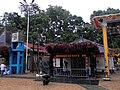 Place Kataragama temple Temple complex in Kataragama, Sri Lanka
 -
 Place Baitala Deula Temple in Odisha, India
 -
 Place Sri Mahamariamman Temple Hindu temple in Kuala Lumpur
 -
 Place Sri Veeramakaliamman Temple Hindu temple in Singapore
 - Place Akhadachandi Temple Temple in Odisha
-
 Place Masānī Ammān This is a famous Hindu temple located in the Coimbatore district of Kongu Nadu, Tamil Nadu.
 - Place Bharati Matha Temple Hindu Matha and Shiva Temple
-
 Place Radha Raman Temple Radha Krishna temple in Vrindavan
 - Place Chakreshvari Siva Temple Hindu temple located in Bhubaneswar dedicated to Shiva
- Place Chandrasekhara Mahadeva Temple Hindu Shiva temple in Odisha
-
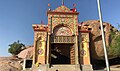 Place Churrio Jabal Durga Mata Temple Hindu temple in Sindh, Pakistan
 -
 Place Ganesha Ratha Temple in India
 -
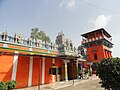 Place Karmanghat Hanuman Temple Hindu temple in Hyderabad, Telangana
 -
 Place Brahma Temple, Bindusagar Hindu temple in Bhubaneswar
 - Place Byamokesvara Temple Hindu Shiva temple in Bhubaneswar
-
 Place Champakesvara Siva Temple Hindu Shiva temple located in Bhubaneswar
 - Place Devasabha Temple Hindu temple in Bhubaneswar
-
.jpg/120px-Jagannath_Temple_Thalassery_JTG_(3).jpg) Place Jagannath Temple, Thalassery Town in Kerala, India
Place Jagannath Temple, Thalassery Town in Kerala, India -
 Place Suryavinayak Temple Hindu Temple in Nepal
 - Place Bhringesvara Siva Temple Hindu temple in Odisha
-
 Place Chintamanisvara Siva Temple Hindu Shiva temple located in Bhubaneswar
 - Place Gangesvara Siva Temple Hindu Shiva temple in Bhubaneswar
-
 Place Peruvanam Mahadeva Temple 10th to 11th century temples in Cherpu, Kerala
 -
 Place Sri Thendayuthapani Temple Hindu temple in Singapore
 -
 Place Sthalasayana Perumal Temple Hindu temple in India
 -
 Place The RVM Foundation Shiv Temple Temple in India
 -
 Place Thirumalapadi Siva Temple Shiva Temple in Ariyalur, Tamil Nadu
 -
 Place Vairankode Bhagavathy Temple Sree Vairankode Bhagavathi Temple (alternatively Vairankode Bhagavathy Temple) is a Hindu temple at Vairankode, Malappuram District, Kerala state, India.
Festivals and practices · 20
Festivals, holy days and practices
What this means
Records whose own statements name this tradition — 20 of them. Computed from those statements, not curated here, and ordered by how widely each is linked across Wikipedia — those at home in the tradition’s collection first, and those with a picture first among the leading few — rather than by significance to the tradition.
A holy day’s day is the one its record states it is observed on. A festival recurs, so it has no date on the historical clock, and one named here is not evidence of when or where it was kept.
Imported from Wikidata. Nothing here has been read by an editor.
Holy days and festivals · 5, each with the day its record gives
-
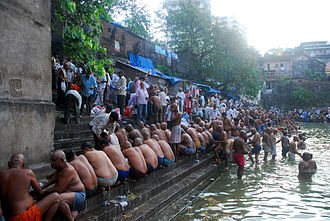 Observed on Bhadra Purnima and 15 other days
Pitru Paksha
Ancestral Worship from Hindu religion -
.jpg/330px-Tihar_Celebration_in_Nepal_(Brother_and_Sister).jpg) Observed on Kartik Shukla Dwitiya
Observed on Kartik Shukla DwitiyaBhai Dooj
Festival celebrated by Hindus -
 Observed on January 13
Bhogi
First day of the South Indian festival Pongal - Observed on Phalguna Purnima
Dol Purnima
Indian Holi festival
Rites and practices · 15, with no day on record
-

puja
Prayer ritual performed by Hindus of devotional worship -

Makar Sankranti
Hindu festival that reveres Surya (sun god) -

Upanayana
Hindu rite of passage when a student enters a school, particularly Vedic school -
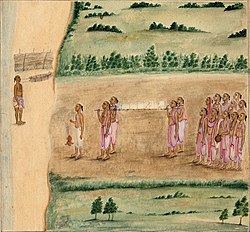
Antyesti
Funeral rites for the dead in Hinduism -

Kanwar Yatra
Tradition or Holy Custom of Hindu religion -

Hindu wedding
Marriage rituals in the Hindu culture
Show 10 more
-
 Practice Simhasana Kneeling posture in hatha yoga
 -
 Practice Thiruvathira Women's festival in South Indian states Kerala, Tamilnadu
 -
 Observed on Makar Sankranti Magh Bihu Traditional Harvest Festival of Assamese People
 -
 Practice Aadi Perukku South Indian Hindu festival
 -
 Practice Staff Pose Sitting asana
 -
 Practice Ahoi Ashtami Indian Festival
 - Practice Kodungallur bharani Hindu Festival
- Practice Makaravilakku Holy festival
- Practice Brahmotsava Hindu Utsava by Brahma
- Practice Nishekam Hindu ritual associated with first sexual intercourse
The South Asian traditions collection holds 46 festivals and practices in all; 26 of them do not name Hinduism on their own records. See them in the collection
Institutions · 12
Pantheons and houses
What this means
Records whose own statements name this tradition — 12 of them. Computed from those statements, not curated here, and ordered by how widely each is linked across Wikipedia — those at home in the tradition’s collection first, and those with a picture first among the leading few — rather than by significance to the tradition.
A ruling house that names a tradition is a family’s recorded affiliation, not its subjects’ practice; an office is a line of holders, not a family.
Imported from Wikidata. Nothing here has been read by an editor.
-
.jpeg/250px-UgrataraTemple2_(cropped).jpeg) Pantheon
PantheonTrimurti
Trinity of supreme divinity in Hinduism, in which the cosmic functions of creation, preservation, and destruction are personified as a triad of deities -
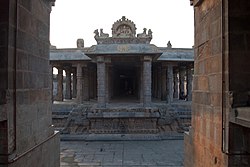 House
HouseChola dynasty
Dynasty of southern India -
 House
HouseChalukya dynasty
Classical Indian dynasty (543–753) -
 Pantheon
Tridevi
Hindu combining of three goddesses into one -
 House
HouseChandelas of Jejakabhukti
Mediaeval Indian dynasty - House
Dar Raj
Royal family and Jagirdari estate
Show 6 more
- House Pallava dynasty Indian dynasty between the 3rd and 9th centuries CE
- House Pandya dynasty Ancient Tamil dynasty of south India
- House Rashtrakuta dynasty Early medieval period Indian dynasty (r. mid-6th to 10th century)
- House Chera dynasty One of the three major kingdoms of ancient south India. Ruled over parts of present-day states of Kerala and Tamil Nadu in south India
- House Kakatiya dynasty 12th–14th century Indian dynasty
-
 House Taungoo dynasty Ruling dynasty of Burma (Myanmar) from the mid-16th century to 1752
Connections
How Hinduism connects
Grouped by the kind of relationship, because a successor is not a son and a shared symbol is not an influence.
Identification 1
What this means
One figure treated as another in some context. Not literal identity in all contexts, and usually a claim by a third party.
Does not imply literal identity in all contexts · that either tradition made the identification
Imported from Wikidata unless a tile says otherwise. Nothing here has been read by an editor.
Documented influence 5
What this means
A transmission argued from evidence. Not shared symbols, and not a short path through a database.
Does not imply shared symbols as evidence · a short path through a database
Imported from Wikidata unless a tile says otherwise. Nothing here has been read by an editor.
- was influenced by Dravidian folk religion form of Hinduism
- was influenced by Historical Vedic religion 1500–500 BC Indo-Aryan religion of northwest India
- influenced Radha Soami religion related to Sikhism and Hinduism (1861-)
-
 influenced Rodnovery modern religious movement based on Slavic native beliefs
 -
 influenced Shinto a polytheistic and animistic religion originating in Japan
Place 1
What this means
Where something is, or is documented. A location is not by itself evidence of activity.
Does not imply that anything is documented to have happened there
Imported from Wikidata unless a tile says otherwise. Nothing here has been read by an editor.
Sources
Sources and evidence
Where every statement on this page comes from, and how each one stands.
6 statements on this record
- 2 Has references The statement cites something outside Wikimedia. That citation has not been checked here.
- 4 Imported Taken from Wikidata as it stands. Nobody here has read it.
Only this record’s own statements. What other records say about it is counted on theirs.
Three layers, three licences
- Text
- Wikipedia · CC BY-SA 4.0, quoted, not merged
- Pictures
- Wikimedia Commons · each file’s own terms
Review
Not yet read by an editor here. Every relationship on this page is an import.
Disagreements are kept, not resolved, and a count of sources is not a confidence score.
.jpeg/960px-UgrataraTemple2_(cropped).jpeg)
.jpeg)
Keep exploring
More from South Asian traditions
Hinduism and its schools, Jainism, Sikhism, and the Vedic material behind them.