

Tradition Institution East Asian traditions
Daejonggyo
大倧教 zh 大ソウ教 ja 대종교 ko
Religious movements within Korean shamanism
- Dated from 1909 CE
- Also called Taejonggyo, Daejongism, Dangunism
A path that branches,
meets and parts.
Schools and lineages
Branches and affiliations
Many paths. Shared histories.
What this means
Association and branching, in both directions. Traditions overlap, split and re-merge; this is not a single-origin family tree, and being listed under another tradition is not the same as being recognised by it.
Does not imply a clean single-origin family tree · that the parent recognises the branch
Imported from Wikidata. Nothing here has been read by an editor.
Recorded as a branch of

Overview
From Wikipedia, quoted unmodified under CC BY-SA 4.0; the article’s history is its list of authors.
Attributed founding
Whom the records name as founder
What this means
An attribution, and a contested one in most traditions: it does not mean the tradition began fully formed, nor that later adherents accept the attribution.
Does not imply that the tradition began fully formed · that later adherents accept the attribution
Imported from Wikidata. Nothing here has been read by an editor.
Connections
How Daejonggyo connects
Grouped by the kind of relationship, because a successor is not a son and a shared symbol is not an influence.
Affiliation 1
What this means
Association with a tradition or school. Traditions branch, overlap and re-merge; this is not a clean single-origin tree.
Does not imply a fixed roster · that every account of the tradition knows this figure
Imported from Wikidata unless a tile says otherwise. Nothing here has been read by an editor.
Sources
Sources and evidence
Where every statement on this page comes from, and how each one stands.
3 statements on this record
- 3 Imported Taken from Wikidata as it stands. Nobody here has read it.
Only this record’s own statements. What other records say about it is counted on theirs.
Three layers, three licences
- Text
- Wikipedia · CC BY-SA 4.0, quoted, not merged
- Pictures
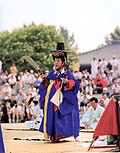
- Wikimedia Commons · each file’s own terms lead image of the English Wikipedia article
Review
Not yet read by an editor here. Every relationship on this page is an import.
Disagreements are kept, not resolved, and a count of sources is not a confidence score.


Keep exploring
More from East Asian traditions
Daoism, Confucian practice, Chinese folk religion, Shinto and Korean tradition.