

Tradition Institution African traditions
Candomblé
Kandomblé yo
Afro-Brazilian religion
- Also called Candomble, Batuque, Candonble
A path that branches,
meets and parts.
Schools and lineages
Branches · 1
Many paths. Shared histories.
What this means
Association and branching, in both directions. Traditions overlap, split and re-merge; this is not a single-origin family tree, and being listed under another tradition is not the same as being recognised by it.
Does not imply a clean single-origin family tree · that the parent recognises the branch
Imported from Wikidata. Nothing here has been read by an editor.


Traditions whose own records say they belong to it
3 traditions name Candomblé as their own — an affiliation, so kept apart from the tree.
Deities · 30
Gods and divine figures
What this means
Records whose own statements name this tradition — 30 of them. Computed from those statements, not curated here, and ordered by how widely each is linked across Wikipedia — those at home in the tradition’s collection first, and those with a picture first among the leading few — rather than by significance to the tradition.
A god named in a tradition is a figure of its accounts; a picture of one is a work of art, not a likeness.
Imported from Wikidata. Nothing here has been read by an editor.
-
 Oshunthe youngest of the orisha, this goddess is associated with sexuality, fertility, and femininity
 -
 Papa LegbaLoa
 -
 Baron SamediLoa of Haitian Vodou
 -
 EshuYoruba deity
 -
 Nana Bulukufemale supreme being in some West African Traditional Religions such as Vodun
 -
 Olokunorisha in the Yoruba religion
 -
 Orunmiladeity
 -
 Babalú-Ayéspirit strongly associated with infectious disease and healing in the Yoruba religion
 -
 DamballaOne of the most important of all the loa
 -
 Maman BrigitteVodou goddess
 -
 Oyaorisha
 -
 Xeviosogod of thunder in the Dahomey mythology
Not its own picture Xevioso — lead image of the French Wikipedia article
Show 18 more
- Deity Mawu Creator goddess in Dahomey mythology
- Deity Ala Ordinani deity
- Deity Agwé Water deity
-
 Deity Ibeji Twin Orishas in the Yoruba religion
 -
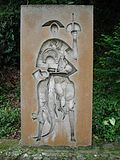 Deity Oxossi Spirit in the Yoruba religion of West Africa
 - Deity Egbado Ethnic group
- Deity Olodumare Supreme deity in the traditional Yoruba religions
-
_(1).jpg/120px-Cole%C3%A7%C3%A3o_Nkisis-Quadro_de_Kaiala%2C_Centro_Esp%C3%ADrita_Nossa_Senhora_da_Guia_(52)_(1).jpg) Deity Kianda In Angolan mythology, Kianda is the goddess of the sea and protector of fishermen.
Deity Kianda In Angolan mythology, Kianda is the goddess of the sea and protector of fishermen. -
 Deity Osanyin Yoruba deity (Orisha)
 - Deity Shakpana Candomblé deity
- Deity Ajok Supreme deity in Lotuko mythology
- Deity Oba Water deity
- Deity Ayao Yoruba goddess of the air and wind
-
 Deity Oko Yoruba orisha
 - Deity Oxalá
- Deity Erinle Deity in the Yoruba religion
- Deity Iansan
- Deity Ogoun Loa in vodun religion
Connections
How Candomblé connects
Grouped by the kind of relationship, because a successor is not a son and a shared symbol is not an influence.
Affiliation 2
What this means
Association with a tradition or school. Traditions branch, overlap and re-merge; this is not a clean single-origin tree.
Does not imply a fixed roster · that every account of the tradition knows this figure · personal belief at every point in a life · the practice of a population
Imported from Wikidata unless a tile says otherwise. Nothing here has been read by an editor.
Sources
Sources and evidence
Where every statement on this page comes from, and how each one stands.
3 statements on this record
- 3 Imported Taken from Wikidata as it stands. Nobody here has read it.
Only this record’s own statements. What other records say about it is counted on theirs.
Three layers, three licences
- Text
- Wikipedia · CC BY-SA 4.0, quoted, not merged
- Pictures
- Wikimedia Commons · each file’s own terms
Review
Not yet read by an editor here. Every relationship on this page is an import.
Disagreements are kept, not resolved, and a count of sources is not a confidence score.


Keep exploring
More from African traditions
Yorùbá, Akan, Igbo, Dogon, Zulu and diaspora traditions, and the Ethiopian and Coptic churches.