

Text Tradition Christianity
Bible
Biblia la ܟܬܒܐ ܩܕܝܫܐ arc
Collection of sacred books in Judaism and Christianity
- Also called Holy Bible, Christian scriptures, The Bible
A path that branches,
meets and parts.
Schools and lineages
Branches and affiliations
Many paths. Shared histories.
What this means
Association and branching, in both directions. Traditions overlap, split and re-merge; this is not a single-origin family tree, and being listed under another tradition is not the same as being recognised by it.
Does not imply a clean single-origin family tree · that the parent recognises the branch
Imported from Wikidata. Nothing here has been read by an editor.
Recorded as a branch of

Texts · 7
Texts and teachings
What this means
Records whose own statements name this tradition — 7 of them. Computed from those statements, not curated here, and ordered by how widely each is linked across Wikipedia — those at home in the tradition’s collection first, and those with a picture first among the leading few — rather than by significance to the tradition.
Where a date is shown it is when the text was written — the source’s clock, never the time of what it tells.
Imported from Wikidata. Nothing here has been read by an editor.
-
_recto_Matt_26%2C_19-37.jpg/250px-Ann_Arbor%2C_University_of_Michigan_Ms_P.Mich.inv._1570_(Papyrus_37)_recto_Matt_26%2C_19-37.jpg) Text
TextNew Testament
Second division of the Christian biblical canon -
 Text
TextOld Testament
First division of the Christian biblical canon -
 Text
TextGospel
Book which describes the life and teachings of Jesus -
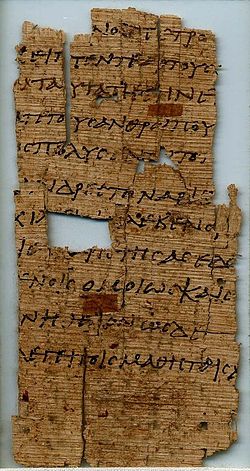 Text
TextGospel of John
One of the four canonical gospels in the New Testament -
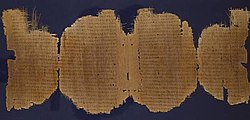 Text
TextGospel of Luke
Book of the New Testament -
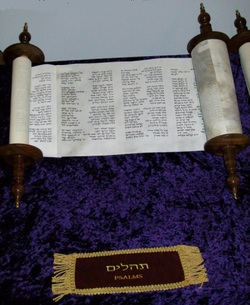 Text
TextPsalms
Book of the Bible, has five books
Show 1 more

Connections
How Bible connects
Grouped by the kind of relationship, because a successor is not a son and a shared symbol is not an influence.
Affiliation 1
What this means
Association with a tradition or school. Traditions branch, overlap and re-merge; this is not a clean single-origin tree.
Does not imply a closed canon · the same status in every branch
Imported from Wikidata unless a tile says otherwise. Nothing here has been read by an editor.

Text 14
What this means
A work, its editions and its witnesses are distinct; their dates are not interchangeable.
Does not imply that the work is the only account · that the work is contemporary with what it describes
Imported from Wikidata unless a tile says otherwise. Nothing here has been read by an editor.
-
 features Adam and Eve first man and woman in Abrahamic creation myth
 -
 features Ahaz king of Judah
 -
 features Amon King of Judah noted in 2 Kings 21:18
 - features Bible prophecy prophecy reported in the Jewish or Christian Bible
-
 features Cyrus the Great founder of the Achaemenid Empire (559–529 BC)
 - features Elyon name of God in Judaism
-
 features Job biblical figure
 -
 features John the Baptist 1st-century Jewish itinerant preacher (Bible)
 -
 features Kartlos Georgian mythological character
Show all 14
-
 features Michael archangel in Jewish, Christian, and Islamic teachings
 -
 features Satan entity in the Abrahamic religions that tells others to do sinful actions
 -
%2C_Artemisia_Gentileschi.jpg/120px-Susanna_and_the_Elders_(1610)%2C_Artemisia_Gentileschi.jpg) features Susanna and the Elders episode in the Additions to Daniel
features Susanna and the Elders episode in the Additions to Daniel - features Tribe of Benjamin one of the twelve Tribes of Israel
- features Tribe of Judah one of the twelve Tribes of Israel
Sources
Sources and evidence
Where every statement on this page comes from, and how each one stands.
3 statements on this record
- 3 Imported Taken from Wikidata as it stands. Nobody here has read it.
Only this record’s own statements. What other records say about it is counted on theirs.
Three layers, three licences
- Text
- Wikipedia · CC BY-SA 4.0, quoted, not merged
- Pictures
- Wikimedia Commons · each file’s own terms
Review
Not yet read by an editor here. Every relationship on this page is an import.
Disagreements are kept, not resolved, and a count of sources is not a confidence score.


Keep exploring
More from Christianity
Its branches, councils, saints, offices and buildings — and where they stopped recognising each other.