
Tradition Institution Mesopotamia and the Levant
Ancient Mesopotamian religion
Religion
- Also called Mesopotamian religion
A path that branches,
meets and parts.
Schools and lineages
Branches · 2
Many paths. Shared histories.
2 branches recorded under Ancient Mesopotamian religion, one step down, as the records give them.
What this means
Association and branching, in both directions. Traditions overlap, split and re-merge; this is not a single-origin family tree, and being listed under another tradition is not the same as being recognised by it.
Does not imply a clean single-origin family tree · that the parent recognises the branch
Imported from Wikidata. Nothing here has been read by an editor.
Recorded as a branch of
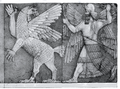
Overview
From Wikipedia, quoted unmodified under CC BY-SA 4.0; the article’s history is its list of authors.
Deities · 9
Gods and divine figures
What this means
Records whose own statements name this tradition — 9 of them. Computed from those statements, not curated here, and ordered by how widely each is linked across Wikipedia — those at home in the tradition’s collection first, and those with a picture first among the leading few — rather than by significance to the tradition.
A god named in a tradition is a figure of its accounts; a picture of one is a work of art, not a likeness.
Imported from Wikidata. Nothing here has been read by an editor.
-
 AnuSumerian deity, Sky Father, King of the Gods
 -
 Enkigod in Sumerian mythology; god of ritual wisdom
 -
 Nabuancient Mesopotamian patron god of literacy, the rational arts, scribes and wisdom
 -
 Errababylonian deity
 - GibilMesopotamian god of fire
- Shalaancient Sumerian goddess
- Shulmanumesopotamian deity
- Ukullamesopotamian goddess, wife of Tishpak
- Meslamta-ea
Figures · 3
Begin with a figure
What this means
Records whose own statements name this tradition — 3 of them. Computed from those statements, not curated here, and ordered by how widely each is linked across Wikipedia — those at home in the tradition’s collection first, and those with a picture first among the leading few — rather than by significance to the tradition.
An affiliation recorded on a person is a third party’s record, often of one period of a life — not that person’s belief at every point in it.
Imported from Wikidata. Nothing here has been read by an editor.


Connections
How Ancient Mesopotamian religion connects
Grouped by the kind of relationship, because a successor is not a son and a shared symbol is not an influence.
Affiliation 2
What this means
Association with a tradition or school. Traditions branch, overlap and re-merge; this is not a clean single-origin tree.
Does not imply a fixed roster · that every account of the tradition knows this figure
Imported from Wikidata unless a tile says otherwise. Nothing here has been read by an editor.
Sources
Sources and evidence
Where every statement on this page comes from, and how each one stands.
3 statements on this record
- 3 Imported Taken from Wikidata as it stands. Nobody here has read it.
Only this record’s own statements. What other records say about it is counted on theirs.
Three layers, three licences
- Text
- Wikipedia · CC BY-SA 4.0, quoted, not merged
Review
Not yet read by an editor here. Every relationship on this page is an import.
Disagreements are kept, not resolved, and a count of sources is not a confidence score.


Keep exploring
More from Mesopotamia and the Levant
Sumerian, Akkadian, Babylonian, Assyrian, Hittite-adjacent and Canaanite gods, and the texts that carry them.