


Text
The Divine Comedy
Italian narrative poem by Dante Alighieri
- Written 1320 CE
- Also called Divina Commedia, Divina Comedia, Commedia
Overview
From Wikipedia, quoted unmodified under CC BY-SA 4.0; the article’s history is its list of authors.
Follow the text
Stories and families in it
Each on its own page, where this text is one account among others.
Figures
Who appears in it
Gods and people whose own records say they appear in this work.
What this means
Read from the other end: computed from those records, not from this one. A figure appearing here does not make this the only account of them, and a relationship attested in this work holds in this work.
-
 Plato4th-century BCE Greek philosopher
 -
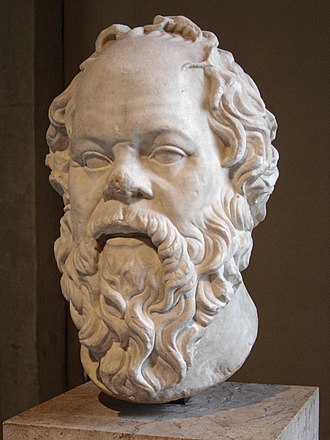 Socrates5th-century BCE Greek philosopher
 -
.jpg/330px-Homer_bust%2C_Farnese_collection_(Naples).jpg) Homerreputed author of the Iliad and the Odyssey
Homerreputed author of the Iliad and the Odyssey -
.jpg/330px-Parco_della_Grotta_di_Posillipo5_(crop).jpg) VirgilRoman poet (1st century BC)
VirgilRoman poet (1st century BC) -
_-_Palazzo_Nuovo_-_Musei_Capitolini_-_Rome_2016.jpg/330px-Bust_of_Cicero_(1st-cent._BC)_-_Palazzo_Nuovo_-_Musei_Capitolini_-_Rome_2016.jpg) CiceroRoman statesman, lawyer, orator, and philosopher (106–43 BC)
CiceroRoman statesman, lawyer, orator, and philosopher (106–43 BC) -
 OvidRoman poet (43 BC – 17/18 AD)
 -
 AvicennaPersian polymath, physician and philosopher (c. 980–1037)
 -
 HippocratesGreek physician (c. 460 – c. 370 BC)
 -
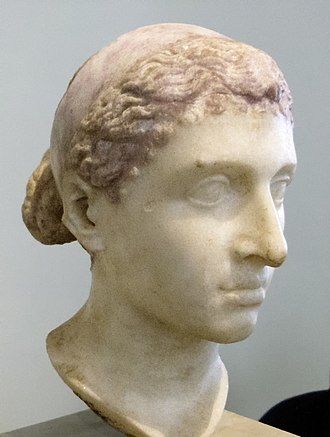 CleopatraQueen of Ptolemaic Kingdom of Egypt from 51 to 30 BCE
 -
 HoraceRoman lyric poet (65 BC – 8 BC)
 -
 DemocritusGreek philosopher (c. 460–c. 370 BC)
 -
 HeraclitusGreek philosopher (late 6th/early 5th-century BC)
Show all 35
-
 Solomonking of Israel and son of David
 -
 Ptolemy2nd-century Roman mathematician, astronomer, geographer
 -
 AverroesArab Andalusian Muslim writer and philosopher (1126–1198)
 -
 AchillesGreek mythological hero of the Trojan War
 -
 Empedocles5th century BC Greek philosopher
 -
%2C_RP-P-1907-4495.jpg/330px-Portretbuste_van_Zeno_van_Elea_Paradigmata_graphices_variorum_artificum_(serietitel)%2C_RP-P-1907-4495.jpg) Zeno of EleaGreek philosopher (c. 495 – c. 430 BC)
Zeno of EleaGreek philosopher (c. 495 – c. 430 BC) -
 Helen of Troydaughter of Zeus in Greek mythology
 -
 Frederick II, Holy Roman EmperorKing of Sicily, Holy Roman Emperor (1194–1250, 1220–1250)
 -
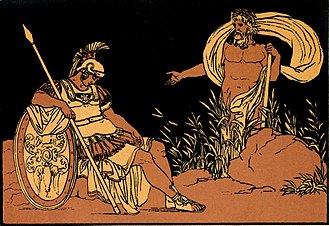 AeneasTrojan hero, son of Anchises and Aphrodite
 -
 Boniface VIIIpope of the Catholic Church from 1294 to 1303
 -
 MinosGreek mythology character, son of Zeus and Europa, king of Crete
 -
 Orpheuslegendary musician, poet, and prophet in ancient Greek religion and myth
 -
 Hectorprince of Troy in Greek mythology
 -
 Parismythological son of Priam, king of Troy
 -
 Didolegendary founder and first queen of Carthage
 -
 PenthesileaAmazonian queen in Greek mythology, daughter of Ares and Otrera
 -
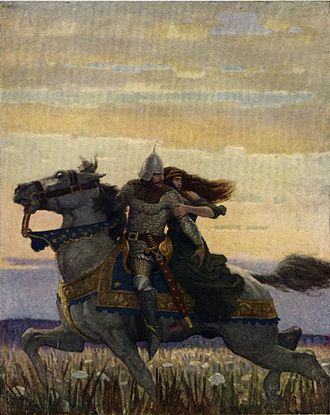 LancelotArthurian character
 -
_-_Google_Art_Project.jpg/330px-Orestes_Pursued_by_the_Furies_by_William-Adolphe_Bouguereau_(1862)_-_Google_Art_Project.jpg) Tisiphoneancient Greek mythological punisher of murder
Tisiphoneancient Greek mythological punisher of murder - Alectoone of the Erinyes or Furies, ancient Greek mythological punisher of moral crimes
-
 Laviniawife of Aeneas in Roman mythology
 -
.jpg/330px-Rogelio_de_Egusquiza_-_Trist%C3%A1n_e_Iseo_(La_vida).jpg) TristanCornish knight of the Round Table Arthurian legend
TristanCornish knight of the Round Table Arthurian legend -
 Megaeraone of the Erinyes or Furies
 -
 Latinusking in Greek and Roman mythology
Parts
Works within it
Works recorded as part of this one. Each date is that work’s own, on the source clock.

Connections
How The Divine Comedy connects
Grouped by the kind of relationship, because a successor is not a son and a shared symbol is not an influence.
Documented influence 1
What this means
A transmission argued from evidence. Not shared symbols, and not a short path through a database.
Does not imply shared symbols as evidence · a short path through a database
Imported from Wikidata unless a tile says otherwise. Nothing here has been read by an editor.
.jpg/120px-Daniil_Andreev_Roza_mira_(1991).jpg)
Sources
Sources and evidence
Where every statement on this page comes from, and how each one stands.
0 statements on this record
This record makes no statements of its own yet, so there is nothing here to weigh.
Only this record’s own statements. What other records say about it is counted on theirs.
Three layers, three licences
- Text
- Wikipedia · CC BY-SA 4.0, quoted, not merged
- Pictures
- Wikimedia Commons · each file’s own terms
Review
Not yet read by an editor here. Every relationship on this page is an import.
Disagreements are kept, not resolved, and a count of sources is not a confidence score.
.jpg/960px-The_Court_of_Gayumars_(Cropped).jpg)

.jpg)