


Text Greek and Roman
Iliad
Ἰλιάς grc Ilias la
Epic poem attributed to Homer
- Written 8th century BCE
- Also called the Iliad, Hom. Il.
A text has a date.
What it tells
may not.
Two clocks, kept apart
Overview
From Wikipedia, quoted unmodified under CC BY-SA 4.0; the article’s history is its list of authors.
Follow the text
Stories and families in it
Each on its own page, where this text is one account among others.

Figures
Who appears in it
Gods and people whose own records say they appear in this work.
What this means
Read from the other end: computed from those records, not from this one. A figure appearing here does not make this the only account of them, and a relationship attested in this work holds in this work.
-
 ZeusGreek god of the sky and king of the gods
 -
 Athenagoddess of wisdom and war in ancient Greek religion and mythology
 -
 Apollogod in Greek and later Roman mythology
 -
 AchillesGreek mythological hero of the Trojan War
 -
 Poseidonone of the twelve Olympians presiding over the sea, storms, earthquakes and horses
 -
 HermesOlympian god in Greek religion and mythology; the emissary and messenger of the gods; the god of trade, heraldry, merchants, commerce, roads, thieves, trickery, sports, travelers, and athletes; the son of Zeus and the Pleiad Maia
 -
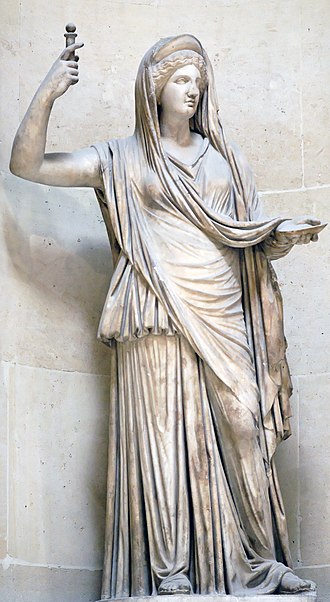 HeraGreek goddess, wife and sister of Zeus
 -
.jpg/330px-%CE%9F_%CE%86%CF%81%CE%B7%CF%82_(Borghese-%CE%9B%CE%BF%CF%8D%CE%B2%CF%81%CE%BF%CF%85).jpg) AresGreek god of war and combat
AresGreek god of war and combat -
_Ancient_Roman_statues_in_the_Museo_archeologico_nazionale_-_Ulysses.jpg/330px-(Venice)_Ancient_Roman_statues_in_the_Museo_archeologico_nazionale_-_Ulysses.jpg) Odysseuslegendary Greek king of Ithaca
Odysseuslegendary Greek king of Ithaca -
 HephaestusGreek god of blacksmiths
 -
 Helen of Troydaughter of Zeus in Greek mythology
 -
 Agamemnonson of Atreus in Greek mythology
Show all 47
-
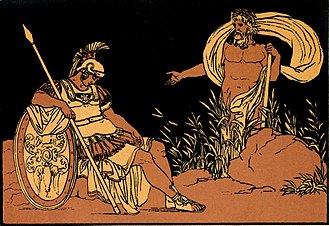 AeneasTrojan hero, son of Anchises and Aphrodite
 -
 Hectorprince of Troy in Greek mythology Has references
 -
 Parismythological son of Priam, king of Troy
 -
 EosGreek goddess of the dawn
 -
 Menelausmythical king of Sparta, husband of Helen of Troy
 -
.jpg/330px-Cassandra_(Stratford_Gallery).jpg) Cassandramythological prophetess and princess of Troy
Cassandramythological prophetess and princess of Troy -
 LetoGreek mythological figure and mother of Apollo and Artemis
 -
 Priamthe legendary and last king of Troy during the Trojan war; son of Laomedon
 -
 Hebeancient Greek goddess of youth
 -
 ErisGreek goddess of discord
 -
 Moiraepersonifications of fate in Greek mythology
 -
 Iristhe personification of the rainbow in ancient Greek religion and mythology
 -
_-_Napoli_MAN_9105_-_03_(cropped).jpg/330px-Wall_painting_-_Briseis_taken_away_from_Achilles_-_Pompeii_(VI_8_5)_-_Napoli_MAN_9105_-_03_(cropped).jpg) Patroclusson of Menoetius in Greek mythology, a greek hero of the Trojan war
Patroclusson of Menoetius in Greek mythology, a greek hero of the Trojan war -
 Hecubaspouse of king Priam Has references
 -
 ThetisNereid of Greek mythology
 -
 Hypnospersonification of sleep in Greek mythology
 -
 Nestorwise ruler of Pylos in Greek mythology, son of Neleus
 -
 DioneGreek goddess, mother of Aphrodite
 -
 Briseisdaughter of Briseus in Greek mythology
 -
 Ajax the Lessermythological Greek character, son of Oileus
 - Deiphobusmythical character, son of Priam of Troy
-
 Calchasmythical seer
 -
 Chryseismythological Greek character, daughter of Chryses in the Iliad
 - Chrysesmythical son of Minos and priest of Apollo
-
 Machaoncharacter of Greek mythology: son of Asclepius and Coronis, lover of Anticlea; healing hero of the Trojan War; killed by Eurypylus
 -
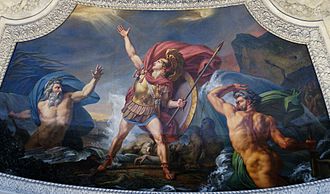 Scamanderwater deity
 -
 CaeneusLapith hero of Thessaly Has references
 -
 Rhesus of Thracemythical king and demigod
 -
 Acamasson of Theseus
 -
 SarpedonGreek mythology character, son of Laodamia
 - Paean (god)Greek deity, physician of Olympian gods
-
 Asteropaiosson of Pelegon in Greek mythology
 - EudorosGreek mythical character, leader of the Myrmidons
- Briseusson of Ardys in Greek mythology
-
_-_Polyt%C3%A8s%2C_fils_de_Priam%2C_observant_ecc._(1833-4)_-_ErosAccademia_p._51.jpg/330px-Flandrin%2C_Hippolyte_(1805-1864)_-_Polyt%C3%A8s%2C_fils_de_Priam%2C_observant_ecc._(1833-4)_-_ErosAccademia_p._51.jpg) Politesmythological Greek character, Trojan prince, son of Priam
Politesmythological Greek character, Trojan prince, son of Priam
Sources
Sources and evidence
Where every statement on this page comes from, and how each one stands.
1 statement on this record
- 1 Imported Taken from Wikidata as it stands. Nobody here has read it.
Only this record’s own statements. What other records say about it is counted on theirs.
Three layers, three licences
- Text
- Wikipedia · CC BY-SA 4.0, quoted, not merged
- Pictures
- Wikimedia Commons · each file’s own terms
Review
Not yet read by an editor here. Every relationship on this page is an import.
Disagreements are kept, not resolved, and a count of sources is not a confidence score.


Keep exploring
More from Greek and Roman
The Olympians and their Roman equivalents, the mystery cults, and the poets whose accounts disagree.