


Text
Aeneid
Epic poem by Virgil
- Written 1st century BCE
- Also called Aenēis, Aeneis, Eneid
A text has a date.
What it tells
may not.
Two clocks, kept apart
Overview
From Wikipedia, quoted unmodified under CC BY-SA 4.0; the article’s history is its list of authors.
Follow the text
Stories and families in it
Each on its own page, where this text is one account among others.
Figures
Who appears in it
Gods and people whose own records say they appear in this work.
What this means
Read from the other end: computed from those records, not from this one. A figure appearing here does not make this the only account of them, and a relationship attested in this work holds in this work.
-
 Helen of Troydaughter of Zeus in Greek mythology
 -
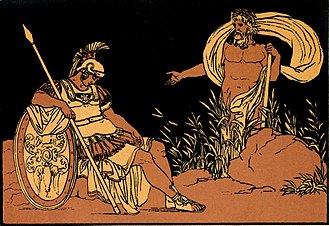 AeneasTrojan hero, son of Anchises and Aphrodite Has references
 -
 Orpheuslegendary musician, poet, and prophet in ancient Greek religion and myth
 -
 Priamthe legendary and last king of Troy during the Trojan war; son of Laomedon
 -
 Didolegendary founder and first queen of Carthage
 -
 Hecubaspouse of king Priam
 - Deiphobusmythical character, son of Priam of Troy
-
 Evander of Pallenemythical character of Greek and Roman mythology, king of Pallantium
 -
_-_Polyt%C3%A8s%2C_fils_de_Priam%2C_observant_ecc._(1833-4)_-_ErosAccademia_p._51.jpg/330px-Flandrin%2C_Hippolyte_(1805-1864)_-_Polyt%C3%A8s%2C_fils_de_Priam%2C_observant_ecc._(1833-4)_-_ErosAccademia_p._51.jpg) Politesmythological Greek character, Trojan prince, son of Priam
Politesmythological Greek character, Trojan prince, son of Priam
Sources
Sources and evidence
Where every statement on this page comes from, and how each one stands.
0 statements on this record
This record makes no statements of its own yet, so there is nothing here to weigh.
Only this record’s own statements. What other records say about it is counted on theirs.
Three layers, three licences
- Text
- Wikipedia · CC BY-SA 4.0, quoted, not merged
- Pictures
- Wikimedia Commons · each file’s own terms
Review
Not yet read by an editor here. Every relationship on this page is an import.
Disagreements are kept, not resolved, and a count of sources is not a confidence score.
.jpg/960px-The_Court_of_Gayumars_(Cropped).jpg)

.jpg)