

Place Institution Buddhist traditions
Nigatsu-dō
東大寺二月堂 zh
Buddhist temple in Nara Prefecture, Japan
- Dated from 8th century CE
- Also called Second Month Hall, Tōdai-ji Nigatsu-dō
Overview
From Wikipedia, quoted unmodified under CC BY-SA 4.0; the article’s history is its list of authors.
Site history & evidence
What is documented here
Each kind of evidence on its own row, because they do not add up.
| Evidence | On record | What it shows |
|---|---|---|
| Site date | Dated from 8th century CE On the timeline | A date for the site as recorded — not the start of worship, and not a floor on the tradition here. |
| Location | Recorded to the site On the atlas | A coordinate for the place. It locates the site; it does not draw its extent. |
| Dated activity | None recorded | A pin is a place, not an event. What happened at Nigatsu-dō, and when, is a separate claim, and this import holds none: it carries site locations, not dated activity. |
Nearby
Places nearby
The nearest this collection holds, measured between recorded coordinates.
What this means
Computed from coordinates, not stated by any source. Nearness is geometry, not a connection: two sites a kilometre apart may never have shared a worshipper, a tradition or a century. Where either coordinate is recorded only to a district, the distance is rounded and says “about”.
-
 under 1 km away
Hokke-dō
-
 under 1 km away
Tamukeyama Hachiman Shrine
Shinto shrine in Nara Prefecture, Japan -
 under 1 km away
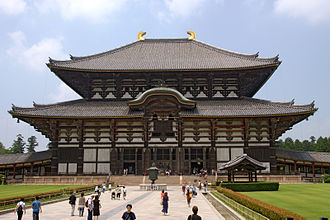
Tōdai-ji Temple
Japanese Buddhist temple in Nara -
 under 1 km away
Himuro Shrine
Shinto shrine in Nara Prefecture, Japan -
 under 1 km away
Kasuga-taisha
Shinto shrine in Nara Prefecture, Japan -
 1.4 km away
Kōfuku-ji Temple
Buddhist temple in Nara Prefecture, Japan -
 1.4 km away
Hannya-ji Temple
Buddhist temple in Nara, Japan -
 1.5 km away
Shin-Yakushi-ji Temple
Buddhist temple in Nara Prefecture, Japan
History
Recorded events
What Nigatsu-dō’s own record names in its history, in the order of the dates on the statements.
What this means
Events Wikidata records in a subject’s history, and the day a festival is kept. Not a complete history, and the day a festival falls on is not when it began. Each date is the one on the statement itself; an event with none is named after the line. It does not imply that these are all the events in its history, or that Wikidata ranks the events by importance.
- from 760 CE Omizutori ↗
- 1667 CE Conflagration ↗
- 1669 CE Architectural reconstruction ↗
Sources
Sources and evidence
Where every statement on this page comes from, and how each one stands.
5 statements on this record
- 1 Has references The statement cites something outside Wikimedia. That citation has not been checked here.
- 4 Imported Taken from Wikidata as it stands. Nobody here has read it.
Only this record’s own statements. What other records say about it is counted on theirs.
Three layers, three licences
- Text
- Wikipedia · CC BY-SA 4.0, quoted, not merged
- Pictures
- Wikimedia Commons · each file’s own terms
Review
Not yet read by an editor here. Every relationship on this page is an import.
Disagreements are kept, not resolved, and a count of sources is not a confidence score.


Keep exploring
More from Buddhist traditions
Theravāda, Mahāyāna and Vajrayāna, their figures, sutras, lineages and monasteries.