

Place Institution East Asian traditions
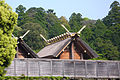
Ise Jingū
伊势神宫 zh 伊勢神宮 ja 이세 신궁 ko
Shinto shrine in Mie Prefecture, Japan
- Dated from 4 BCE
- Also called Jingū, Ise Shrine, Gekū
Site history & evidence
What is documented here
Each kind of evidence on its own row, because they do not add up.
| Evidence | On record | What it shows |
|---|---|---|
| Site date | Dated from 4 BCE On the timeline | A date for the site as recorded — not the start of worship, and not a floor on the tradition here. |
| Location | Recorded On the atlas | A coordinate for the place. It locates the site; it does not draw its extent. |
| Dated activity | None recorded | A pin is a place, not an event. What happened at Ise Jingū, and when, is a separate claim, and this import holds none: it carries site locations, not dated activity. |
Nearby
Places nearby
The nearest this collection holds, measured between recorded coordinates.
What this means
Computed from coordinates, not stated by any source. Nearness is geometry, not a connection: two sites a kilometre apart may never have shared a worshipper, a tradition or a century. Where either coordinate is recorded only to a district, the distance is rounded and says “about”.
-
 under 1 km away
Kōtai Jingū
Shinto shrine in Mie Prefecture, Japan -
 3.9 km away
Ise
city in Mie prefecture, Japan -
 4.1 km away
Toyōke Daijingū
Shinto shrine in Mie Prefecture, Japan -
_07.JPG/330px-Kongoshoji(Mie)_07.JPG) 5.5 km away
5.5 km awayKongōshō-ji Temple
Buddhist temple in Mie Prefecture, Japan -
 8.3 km away
Futami Okitama Shrine
Shinto shrine in Mie Prefecture, Japan -
 11 km away
Izawa-no-miya
Shinto shrine in Shima, Mie, Japan -
 11 km away
Saminaga Shrine
Shinto shrine in Mie Prefecture, Japan -
 14 km away
Izawa Shrine
Shinto shrine in Arashima-chō, Toba, Mie, Japan
Connections
How Ise Jingū connects
Grouped by the kind of relationship, because a successor is not a son and a shared symbol is not an influence.
Affiliation 2
What this means
Association with a tradition or school. Traditions branch, overlap and re-merge; this is not a clean single-origin tree.
Does not imply a fixed roster · that every account of the tradition knows this figure
Imported from Wikidata unless a tile says otherwise. Nothing here has been read by an editor.

Succession in office 1
What this means
Who held an office after whom. Not parentage, not discipleship, and not universally recognised — offices are contested.
Does not imply parentage · discipleship · an explanation of why the succession happened
Imported from Wikidata unless a tile says otherwise. Nothing here has been read by an editor.
Recorded events and days 1
What this means
Events Wikidata records in a subject’s history, and the day a festival is kept. Not a complete history, and the day a festival falls on is not when it began.
Does not imply that these are all the events in its history · that Wikidata ranks the events by importance
Imported from Wikidata unless a tile says otherwise. Nothing here has been read by an editor.
Sources
Sources and evidence
Where every statement on this page comes from, and how each one stands.
5 statements on this record
- 5 Imported Taken from Wikidata as it stands. Nobody here has read it. 1 of them cite only Wikipedia: one source, counted once.
Only this record’s own statements. What other records say about it is counted on theirs.
Three layers, three licences
- Text
- Wikipedia · CC BY-SA 4.0, quoted, not merged
- Pictures
- Wikimedia Commons · each file’s own terms
Review
Not yet read by an editor here. Every relationship on this page is an import.
Disagreements are kept, not resolved, and a count of sources is not a confidence score.


Keep exploring
More from East Asian traditions
Daoism, Confucian practice, Chinese folk religion, Shinto and Korean tradition.