
A seat,
and those
who held it.
Holders in order

Overview
From Wikipedia, quoted unmodified under CC BY-SA 4.0; the article’s history is its list of authors.
Succession in office
Who held it, in order
A sequence of office-holders, not a family genealogy.
- 62 holders
- 2 overlaps
- 13 gaps
- 19 steps named in the records
- 29 undated
What this means
Who held an office after whom. Not parentage, not discipleship, and not universally recognised — offices are contested.
Does not imply recognition by every tradition · an uncontested claim · parentage · discipleship · an explanation of why the succession happened
Holding an office after someone says nothing about being related to them or taught by them. Where a line is also a family, both are on the holders’ own pages as separate sections.
A gap is a vacancy, an interregnum or a hole in the record; an overlap is rival claims or an office held by more than one at once. The records do not say which, so neither is resolved here. A gap shorter than two years sits inside the precision of year-dated records and is not marked.
Why a succession happened is a historical argument. Where sources make one, it belongs in a reviewed connection with its citations — not in this order, and not in a predecessor field.
Recognition is never universal. Where a card names no recognising body, none is recorded — which is not the same as none.
Imported from Wikidata unless a card says otherwise. Nothing here has been read by an editor.
-
Gap about 553 years with no holder recorded
-
Gap about 490 years with no holder recorded
-
Overlap held at the same time as Akhenaten
-
Gap about 3 years with no holder recorded
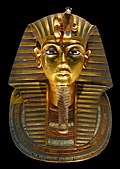 1333 BCE – 1324 BCE Tutankhamun 14th century BCE (18th dynasty) Egyptian pharaoh Hedged in the source
 -
Gap about 31 years with no holder recorded
-
 31 May 1279 BCE – 1212 BCE Ramesses II Egyptian third pharaoh of the Nineteenth Dynasty Has references
 -
Overlap held at the same time as Amenmesse
 1199 BCE – 1193 BCE Seti II Egyptian pharaoh, sixth ruler of the Nineteenth dynasty
 -
Gap about 3 years with no holder recorded
-
Gap about 2 years with no holder recorded
-
 1154 BCE – 1148 BCE Ramesses IV 3rd pharaoh of the Twentieth Dynasty of the New Kingdom of Ancient Egypt Has references
 -
Gap about 5 years with no holder recorded
-
Gap about 24 years with no holder recorded
-
Gap about 409 years with no holder recorded
-
Gap about 45 years with no holder recorded
-
 29 September 522 BCE – 1 October 486 BCE Darius I The fourth and greatest Achaemenid emperor (522–486 BC)
 -
 522 BCE – 29 September 522 BCE Bardiya Son of Cyrus the Great (died c. 522 BC)
 -
Gap about 192 years with no holder recorded
.jpg/120px-Alexander_the_Great_mosaic_(cropped).jpg) 330 BCE – 323 BCE Alexander the Great king of Macedonia and conqueror of Achaemenid Persia (356–323 BC)
330 BCE – 323 BCE Alexander the Great king of Macedonia and conqueror of Achaemenid Persia (356–323 BC)


.jpg/120px-Cairo%2C_Egyptian_Museum%2C_Antiquities%2C_photo_4_of_97_-_Archivio_fotografico_Museo_Egizio%2C_Turin_Album3_010_(cropped).jpg)


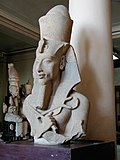




Show 3 more holders
-
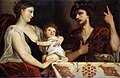 322 BCE – 309 BCE Alexandros IV of Macedon King of Macedonia from 323/2 to 309 BC
 -
Gap about 4 years with no holder recorded
 305 BCE – 283 BCE Ptolemy I Soter Macedonian general, ruler of Egypt
 -
Gap about 232 years with no holder recorded
 29 August 51 BCE – 12 August 30 BCE Cleopatra Queen of Ptolemaic Kingdom of Egypt from 51 to 30 BCE Has references
No dates recorded 29
- Dates unrecorded Menkheperre Egyptian High Priest of Amun
-
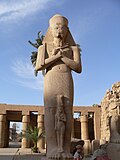 Dates unrecorded Pinedjem I ancient Egyptian high priest of Amun (1200-1031)
 -
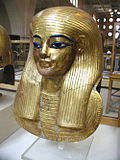 Dates unrecorded Yuya ancient Egyptian high priest of Min, father-in-law of Amenhotep III
 -
 Dates unrecorded Sneferu pharaoh and founder of the 4th dynasty of Ancient Egypt
 -
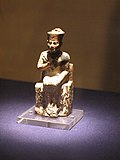 Dates unrecorded Khufu Fourth Dynasty ancient Egyptian pharaoh
 -
 Dates unrecorded Psusennes I Egyptian pharaoh of the 21st dynasty
 -
 Dates unrecorded Psusennes II last Egyptian pharaoh of the 21st dynasty
 -
 Dates unrecorded Tiye Great Royal Wife of the Egyptian pharaoh Amenhotep III
 -
.JPG/120px-National_Museum_of_Iran_Darafsh_(784).JPG) Dates unrecorded Xerxes I fifth Achaemenid emperor (486–465 BC)
Dates unrecorded Xerxes I fifth Achaemenid emperor (486–465 BC) -
 Dates unrecorded Artaxerxes II The 10th Achaemenid Emperor (404–358 BC)
 -
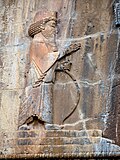 Dates unrecorded Artaxerxes III 11th Achaemenid Emperor (358–338 BC)
 -
 Dates unrecorded Amenemhat I Egyptian-Sudanese king
Show 17 more
- Dates unrecorded Neferu III ancient Egyptian queen consort
-
 Dates unrecorded Meritaten ancient Egyptian queen consort
 -
 Dates unrecorded Nefertiti Egyptian queen and Great Royal Wife (chief consort) of Akhenaten, an Egyptian Pharaoh
 -
 Dates unrecorded Huni ancient Egyptian king
 -
 Dates unrecorded Amenemope Egyptian pharaoh of the 21st dynasty
 -
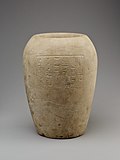 Dates unrecorded Smendes 1st Egyptian pharaoh of the 21st dynasty
 -
 Dates unrecorded Herihor Egyptian high priest
 -
 Dates unrecorded Ptolemy XIII Theos Philopator Pharaoh of Egypt from 51 to 47 BC
 -
 Dates unrecorded Ptolemy XII Auletes 1st-century BC Egyptian pharaoh
 -
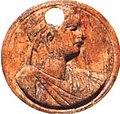 Dates unrecorded Ptolemy XIV of Egypt Egyptian puppet pharao as the husband of Cleopatra VII
 -
 Dates unrecorded Cleopatra V of Egypt Ptolemaic Queen of Egypt
 -
.jpg/120px-Darius_II_(reduced_shadow).jpg) Dates unrecorded Darius II The ninth Achaemenid emperor (423–404 BC)
Dates unrecorded Darius II The ninth Achaemenid emperor (423–404 BC) -
 Dates unrecorded Arses The 12th Achaemenid Emperor (338–336 BC)
 - Dates unrecorded Eurydice of Egypt Egyptian queen consort
-
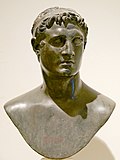 Dates unrecorded Ptolemy II Philadelphus king of the Ptolemaic dynasty in Egypt (308–246 B.C.)
 -
 Dates unrecorded Berenice I of Egypt Egyptian queen consort
 -
 Dates unrecorded Arsinoe II Ptolemaic Greek Princess of Ancient Egypt and Queen of Thrace, Asia Minor and Macedonia
Chronology is not a full explanation
Why one holder followed another takes evidence beyond the order of their dates.
Family
The family of pharaoh
Parents, consorts and children as the accounts give them. Choose a consort to see the children the stories give the two.
Accounts differ about a god’s family. Where they name different parents, the tree sets them side by side instead of choosing one.
The family as a list · 1
Kinship in an account 1
What this means
Parentage as a named source tells it. Not an independently established biological relationship, and different accounts disagree.
Does not imply an independently established biological relationship · agreement between accounts
Imported from Wikidata unless a tile says otherwise. Nothing here has been read by an editor.
_-_Hagar_and_the_Angel_-_GLAHA-51972_-_Hunterian_Museum_and_Art_Gallery.jpg/120px-John_Runciman_(1744-1768)_-_Hagar_and_the_Angel_-_GLAHA-51972_-_Hunterian_Museum_and_Art_Gallery.jpg "Picture: Hagar and the Angel, painting")

Connections
How pharaoh connects
Grouped by the kind of relationship, because a successor is not a son and a shared symbol is not an influence.
Identification 2
What this means
One figure treated as another in some context. Not literal identity in all contexts, and usually a claim by a third party.
Does not imply literal identity in all contexts · that either tradition made the identification
Imported from Wikidata unless a tile says otherwise. Nothing here has been read by an editor.
Sources
Sources and evidence
Where every statement on this page comes from, and how each one stands.
2 statements on this record
- 2 Imported Taken from Wikidata as it stands. Nobody here has read it.
Only this record’s own statements. What other records say about it is counted on theirs.
Three layers, three licences
- Text
- Wikipedia · CC BY-SA 4.0, quoted, not merged
- Pictures
- Wikimedia Commons · each file’s own terms
Review
Not yet read by an editor here. Every relationship on this page is an import.
Disagreements are kept, not resolved, and a count of sources is not a confidence score.


Keep exploring
More offices, tradition by tradition
The directory lists every one on record, most widely recorded first.
A seat outlasts
whoever sits in it.