
Office Buddhist traditions
Jebtsundamba Khutuktu
རྗེ་བཙུན་དམ་པ་ཧུ་ཐུག་ཐུ། bo 哲布尊丹巴呼图克图 zh ジェプツンダンバ・ホトクト ja
Lineage
A seat,
and those
who held it.
Holders in order
Overview
From Wikipedia, quoted unmodified under CC BY-SA 4.0; the article’s history is its list of authors.
Succession in office
Who held it, in order
A sequence of office-holders, not a family genealogy.
- 2 holders
- 1 gap
What this means
Who held an office after whom. Not parentage, not discipleship, and not universally recognised — offices are contested.
Does not imply recognition by every tradition · an uncontested claim · parentage · discipleship · an explanation of why the succession happened
Holding an office after someone says nothing about being related to them or taught by them. Where a line is also a family, both are on the holders’ own pages as separate sections.
A gap is a vacancy, an interregnum or a hole in the record; an overlap is rival claims or an office held by more than one at once. The records do not say which, so neither is resolved here. A gap shorter than two years sits inside the precision of year-dated records and is not marked.
Why a succession happened is a historical argument. Where sources make one, it belongs in a reviewed connection with its citations — not in this order, and not in a predecessor field.
Recognition is never universal. Where a card names no recognising body, none is recorded — which is not the same as none.
Imported from Wikidata unless a card says otherwise. Nothing here has been read by an editor.
-
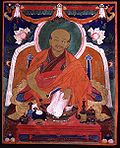 1st 1635 CE – 1723 CE Zanabazar Tibetan Buddhist spiritual leader
 -
Gap about 146 years with no holder recorded
 8th 1869 CE – 17 April 1924 CE Bogd Khan Great Khan of Outer Mongolia (1869–1924)
Chronology is not a full explanation
Why one holder followed another takes evidence beyond the order of their dates.
Sources
Sources and evidence
Where every statement on this page comes from, and how each one stands.
0 statements on this record
This record makes no statements of its own yet, so there is nothing here to weigh.
Only this record’s own statements. What other records say about it is counted on theirs.
Three layers, three licences
- Text
- Wikipedia · CC BY-SA 4.0, quoted, not merged
Review
Not yet read by an editor here. Every relationship on this page is an import.
Disagreements are kept, not resolved, and a count of sources is not a confidence score.


Keep exploring
More from Buddhist traditions
Theravāda, Mahāyāna and Vajrayāna, their figures, sutras, lineages and monasteries.