
Office Christianity
diocesan bishop
Episcopus dioecesanus la
Bishop in pastoral charge of a diocese, as opposed to a titular bishop
- Also called eparchial bishop, residential bishop
A seat,
and those
who held it.
Holders in order
Overview
From Wikipedia, quoted unmodified under CC BY-SA 4.0; the article’s history is its list of authors.
Succession in office
Everyone recorded as holding it
Its tenures overlap throughout — a roll of holders, not a line.
- 79 holders
- 1,923 overlapping pairs
- 3 undated
What this means
Who held an office after whom. Not parentage, not discipleship, and not universally recognised — offices are contested.
Does not imply recognition by every tradition · an uncontested claim · parentage · discipleship · an explanation of why the succession happened
Holding an office after someone says nothing about being related to them or taught by them. Where a line is also a family, both are on the holders’ own pages as separate sections.
A gap is a vacancy, an interregnum or a hole in the record; an overlap is rival claims or an office held by more than one at once. The records do not say which, so neither is resolved here. A gap shorter than two years sits inside the precision of year-dated records and is not marked. This office’s tenures overlap throughout, so it is listed as a roll in order of start rather than drawn as a line.
Why a succession happened is a historical argument. Where sources make one, it belongs in a reviewed connection with its citations — not in this order, and not in a predecessor field.
Recognition is never universal. Where a card names no recognising body, none is recorded — which is not the same as none.
Imported from Wikidata unless a card says otherwise. Nothing here has been read by an editor.
-
 from 465 CE Padarn 6th‑century Welsh bishop and Christian saint active during the Age of the Saints in Wales Has references
 -
 from 1149 CE Henry of France, Archbishop of Reims French archbishop of Reims from 1161 to 1175 Has references
 -
 from 1151 CE Geoffrey of Monmouth Historian and Bishop of St Asaph, Wales (c.1095–1155) Has references
 -
 from 28 March 1295 CE Clement V pope of the Catholic Church from 1305 to 1314 (1264–1314) Has references
 -
.JPG/120px-Antipope_Alexander_V_(1409-1410).JPG) 5 October 1386 CE – 24 April 1388 CE Alexander V Catholic cardinal and antipope (1339-1410) Has references
5 October 1386 CE – 24 April 1388 CE Alexander V Catholic cardinal and antipope (1339-1410) Has references -
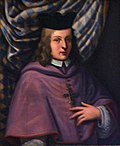 1 August 1495 CE – 3 December 1498 CE Ruprecht of the Palatinate German bishop (1481-1504) Has references
 -
_-_National_Museum_of_Capodimonte.jpg/120px-Portrait_of_Pope_Paul_III_Farnese_(by_Titian)_-_National_Museum_of_Capodimonte.jpg) from 2 July 1519 CE Paul III pope of the Catholic Church from 1534 to 1549 (1468–1549) Has references
from 2 July 1519 CE Paul III pope of the Catholic Church from 1534 to 1549 (1468–1549) Has references

.jpg/120px-Gregor-Chora_(cropped).jpg)




.jpg/120px-Visconti%2C_Giovanni_(1290-1354).jpg)

_Portretten_van_kardinalen_(serietitel)%2C_RP-P-1910-4515.jpg/120px-Portret_van_de_Franse_kardinaal_Pierre_d'Ailly_Annes_Card._D'Alli_(titel_op_object)_Portretten_van_kardinalen_(serietitel)%2C_RP-P-1910-4515.jpg)


Show 46 more holders
-
 1605 CE – 29 April 1624 CE Armand-Jean du Plessis, duc de Richelieu French clergyman, cardinal, noble and statesman (1585-1642) Has references
 -
_-_Google_Art_Project_-_edited.jpg/120px-Pietro_da_Cortona_-_Portrait_of_Urban_VIII_(ca._1624-1627)_-_Google_Art_Project_-_edited.jpg) 27 October 1608 CE – 17 July 1617 CE Urban VIII 235 pope of the Catholic Church from 1623 to 1644 (1568–1644) Has references
27 October 1608 CE – 17 July 1617 CE Urban VIII 235 pope of the Catholic Church from 1623 to 1644 (1568–1644) Has references -
.jpg/120px-Portrait_of_Pope_Alexander_VII_Chigi_(by_Giovanni_Battista_Gaulli_-_Baciccio).jpg) 8 January 1635 CE – February 1652 CE Alexander VII pope of the Catholic Church from 1655 to 1667 Has references
8 January 1635 CE – February 1652 CE Alexander VII pope of the Catholic Church from 1655 to 1667 Has references -
 5 November 1645 CE – 10 December 1679 CE Francesco Barberini Italian cardinal (1597-1679) Has references
 -
 4 April 1650 CE – 6 March 1656 CE Innocent XI pope of the Catholic Church from 1676 to 1689 Has references
 -
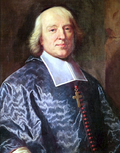 13 September 1669 CE – 31 October 1671 CE Jacques Bénigne Bossuet French bishop and theologian (1627-1704) Has references
 -
 from 4 November 1685 CE Joseph Clemens of Bavaria Duke, Roman Catholic archbishop (1671-1723) Has references
 -
.jpg/120px-Charles_Picqu%C3%A9_%E2%80%93_Portrait_de_L%C3%A9on_XII_(1828).jpg) 8 March 1816 CE – 10 September 1816 CE Leo XII Pope of the Catholic Church from 1823 to 1829 Has references
8 March 1816 CE – 10 September 1816 CE Leo XII Pope of the Catholic Church from 1823 to 1829 Has references -
.jpg/120px-A._Szeptycki_(retouched).jpg) from 19 June 1899 CE Andrey Sheptytsky Metropolitan Archbishop of the Ukrainian Greek Catholic Church (1865-1944) Has references
from 19 June 1899 CE Andrey Sheptytsky Metropolitan Archbishop of the Ukrainian Greek Catholic Church (1865-1944) Has references -
 from 30 December 1911 CE Carlos María de la Torre Ecuadorian Catholic cardinal (1873–1968) Has references
 -
 from 21 April 1917 CE Iuliu Hossu Cardinal, Romanian Greek-Catholic Bishop of Cluj-Gherla, Martyr and Blessed (1885-1970) Has references
 - 5th 21 August 1919 CE – 20 December 1926 CE Carlos María de la Torre Ecuadorian Catholic cardinal (1873–1968) Has references
-
.JPG/120px-Cardinal_Rossi_(cropped).JPG) from 22 April 1920 CE Raffaele Rossi Italian Cardinal of the Roman Catholic Church (1876–1948) Has references
from 22 April 1920 CE Raffaele Rossi Italian Cardinal of the Roman Catholic Church (1876–1948) Has references -
 2nd 4 July 1924 CE – 22 September 1937 CE Carlos Duarte Costa Brazilian bishop and saint Has references
 -
 1st 1925 CE – 1926 CE August Hlond archbishop, cardinal, primate of Poland (1881–1948) Has references
 -
 30 November 1937 CE – 25 August 1962 CE Grégoire-Pierre Agagianian Armenian Cardinal Patriarch and Servant of God (1895–1971) Has references
 -
 from 13 March 1943 CE Maximos V Hakim Melkite Greek Catholic Patriarch of Antioch (1908–2001) Has references
 -
 21 June 1948 CE – 17 November 1966 CE Giuseppe Pizzardo Catholic cardinal (1877-1970) Has references
 -
 1st from 15 February 1966 CE Stephen Kim Sou-hwan South Korean Roman Catholic cardinal and Servant of God Has references
 -
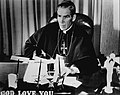 21 October 1966 CE – 6 October 1969 CE Fulton J. Sheen American catholic bishop and television presenter (1895–1979) Has references
 - 22 November 1967 CE – 22 November 2000 CE Maximos V Hakim Melkite Greek Catholic Patriarch of Antioch (1908–2001) Has references
-
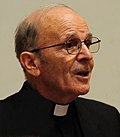 1st 29 May 1969 CE – 6 October 1990 CE René Dupont French Roman Catholic prelate (1929–2025) Has references
 -
 30 November 1998 CE – 13 March 2013 CE Pope Francis 266th pope of the Catholic Church from 2013 to 2025 (1936–2025) Has references
 -
 29 November 2000 CE – 6 May 2017 CE Gregory III Laham Melkite Greek Catholic Patriarch of Antioch Has references


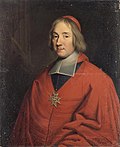
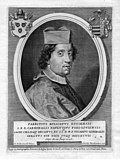
%2C_Portrait_of_the_Li%C3%A8ge_Prince-Bishop_John_Theodore_of_Bavaria.jpg/120px-Paul-Joseph_Delcloche_(attributed)%2C_Portrait_of_the_Li%C3%A8ge_Prince-Bishop_John_Theodore_of_Bavaria.jpg)
_(cropped).jpg/120px-Jozef_Andrzej_Zaluski_(81485907)_(cropped).jpg)


.jpg/120px-John_Ireland_(archbishop_of_Saint_Paul).jpg)
.tif/lossy-page1-120px-Dom_Agnelo_Rossi_(1967).tif.jpg)


No dates recorded 3
-
 Dates unrecorded Esprit Fléchier French Catholic bishop, preacher and writer


Sources
Sources and evidence
Where every statement on this page comes from, and how each one stands.
0 statements on this record
This record makes no statements of its own yet, so there is nothing here to weigh.
Only this record’s own statements. What other records say about it is counted on theirs.
Three layers, three licences
- Text
- Wikipedia · CC BY-SA 4.0, quoted, not merged
Review
Not yet read by an editor here. Every relationship on this page is an import.
Disagreements are kept, not resolved, and a count of sources is not a confidence score.


Keep exploring
More from Christianity
Its branches, councils, saints, offices and buildings — and where they stopped recognising each other.