
Office Christianity
bishop-elect
In the Catholic Church, a title given to those who, who have been appointed bishop, both diocesan and titular, have not yet received episcopal ordination and are used "in order to distinguish him from the bishop already consecrated"
- Also called nominated Bischof, Bishop, appointed Bishop
A seat,
and those
who held it.
Holders in order
Succession in office
Everyone recorded as holding it
Its tenures overlap throughout — a roll of holders, not a line.
- 10 holders
- 3 overlapping pairs
- 4 undated
What this means
Who held an office after whom. Not parentage, not discipleship, and not universally recognised — offices are contested.
Does not imply recognition by every tradition · an uncontested claim · parentage · discipleship · an explanation of why the succession happened
Holding an office after someone says nothing about being related to them or taught by them. Where a line is also a family, both are on the holders’ own pages as separate sections.
A gap is a vacancy, an interregnum or a hole in the record; an overlap is rival claims or an office held by more than one at once. The records do not say which, so neither is resolved here. A gap shorter than two years sits inside the precision of year-dated records and is not marked. This office’s tenures overlap throughout, so it is listed as a roll in order of start rather than drawn as a line.
Why a succession happened is a historical argument. Where sources make one, it belongs in a reviewed connection with its citations — not in this order, and not in a predecessor field.
Recognition is never universal. Where a card names no recognising body, none is recorded — which is not the same as none.
Imported from Wikidata unless a card says otherwise. Nothing here has been read by an editor.
-
 20 May 1452 CE – 1458 CE Bernard II, Duke of Brunswick-Lüneburg Prince-Bishop of Hildesheim; Prince of Luneburg Has references
 -
 23 April 1553 CE – 1 February 1554 CE Julius, Duke of Brunswick-Lüneburg Prince of Wolfenbüttel and Calenberg (1528-1589) Has references
 -
 from 28 April 1574 CE John William, Duke of Jülich-Cleves-Berg Duke of Jülich-Cleves-Berg
 -
 20 February 1716 CE – 3 March 1729 CE Count Palatine Francis Louis of Neuburg Archbishop and Prince-Elector of Mainz and Trier, Prince-Bishop of Worms and Wrocław, Hochmeister of the Teutonic Order

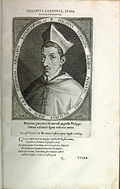
No dates recorded 4

.jpg/120px-Ladislaus_of_Salzburg_-_seal_(1257).jpg)

Connections
How bishop-elect connects
Grouped by the kind of relationship, because a successor is not a son and a shared symbol is not an influence.
Identification 1
What this means
One figure treated as another in some context. Not literal identity in all contexts, and usually a claim by a third party.
Does not imply literal identity in all contexts · that either tradition made the identification
Imported from Wikidata unless a tile says otherwise. Nothing here has been read by an editor.
Sources
Sources and evidence
Where every statement on this page comes from, and how each one stands.
2 statements on this record
- 2 Imported Taken from Wikidata as it stands. Nobody here has read it.
Only this record’s own statements. What other records say about it is counted on theirs.
Review
Not yet read by an editor here. Every relationship on this page is an import.
Disagreements are kept, not resolved, and a count of sources is not a confidence score.


Keep exploring
More from Christianity
Its branches, councils, saints, offices and buildings — and where they stopped recognising each other.