

Lineages
Four kinds of succession, kept apart.
A tradition branching, a teaching passed on, an office held in turn and a family are four different relationships — and they are never drawn as one.
- 178 traditions with branches
- 1,215 teachers and students
- 186 offices with holders
- 298 houses with members
A teacher is not a parent.
A poem is not a pedigree.
Every line says what it is
Four relationships, four colours.
Each kind has its own colour, its own mark and its own section, wherever it appears.
-
 Affiliation
Traditions & schools
Branches recorded under a tradition: association, not descent.Pictured: Christianity -
 Transmission
Teachers & students
Teaching passed from one person to another: not ancestry.Pictured: Confucius -
 Succession in office
Offices
Who held an office after whom: not parentage, not discipleship.Pictured: Pope Francis, a recorded holder of the office of Pope -
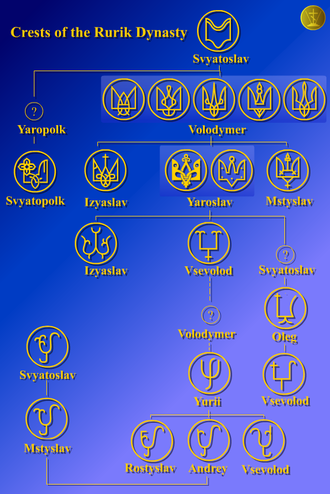 Family
Houses
Families, drawn as families: a house is not its religion.Pictured: Rurikids
An example from the records
Interwoven, not identical.
One person can stand in every kind of line at once. Here is Alexander the Great, drawn from the records' own statements: each line keeps its own mode, its own colour and its own words, and none is read as another.
Alexandros IV of Macedon appears twice: named in the records as succeeding Alexander the Great as pharaoh, and recorded as a child of Alexander the Great. Two statements, in two modes; the page never draws one as the reason for the other.
How the kinds are kept apart.jpg/330px-Alexander_the_Great_mosaic_(cropped).jpg) Alexander the Great 20 July 356 BCE – 10 June 323 BCE
Alexander the Great 20 July 356 BCE – 10 June 323 BCE Each line reads from Alexander the Great down.
-
Tradition Affiliation
-
belongs to
 Ancient Greek religion
-
-
Teacher Transmission
-
studied under 343 BCE – 336 BCE
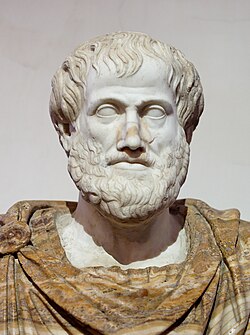 Aristotle 384 BCE – 322 BCE
-
-
Office Succession in office
-
held the office 330 BCE – 323 BCE
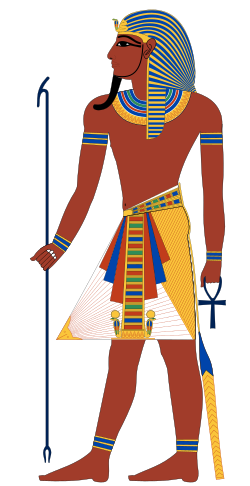 Pharaoh
 -
was succeeded by
 Alexandros IV of Macedon held it 322 BCE – 309 BCE
 Also under Family
-
-
House Family
-
of the house
 Argead dynasty
 -
parent of
Alexandros IV of Macedon 323 BCE – 309 BCE Also under Succession in office
-
Browse the lines
One kind at a time, each in its own colour: the tabs never show two kinds as one.
Affiliation
Many paths. Shared histories.
Traditions with branches recorded under them, most-branched first.
What this means
Association with a tradition or school. Traditions branch, overlap and re-merge; this is not a clean single-origin tree.
178 traditions in this collection have branches recorded under them. Branching is association, not descent, and being listed under a tradition is not being recognised by it.
-
 32 branches recorded
Christianity
Catholicism · Nestorianism · monophysitism -
 31 branches recorded
Modern paganism
Wicca · heathenry · Kemetism -
 22 branches recorded
Protestantism
Lutheranism · Reformed Christianity · Anglicanism -
.jpg/250px-Auto_de_P%C3%A1scoa_-_IgrejaDaCidade_(crop).jpg) 13 branches recorded
13 branches recordedBaptists
Seventh Day Baptists · Reformed Baptists · Independent Baptist -
 13 branches recorded
Vaishnavism
Gaudiya Vaishnavism · Sri Vaishnavism · Warkari -
 13 branches recorded
Shingon Buddhism
Shingon Risshu · Kōyasan Shingon-shū · Kogi Shingon-shū - 12 branches recorded
Evangelicalism
Baptists · Pentecostalism · Charismatic Movement -
_(1).jpg/250px-Taoist_ceremony_at_Xiao_ancestral_temple_in_Chaoyang%2C_Shantou%2C_Guangdong_(daoshi)_(1).jpg) 11 branches recorded
11 branches recordedTaoism
Quanzhen School · Way of the Five Pecks of Rice · Lingbao School -
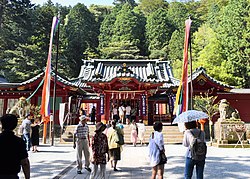 11 branches recorded
Shinto
shinbutsu-shūgō · State Shinto · koshintō -
 10 branches recorded
Islam
Shia Islam · Sunni Islam · Ahmadiyya -
 10 branches recorded
Buddhism
Mahāyāna · Theravāda · Tibetan Buddhism -
 9 branches recorded
Judaism
Conservative Judaism · Karaite Judaism · Humanistic Judaism
Show 12 more
-
 9 branches recorded
Lutheranism
Laestadianism · Evangelical Lutheran Church in Jordan and the Holy Land · Evangelical Church of Augustan Confession in Romania - 9 branches recorded
Folk religion
Hinduism · Shinto · Tengrism -
 8 branches recorded
Paganism
modern paganism · Germanic paganism · Slavic religion -
 8 branches recorded
Abrahamic religion
Islam · Christianity · Judaism -
 8 branches recorded
Reformed Christianity
Puritans · Presbyterianism · Continental Reformed Protestantism - 8 branches recorded
Chan Buddhism
Caodong school · Linji school · Vietnamese Thiền - 8 branches recorded
Bhakti movement
Gaudiya Vaishnavism · Warkari · Ekasarana Dharma -
 7 branches recorded
Sunni Islam
Salafism · Hanbalism · Hanafism -
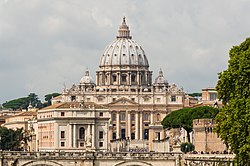 7 branches recorded
Catholicism
Jansenism · traditionalist Catholicism · Independent Catholicism -
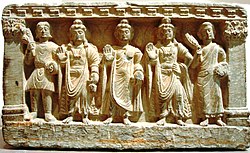 7 branches recorded
Mahāyāna
Zen · Pure Land Buddhism · Madhyamaka -
 7 branches recorded
Orthodox Judaism
Hasidic Judaism · Haredi Judaism · religious Zionism -
_(42096289494).jpg/250px-Le_Grand_Bouddha_du_Kotoku-in_(Kamakura%2C_Japon)_(42096289494).jpg) 7 branches recorded
7 branches recordedBuddhism in Japan
shinbutsu-shūgō · Kegon · Nanto Rokushū
Transmission
Teachers and students
The thinnest data on the site: where this is short, the record is — not the tradition.
What this means
Teaching passed from one person to another. Not biological ancestry and not automatic institutional succession.
Transmission is the backbone of most living traditions — isnād in Islam, the rabbinic chain, Buddhist teacher-to-student lineage, Sufi silsila — and it is barely present in structured data. That is written in each collection’s known gaps rather than left for a reader to infer from a thin page.
1,215 figures here have a recorded teacher or student, most widely linked first.
-
.jpg/330px-Spas_vsederzhitel_sinay_(cropped1).jpg) Jesus Christc. between 9 and 1 BCE – 7 April 30 CE 31 teaching links
Jesus Christc. between 9 and 1 BCE – 7 April 30 CE 31 teaching links -
 Aristotle384 BCE – 322 BCE 21 teaching links
 - Confuciusc. 551 BCE – c. 479 BCE 77 teaching links
-
 Isaac Newton25 December 1642 CE (Old Style) – 20 March 1727 CE (Old Style) 9 teaching links
 -
 Platothe 420s BCE – the 340s BCE 28 teaching links
 -
 Muhammad20 April 571 CE – 8 June 632 CE 8 teaching links
 -
 Mahatma Gandhi2 October 1869 CE – 30 January 1948 CE 2 teaching links
 -
 Leo Tolstoy28 August 1828 CE (Old Style) – 7 November 1910 CE (Old Style) 2 teaching links
 -
 Charles Darwin12 February 1809 CE – 19 April 1882 CE 3 teaching links
 -
.jpg/330px-Goethe_(Stieler_1828).jpg) Johann Wolfgang von Goethe28 August 1749 CE – 22 March 1832 CE 5 teaching links
Johann Wolfgang von Goethe28 August 1749 CE – 22 March 1832 CE 5 teaching links -
 Socratesc. 470 BCE – 15 February 399 BCE 15 teaching links
 -
.jpg/330px-Buddha_in_Sarnath_Museum_(Dhammajak_Mutra).jpg) The Buddha1st millennium BCE 16 teaching links
The Buddha1st millennium BCE 16 teaching links -
 Ludwig van Beethovenc. 16 December 1770 CE – 26 March 1827 CE 17 teaching links
 -
 Dante Alighieric. 1265 CE – 14 September 1321 CE 5 teaching links
 - Alexander the Great20 July 356 BCE – 10 June 323 BCE 3 teaching links
-
.jpg/330px-Lucas_Cranach_d.%C3%84._-_Martin_Luther%2C_1528_(Veste_Coburg).jpg) Martin Luther10 November 1483 CE – 18 February 1546 CE 3 teaching links
Martin Luther10 November 1483 CE – 18 February 1546 CE 3 teaching links -
 René Descartes31 March 1596 CE – 11 February 1650 CE 2 teaching links
 -
.jpg/330px-Sigmund_Freud%2C_by_Max_Halberstadt_(cropped).jpg) Sigmund Freud6 May 1856 CE – 23 September 1939 CE 10 teaching links
Sigmund Freud6 May 1856 CE – 23 September 1939 CE 10 teaching links -
.jpg/330px-Parco_della_Grotta_di_Posillipo5_(crop).jpg) Virgil15 October 70 BCE – 21 September 19 BCE 1 teaching link
Virgil15 October 70 BCE – 21 September 19 BCE 1 teaching link - Pope Francis17 December 1936 CE – 21 April 2025 CE 1 teaching link
-
 Mao Zedong26 December 1893 CE – 9 September 1976 CE 1 teaching link
 -
 Augustine of Hippo13 November 354 CE – 28 August 430 CE 1 teaching link
 -
 Carl Linnaeus23 May 1707 CE – 10 January 1778 CE 44 teaching links
 -
 Pythagoras6th century BCE – the 490s BCE 10 teaching links
Succession in office
Who held it next?
Offices held in sequence — not a family genealogy. Open one for its ladder of holders.
What this means
Who held an office after whom. Not parentage, not discipleship, and not universally recognised — offices are contested.
186 offices here have holders recorded: lines first, then offices whose tenures overlap throughout — held by many at once, or claimed side by side — most holders first within each. The faces are the most recent holders with a picture.
-
.jpg/250px-Leo_XIV_(13_October_2025).jpg) 141 holders recorded
141 holders recordedPope
-
 90 holders recorded
Emperor of Japan
- 62 holders recorded
Pharaoh
- 38 holders recorded
Dean of the College of Cardinals
-
 35 holders recorded
Apostle
-
 29 holders recorded
Prophet
- 22 holders recorded
High Priest of Israel
- 21 holders recorded
Cardinal Secretary of State
-
 18 holders recorded
Archbishop of Canterbury
-
_(cropped).jpg/250px-Cardinal_Dolan_at_UST_(Sept_2019%2C_Cropped)_(cropped).jpg) 14 holders recorded
14 holders recordedMetropolitan
-
 14 holders recorded
Ecumenical Patriarch of Constantinople
-
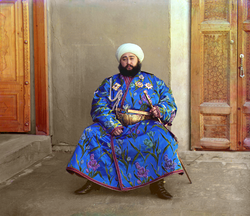 13 holders recorded
Amir


_(cropped).jpg/120px-Paus_Johannes_Paulus_I_(Bestanddeelnr_929-9074)_(cropped).jpg)
.jpg/120px-Pope_Paul_VI_1969_Portrait_(4x5_cropped).jpg)
.jpg/120px-Emperor_Akihito_(2016).jpg)

.jpg/120px-%E5%AD%9D%E6%98%8E%E5%A4%A9%E7%9A%87%E5%AE%B8%E5%BD%B1_(cropped).jpg)


.jpg/120px-Alexander_the_Great_mosaic_(cropped).jpg)


.jpg/120px-Angelo_Cardinal_Sodano_in_2016_(cropped).jpg)

.tif/lossy-page1-120px-Dom_Agnelo_Rossi_(1967).tif.jpg)


.jpg/120px-Spas_vsederzhitel_sinay_(cropped1).jpg)

.jpg/120px-Kardinalom_Tarcisiem_Bertonejem_2013_(cropped).jpg)
.jpg/120px-Agostino_Casaroli_-_S_M_de_Medellin_(cropped).jpg)

.jpg/120px-CICOGNANI_AMLETO_GIOVANNI_(%2B1973).jpg)


.jpg/120px-Arthur_Michael_Ramsey_(1961).jpg)


.jpg/120px-Hagia_Sophia_Constantinople_(cropped).jpg)

%2C_Timurid_genealogy%2C_1405-1409%2C_Samarkand_(TSMK%2C_H2152).jpg/120px-Timur_seated_(earliest_known_portrait)%2C_Timurid_genealogy%2C_1405-1409%2C_Samarkand_(TSMK%2C_H2152).jpg)
.jpg/120px-Muhammad_I_Granada_cropped_CSM_185_(187).jpg)

Show 12 more
-
 13 holders recorded
Cardinal-bishop
- 13 holders recorded
Grand ayatollah
-
 12 holders recorded
Dalai Lama
-
 12 holders recorded
Chaplain
- 10 holders recorded
Diocesan administrator
-
 9 holders recorded
Rebbe
- 9 holders recorded
Rosh yeshiva
-
 8 holders recorded
Panchen Lama
-
 8 holders recorded
Karmapa
-
 7 holders recorded
Prophet of Islam
- 7 holders recorded
Biblical judge
- 7 holders recorded
Chief Rabbinate of Israel


_(cropped).JPG/120px-Yitzhak_Yosef_(42)_(cropped).JPG)



Family
Houses and dynasties
Families, drawn as families. Their religious context is a separate claim, on each house’s page.
What this means
A documented human family relationship. Not a succession mechanism, and not religious transmission.
298 houses here have members recorded, largest first. Membership of a house is not a religious affiliation, and a dynasty’s affiliation is never its population’s.
-
 88 members recorded
Rurikids
-
 80 members recorded
Imperial House of Japan
-
 71 members recorded
House of Habsburg-Lorraine
-
 62 members recorded
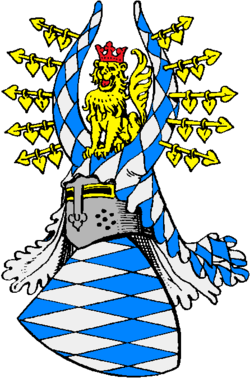
House of Wittelsbach
-
 56 members recorded
House of Habsburg
-
 49 members recorded
House of Hohenzollern
-
_(2).svg/250px-Lesser_coat_of_arms_of_the_Kingdom_of_Italy_(1890)_(2).svg.png) 46 members recorded
46 members recordedHouse of Savoy
-
 46 members recorded
House of Wettin
-
 37 members recorded
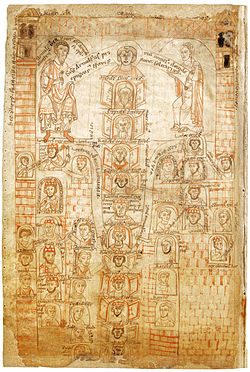
Carolingian dynasty
-
 37 members recorded
House of Wessex
-
 33 members recorded
House of Medici
-
 33 members recorded
Árpád dynasty


.jpg/120px-Isabeau_de_Baviere_(detail).jpg)

.jpg/120px-Kaiserin_Maria_Theresia_(HRR).jpg)
_-_Portr%C3%A4t_Kaiser_Karl_VI.jpg/120px-Martin_van_Meytens_(attrib.)_-_Portr%C3%A4t_Kaiser_Karl_VI.jpg)
_-_Emperor_Ferdinand_I_-_WGA02326.jpg/120px-Hans_Bocksberger_(I)_-_Emperor_Ferdinand_I_-_WGA02326.jpg)


.jpg/120px-Frederick_William_II_(1744-1797).jpg)


_-_VE_-_Umberto_I_di_Savoia_1.jpg/120px-Fratelli_Vianelli_(Giuseppe_e_Luigi%2C_flor._1860-1890_ca)_-_VE_-_Umberto_I_di_Savoia_1.jpg)


.jpg/120px-Ritratto_di_Amedeo_VIII_-_Google_Art_Project_(cropped).jpg)






.png/120px-Alfred_the_Great%2C_silver_penny%3B_struck_875%E2%80%93880_(obverse).png)


_-_Ritratto_di_Lorenzo_il_Magnifico_-_865_-_Uffizi_Gallery_(cropped).jpg/120px-Bottega_di_Agnolo_di_Cosimo%2C_detto_il_Bronzino_(Firenze_1503-1572)_-_Ritratto_di_Lorenzo_il_Magnifico_-_865_-_Uffizi_Gallery_(cropped).jpg)
.jpg/120px-Portrait_of_Pope_Pius_IV%2C_three-quarter-length%2C_seated_at_a_draped_table_(Circle_of_Scipione_Pulzone).jpg)



.jpg/120px-B%C3%A9la_IV_(Chronica_Hungarorum).jpg)


Show 12 more
-
 33 members recorded
Přemyslid dynasty
-
 28 members recorded
House of Bourbon
-
 27 members recorded
House of Estridsen
-
 23 members recorded
House of Plantagenet
-
 23 members recorded
House of Valois
-
 23 members recorded
House of Hanover
-
 23 members recorded
Bagrationi dynasty
-
 22 members recorded
House of York
- 22 members recorded
Abbasids
- 21 members recorded
Palaiologos
-
 21 members recorded
House of Bourbon-Parma
- 21 members recorded
Davidic line


.jpg/120px-Premek(2).jpg)

_-_Portrait_of_Louis_XV_-_Louvre_-_INV_6319.jpg/120px-Louis-Michel_van_Loo_(School_of)_-_Portrait_of_Louis_XV_-_Louvre_-_INV_6319.jpg)

_-_Charles_X_(1757-1836)%2C_King_of_France_-_RCIN_405138_-_Royal_Collection.jpg/120px-Sir_Thomas_Lawrence_(1769-1830)_-_Charles_X_(1757-1836)%2C_King_of_France_-_RCIN_405138_-_Royal_Collection.jpg)


.jpg/120px-Valdemar_Sejr_(kongefrisen).jpg)


%2C_f.116_-_BL_Cotton_MS_Claudius_D_II.jpg/120px-King_John_hunting_-_Statutes_of_England_(14th_C)%2C_f.116_-_BL_Cotton_MS_Claudius_D_II.jpg)



%2C_basilique%2C_gisant_de_Charles_V_sculpt%C3%A9_lorsqu'il_avait_27_ans_2.jpg/120px-Saint-Denis_(93)%2C_basilique%2C_gisant_de_Charles_V_sculpt%C3%A9_lorsqu'il_avait_27_ans_2.jpg)


_-_George_III_(1738-1820)_-_RCIN_405307_-_Royal_Collection.jpg/120px-Allan_Ramsay_(1713-84)_-_George_III_(1738-1820)_-_RCIN_405307_-_Royal_Collection.jpg)


.jpg/120px-King_George_I_by_Sir_Godfrey_Kneller%2C_Bt_(3).jpg)




%2C_Cream_of_Histories_(Z%C3%BCbdet-%C3%BCt_Tevarih%2C_1598).jpg/120px-Abb%C4%81sid_Caliph_al-Man%E1%B9%A3%C5%ABr_from_the_genealogy_(silsilan%C4%81ma)%2C_Cream_of_Histories_(Z%C3%BCbdet-%C3%BCt_Tevarih%2C_1598).jpg)
.jpg/120px-Balami_-_Tarikhnama_-_Abu'l-'Abbas_al-Saffah_is_proclaimed_the_first_'Abbasid_Caliph_(cropped).jpg)
.jpg/120px-Abbasid_Dinar_-_Al_Mahdi_-_167_AH_(783_AD).jpg)
.jpg/120px-Konstantinos_XI_Palaiologos_fresco_(less_edited).jpg)


.jpg/120px-Andronikos_II_Palaiologos_(head).jpg)


Keep going
Every profile keeps them apart too.
A figure's family, teachers and offices are separate sections on their page, each with what it does not imply — and the connections between traditions are drawn with their own cautions.
Four kinds of line,
never one tree.