
Institution Christianity
Premonstratensians
Ordo Praemonstratensis la
Roman Catholic order founded in 1120
- Dated from 1120 CE
- Also called Order of Canons Regular of Prémontré, Norbertines, Canons Regular of Prémontré
Founded, kept
and handed on.
As the records give it

Overview
From Wikipedia, quoted unmodified under CC BY-SA 4.0; the article’s history is its list of authors.
Founders
Named as founders
Who the records name as founding it.
What this means
An attribution, usually recorded long afterwards and often contested — not a claim that it began fully formed, or that everyone who belongs to it accepts the attribution. An order, a church or a dynasty named as founder is listed by name rather than drawn: an arch is for a likeness.


Nearby
Places nearby
The nearest this collection holds, measured between recorded coordinates.
What this means
Computed from coordinates, not stated by any source. Nearness is geometry, not a connection: two sites a kilometre apart may never have shared a worshipper, a tradition or a century. Where either coordinate is recorded only to a district, the distance is rounded and says “about”.
-
 under 1 km away
Santa Balbina
church in Rome -
 under 1 km away
San Saba, Rome
church in Rome, Italy -
_-_Esterno.jpg/330px-Santa_Prisca_(Rome)_-_Esterno.jpg) under 1 km away
under 1 km awaySanta Prisca
church building in Rome, Italy -
_(14769995365).jpg/330px-Roma_descritta_ed_illustrata_(1805)_(14769995365).jpg) under 1 km away
under 1 km awayTemple of Honor and Virtue
Temple in Ancient Rome -
.jpg/330px-San_Gregorio_al_Celio_(Rome).jpg) under 1 km away
under 1 km awaySan Gregorio Magno al Celio
church in Rome -
 under 1 km away
Septizodium
water fountain
Connections
How Premonstratensians connects
Grouped by the kind of relationship, because a successor is not a son and a shared symbol is not an influence.
Affiliation 31
What this means
Association with a tradition or school. Traditions branch, overlap and re-merge; this is not a clean single-origin tree.
Does not imply personal belief at every point in a life · the practice of a population
Imported from Wikidata unless a tile says otherwise. Nothing here has been read by an editor.
-
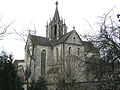 includes Bebenhausen Abbey former Cistercian abbey in Germany
 -
 includes Stift Schlägl building in Upper Austria, Austria
 -
 includes Abbey of Mirasole church building in Opera, Italy
 -
_Abbatiale_Saint-Martin_19.JPG/120px-Laon_(02)_Abbatiale_Saint-Martin_19.JPG) includes Abbey of St. Martin abbey located in Aisne, France
includes Abbey of St. Martin abbey located in Aisne, France -
 includes Adalbert III of Bohemia Archbishop of Salzburg
 -
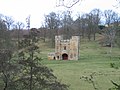 includes Alnwick Abbey Premonstratensian monastery in Northumberland, England, UK
 -
 includes Ardenne Abbey abbey located in Calvados, in France
 -
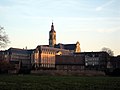 includes Averbode Abbey monastery in Averbode, Belgium
 -
.jpg/120px-Boleslav_Jablonsk%C3%BD_%E2%80%93_Jan_Vil%C3%ADmek_%E2%80%93_%C4%8Cesk%C3%A9_album_(cropped).jpg) includes Boleslav Jablonský Czech poet and Roman Catholic priest (1813-1881)
includes Boleslav Jablonský Czech poet and Roman Catholic priest (1813-1881)
Show all 31
-
 includes Doksany Convent monastery
 -
 includes Drongen Abbey monastery in Ghent, Belgium
 -
 includes František Tůma Czech composer
 -
.jpg/120px-Abbaye_Saint-Michel-de-Frigolet_(2008).jpg) includes Frigolet Abbey abbey located in Bouches-du-Rhône, in France
includes Frigolet Abbey abbey located in Bouches-du-Rhône, in France -
 includes Gregory VIII Pope of the Roman Catholic Church in 1187
 -
 includes Grimbergen Abbey monastery
 -
 includes Hermann Joseph German mystic
 -
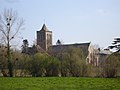 includes La Lucerne Abbey abbey located in Manche, in France
 -
 includes Monastery of Santa María la Real in Aguilar de Campoo Aguilar de Campoo
 -
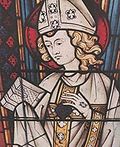 includes Norbert of Xanten 12th‑century German bishop and founder of the Premonstratensians, Catholic saint, reformer of clergy and defender of the Eucharist
 - includes Norbertine Rite Liturgical rite of the Catholic Church
-
 includes Park Abbey monastery
 -
 includes Postel Abbey monastery in Postel, Belgium
 -
 includes Prémontré Abbey abbey located in Aisne, France
 -
.jpg/120px-Prokop_Divi%C5%A1_%E2%80%93_Jan_Vil%C3%ADmek_%E2%80%93_%C4%8Cesk%C3%A9_album_(cropped).jpg) includes Prokop Diviš Czech physicist, inventor and roman catholic priest (1698-1765)
includes Prokop Diviš Czech physicist, inventor and roman catholic priest (1698-1765) -
.jpg/120px-Praha%2C_Hradcany_-_Strahovsky_klaster_(pohled_z_ulice_Uvoz).jpg) includes Strahov Monastery church complex in Prague
includes Strahov Monastery church complex in Prague -
 includes Teplá Abbey national monument of the Czech Republic
 -
 includes Tongerlo Abbey monastery
 -
 includes Torre Abbey house museum in Torquay, United Kingdom
 -
.png/120px-Album_pisarzy_polskich_page015_-_Cio%C5%82ek_(Vitellio).png) includes Vitello Polish-German scholar
includes Vitello Polish-German scholar -
 includes Wilten Abbey abbey in Innsbruck
 -
 includes Windberg Abbey monastery
Sources
Sources and evidence
Where every statement on this page comes from, and how each one stands.
2 statements on this record
- 2 Imported Taken from Wikidata as it stands. Nobody here has read it.
Only this record’s own statements. What other records say about it is counted on theirs.
Three layers, three licences
- Text
- Wikipedia · CC BY-SA 4.0, quoted, not merged
- Pictures
- Wikimedia Commons · each file’s own terms
Review
Not yet read by an editor here. Every relationship on this page is an import.
Disagreements are kept, not resolved, and a count of sources is not a confidence score.


Keep exploring
More from Christianity
Its branches, councils, saints, offices and buildings — and where they stopped recognising each other.