
.jpg/960px-Ordenaciones_sacerdotales_en_Torreciudad_03.09.2017_-_20_(36831054302).jpg)
Institution Christianity
Prelature of the Holy Cross and Opus Dei
Praelatura Sanctae Crucis et Operis Dei la
Personal Prelature of the Catholic Church
- Dated from 2 October 1928 CE
- Also called Praelatura Sanctae Crucis et Operis Dei, Opus Dei, Personal Prelature of Opus Dei
Founded, kept
and handed on.
As the records give it
Founders
Named as founders
Who the records name as founding it.
What this means
An attribution, usually recorded long afterwards and often contested — not a claim that it began fully formed, or that everyone who belongs to it accepts the attribution. An order, a church or a dynasty named as founder is listed by name rather than drawn: an arch is for a likeness.

Nearby
Places nearby
The nearest this collection holds, measured between recorded coordinates.
What this means
Computed from coordinates, not stated by any source. Nearness is geometry, not a connection: two sites a kilometre apart may never have shared a worshipper, a tradition or a century. Where either coordinate is recorded only to a district, the distance is rounded and says “about”.
-
 within about 10 km
prelatic church of Our Lady of Peace
prelatic church of Opus Dei -
 1.3 km away
Cerasi Chapel
chapel in the church of Santa Maria del Popolo, Rome -
 1.3 km away
Santa Maria del Popolo
church in Rome, Italy -
 1.4 km away
Santa Maria Addolorata a piazza Buenos Aires
church building in Rome -
 1.6 km away
Sant'Atanasio
church in Rome -
 1.7 km away
Moschea di Roma
building in Rome, Italy
More
More institutions in Christianity
The institutions this collection holds nearest in date, in their order.
What this means
Listed because they are institutions in Christianity, as this one is, dated close to it — not because either record names the other. Being on the same shelf is not a connection, an influence or a sequence.
-
 from 1925 CE
Fu Jen Catholic University
Catholic University in Taipei, Taiwan -
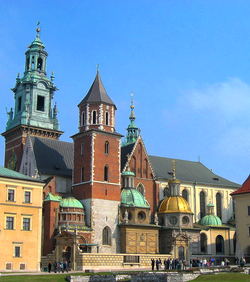 from 28 October 1925 CE
Roman Catholic Archdiocese of Kraków
Catholic archdiocese in Poland -
 from 28 October 1925 CE
Roman Catholic Archdiocese of Vilnius
since 1925 Catholic archdiocese in Lithuania -
 from 1925 CE
Roman Catholic Archdiocese of Katowice
Catholic archdiocese in Poland -
 from 1925 CE
Roman Catholic Archdiocese of Częstochowa
Catholic archdiocese in Poland -
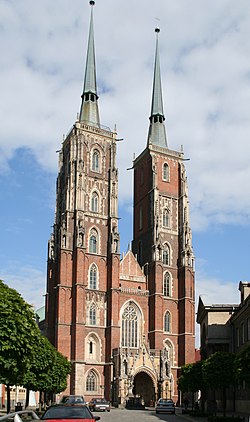 from 13 August 1930 CE
Roman Catholic Archdiocese of Wrocław
Catholic archdiocese in Poland
Connections
How Prelature of the Holy Cross and Opus Dei connects
Grouped by the kind of relationship, because a successor is not a son and a shared symbol is not an influence.
Text 2
What this means
A work, its editions and its witnesses are distinct; their dates are not interchangeable.
Does not imply that the work is the only account · that the work is contemporary with what it describes
Imported from Wikidata unless a tile says otherwise. Nothing here has been read by an editor.
%2C_Shop_--_2013_--_3802.jpg/120px-Rome_(Italy)%2C_Shop_--_2013_--_3802.jpg)
Sources
Sources and evidence
Where every statement on this page comes from, and how each one stands.
4 statements on this record
- 2 Has references The statement cites something outside Wikimedia. That citation has not been checked here.
- 2 Imported Taken from Wikidata as it stands. Nobody here has read it. 2 of them cite only Wikipedia: one source, counted once.
Only this record’s own statements. What other records say about it is counted on theirs.
Three layers, three licences
- Text
- Wikipedia · CC BY-SA 4.0, quoted, not merged
- Pictures
- Wikimedia Commons · each file’s own terms
Review
Not yet read by an editor here. Every relationship on this page is an import.
Disagreements are kept, not resolved, and a count of sources is not a confidence score.


Keep exploring
More from Christianity
Its branches, councils, saints, offices and buildings — and where they stopped recognising each other.