
Institution Christianity
Order of St. Augustine
Ordo Sancti Augustini la
Catholic order of mendicant friars
- Dated from 1244 CE
- Also called Hermits of St Augustine, Order of Saint Augustine, Augustinian friars
Founded, kept
and handed on.
As the records give it

Overview
From Wikipedia, quoted unmodified under CC BY-SA 4.0; the article’s history is its list of authors.
Founders
Named as founders
Who the records name as founding it.
What this means
An attribution, usually recorded long afterwards and often contested — not a claim that it began fully formed, or that everyone who belongs to it accepts the attribution. An order, a church or a dynasty named as founder is listed by name rather than drawn: an arch is for a likeness.
.png/330px-The_Council_of_Lyons_excommunicating_Frederic_II_(cropped).png)

Connections
How Order of St. Augustine connects
Grouped by the kind of relationship, because a successor is not a son and a shared symbol is not an influence.
Affiliation 19
What this means
Association with a tradition or school. Traditions branch, overlap and re-merge; this is not a clean single-origin tree.
Does not imply personal belief at every point in a life · the practice of a population
Imported from Wikidata unless a tile says otherwise. Nothing here has been read by an editor.
-
 includes Santa Maria del Popolo church in Rome, Italy
 -
.jpg/120px-Lucas_Cranach_d.%C3%84._-_Martin_Luther%2C_1528_(Veste_Coburg).jpg) includes Martin Luther German priest and theologian (1483–1546)
includes Martin Luther German priest and theologian (1483–1546) -
 includes St Thomas's Abbey in Brno Augustinian monastery in Brno
 -
 includes Royal Monastery of San Lorenzo de El Escorial monastery and historical residence of the King of Spain
 -
 includes Abraham a Sancta Clara German writer and Augustinian Monk (1644-1709)
 -
 includes Cerasi Chapel chapel in the church of Santa Maria del Popolo, Rome
 -
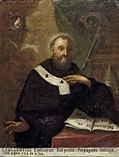 includes Fulgentius of Ruspe 6th-century Bishop of Ruspe
 -
 includes Giles of Rome Roman Catholic archbishop
 -
 includes Gregor Mendel Moravian scientist and Augustinian friar (1822–1884)
Show all 19
-
 includes Jedburgh Abbey abbey in Scottish Borders, Scotland, UK
 -
 includes Jordan of Saxony German Catholic priest, Dominican friar and writer (1190–1237)
 - includes Juan González de Mendoza Spanish bishop
-
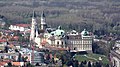 includes Klosterneuburg Monastery building in Klosterneuburg, Austria
 -
 includes Manuel Blanco Ramos Spanish botanist (1778–1845)
 -
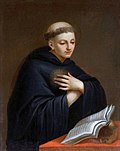 includes Nicholas of Tolentino Italian saint and mystic
 -
 includes Onofrio Panvinio Italian historian and antiquary (1529-1568)
 -
 includes Payo Enríquez de Rivera Viceroy of New Spain, Roman Catholic archbishop of Mexico
 -
.JPG/120px-Ph-mm-manila-intramuros-san_agustin_church_(2014).JPG) includes San Agustin Church Roman Catholic church in Intramuros, Manila, Philippines
includes San Agustin Church Roman Catholic church in Intramuros, Manila, Philippines -
.jpg/120px-Tom%C3%A1s_de_Villanueva_(cropped).jpg) includes Thomas of Villanova Spanish Augustinian saint and archbishop (1488–1555)
includes Thomas of Villanova Spanish Augustinian saint and archbishop (1488–1555)
Transmission 1
What this means
Teaching passed from one person to another. Not biological ancestry and not automatic institutional succession.
Does not imply that the tradition began fully formed · that later adherents accept the attribution
Imported from Wikidata unless a tile says otherwise. Nothing here has been read by an editor.
Sources
Sources and evidence
Where every statement on this page comes from, and how each one stands.
3 statements on this record
- 3 Imported Taken from Wikidata as it stands. Nobody here has read it. 1 of them cite only Wikipedia: one source, counted once.
Only this record’s own statements. What other records say about it is counted on theirs.
Three layers, three licences
- Text
- Wikipedia · CC BY-SA 4.0, quoted, not merged
- Pictures
- Wikimedia Commons · each file’s own terms
Review
Not yet read by an editor here. Every relationship on this page is an import.
Disagreements are kept, not resolved, and a count of sources is not a confidence score.


Keep exploring
More from Christianity
Its branches, councils, saints, offices and buildings — and where they stopped recognising each other.