

Institution Christianity
Franciscans
Ordines Franciscani la
From 1517, group of three religious orders within the Catholic Church
- Dated from 1209 CE
- Also called Seraphic Order, Ordo Fratrum Minorum, OFM
Founded, kept
and handed on.
As the records give it
Founders
Named as founders
Who the records name as founding it.
What this means
An attribution, usually recorded long afterwards and often contested — not a claim that it began fully formed, or that everyone who belongs to it accepts the attribution. An order, a church or a dynasty named as founder is listed by name rather than drawn: an arch is for a likeness.

Where
Located in
The places its record gives — a location, not a claim about what happened there.

Connections
How Franciscans connects
Grouped by the kind of relationship, because a successor is not a son and a shared symbol is not an influence.
Affiliation 27
What this means
Association with a tradition or school. Traditions branch, overlap and re-merge; this is not a clean single-origin tree.
Does not imply a fixed roster · that every account of the tradition knows this figure · a clean single-origin family tree · that the parent recognises the branch · personal belief at every point in a life · the practice of a population
Imported from Wikidata unless a tile says otherwise. Nothing here has been read by an editor.
-
 includes Order of Friars Minor male Franciscan order in the Catholic Church
 - includes Spiritual Franciscans Radical movement within the Franciscan Order (13th–14th centuries) advocating absolute poverty
- has the branch Spiritual Franciscans Radical movement within the Franciscan Order (13th–14th centuries) advocating absolute poverty
-
_Sant'Antonio_da_Padova_by_Alvise_Vivarini_-_Correr_Museum.jpg/120px-(Venice)_Sant'Antonio_da_Padova_by_Alvise_Vivarini_-_Correr_Museum.jpg) includes Anthony of Padua Franciscan saint, Doctor of the Church (1195–1231)
includes Anthony of Padua Franciscan saint, Doctor of the Church (1195–1231) -
 includes Attilio Ariosti Italian composer
 -
 includes Bernard of Quintavalle Italian religious, follower of St. Francis of Assisi
 -
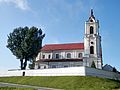 includes Church of Our Lady of the Angels and former Franciscan monastery in Hrodna
 -
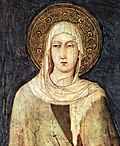 includes Clare of Assisi Italian saint (1194–1253)
 -
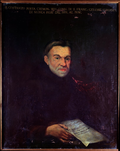 includes Costanzo Porta Italian composer
Show all 27
-
 includes Didacus of Alcalá Franciscan lay brother, missionary and saint
 -
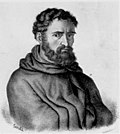 includes Fra Dolcino Italian preacher (1250-1307)
 -
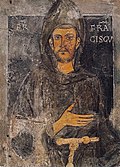 includes Francis of Assisi Italian Catholic saint, friar, deacon and preacher and founder of the Franciscan Order (1181/2–1226)
 -
 includes Gregory IX pope of the Catholic Church from 1227 to 1241
 -
 includes Hethum II, King of Armenia King of Cilician Armenia
 -
 includes Ivo of Kermartin Breton priest and saint (1253-1303)
 -
 includes John Joseph of the Cross Italian saint
 -
 includes Louis IX of France King of France from 1226 to 1270 (1214–1270)
 -
 includes Maria Restituta Kafka Franciscan nun and nurse; Nazi critic; victim of execution in Nazi-run Austria
 -
.jpg/120px-Pope_Paul_VI_1969_Portrait_(4x5_cropped).jpg) includes Paul VI pope of the Catholic Church from 1963 to 1978 (1897–1978)
includes Paul VI pope of the Catholic Church from 1963 to 1978 (1897–1978) -
 includes Pedro Calderón de la Barca Spanish dramatist (1600-1681)
 -
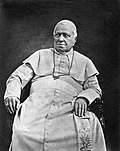 includes Pius IX Pope of the Catholic Church from 1846 to 1878
 -
 includes Robert Grosseteste English bishop and philosopher
 -
 includes Salomea of Poland Polish princess, religious sister
 -
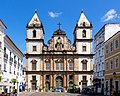 includes São Francisco Church and Convent church and convent in Salvador, Brazil
 -
.jpg/120px-Hal%C5%A1any%2C_ka%C5%9Bcio%C5%82_(10.07.2005).jpg) includes St. John the Baptist Church (Halshany)
includes St. John the Baptist Church (Halshany) -
 includes Therese Neumann German mystic (1898-1962)
 -
.jpg/120px-Franz_Kurz_zum_Thurn_und_Goldenstein_-_Valentin_Vodnik_(cropped).jpg) includes Valentin Vodnik Slovenian writer
includes Valentin Vodnik Slovenian writer
Succession in office 2
What this means
Who held an office after whom. Not parentage, not discipleship, and not universally recognised — offices are contested.
Does not imply parentage · discipleship · an explanation of why the succession happened
Imported from Wikidata unless a tile says otherwise. Nothing here has been read by an editor.

Transmission 1
What this means
Teaching passed from one person to another. Not biological ancestry and not automatic institutional succession.
Does not imply that the tradition began fully formed · that later adherents accept the attribution
Imported from Wikidata unless a tile says otherwise. Nothing here has been read by an editor.
.jpg/120px-Facade_of_Santa_Maria_Gloriosa_dei_Frari_(Venice).jpg)
Documented influence 1
What this means
A transmission argued from evidence. Not shared symbols, and not a short path through a database.
Does not imply shared symbols as evidence · a short path through a database
Imported from Wikidata unless a tile says otherwise. Nothing here has been read by an editor.
Sources
Sources and evidence
Where every statement on this page comes from, and how each one stands.
5 statements on this record
- 5 Imported Taken from Wikidata as it stands. Nobody here has read it. 1 of them cite only Wikipedia: one source, counted once.
Only this record’s own statements. What other records say about it is counted on theirs.
Three layers, three licences
- Text
- Wikipedia · CC BY-SA 4.0, quoted, not merged
- Pictures
- Wikimedia Commons · each file’s own terms
Review
Not yet read by an editor here. Every relationship on this page is an import.
Disagreements are kept, not resolved, and a count of sources is not a confidence score.


Keep exploring
More from Christianity
Its branches, councils, saints, offices and buildings — and where they stopped recognising each other.