

Institution Christianity
Dominican Order
Ordo Praedicatorum la
Roman Catholic religious order
- Dated from 1215 CE
- Also called Order of Preachers, OP, Order of Friars Preachers
Founded, kept
and handed on.
As the records give it
Founders
Named as founders
Who the records name as founding it.
What this means
An attribution, usually recorded long afterwards and often contested — not a claim that it began fully formed, or that everyone who belongs to it accepts the attribution. An order, a church or a dynasty named as founder is listed by name rather than drawn: an arch is for a likeness.
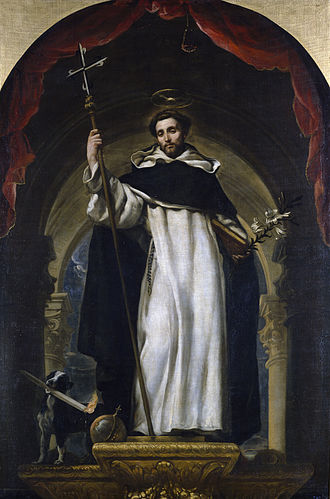
Where
Located in
The places its record gives — a location, not a claim about what happened there.
Located in, not held here: Rome
Connections
How Dominican Order connects
Grouped by the kind of relationship, because a successor is not a son and a shared symbol is not an influence.
Affiliation 60
What this means
Association with a tradition or school. Traditions branch, overlap and re-merge; this is not a clean single-origin tree.
Does not imply personal belief at every point in a life · the practice of a population
Imported from Wikidata unless a tile says otherwise. Nothing here has been read by an editor.
-
.jpg/120px-J._de_Torquemada_(cropped).jpg) includes Juan de Torquemada spansich Dominican and cardinal (1388-1468)
includes Juan de Torquemada spansich Dominican and cardinal (1388-1468) -
 includes Bartolomé de las Casas Spanish Dominican friar, historian, and social reformer (1474–1566)
 -
.jpg/120px-Portrait_of_Giordano_Bruno_in_%22Opere%22_Wellcome_L0015152_(cropped).jpg) includes Giordano Bruno Italian Dominican friar, philosopher and mathematician (1548–1600)
includes Giordano Bruno Italian Dominican friar, philosopher and mathematician (1548–1600) -
 includes Jean-Baptiste Henri Lacordaire French preacher and journalist (1802-1861)
 -
 includes The Singing Nun Belgian nun and musician
 -
 includes Abbaye de Sylvanès abbey located in Aveyron, in France
 -
_1352_150cm%2C_treviso%2C_ex_convento_di_san_niccol%C3%B2%2C_sala_del_capitolo.jpg/120px-Tommaso_da_modena%2C_ritratti_di_domenicani_(vescovo)_1352_150cm%2C_treviso%2C_ex_convento_di_san_niccol%C3%B2%2C_sala_del_capitolo.jpg) includes Albertus Magnus German-Dominican friar and saint (c. 1200–1280)
includes Albertus Magnus German-Dominican friar and saint (c. 1200–1280) -
 includes Bartolo Longo beatified Italian Catholic (1841-1926)
 -
 includes Basilica of Saint Nicholas church in Bari
Show all 60
-
_-_Esterno.jpg/120px-Santa_Sabina_(Rome)_-_Esterno.jpg) includes Basilica of Saint Sabina historical church on the Aventine Hill in Rome
includes Basilica of Saint Sabina historical church on the Aventine Hill in Rome -
.jpg/120px-Bologna_-_Piazza_San_Domenico_(DSCN0004-01-01).jpg) includes Basilica of San Domenico major church in Bologna, Italy
includes Basilica of San Domenico major church in Bologna, Italy -
 includes Basilica of St. Dominic church building in Naples, Italy
 -
 includes Batalha Monastery building in Batalha, Leiria District, Portugal
 -
 includes Beatrice d'Avesnes daughter of Baldwin of Avesnes and his wife Felicitas of Coucy
 -
 includes Benedict XI pope of the Catholic Church from 1303 to 1304
 -
 includes Benedict XIII pope of the Catholic Church from 1724 to 1730
 -
 includes Bridget of York English nun; (1480-1517)
 -
 includes Charles III, Count of Alençon French archbishop
 -
 includes convent of San Domenico monastery in Fiesole, Italy
 -
 includes convent of St Agnes of Bohemia 13th century convent and museum in Prague
 -
 includes Domingo de Soto Spanish theologian, jurist and scientist
 -
 includes Dominican Monastery monastery in České Budějovice
 -
 includes Dominikanerkloster Frankfurt am Main former Christian monastery in Frankfurt am Main
 -
 includes Fra Angelico Italian Early Renaissance painter
 -
 includes Francisco de Vitoria Spanish philosopher
 -
_Bonzano_LCCN2014702485.tif/lossy-page1-120px-Mgr._(i.e._Monseignor)_Bonzano_LCCN2014702485.tif.jpg) includes Giovanni Bonzano Catholic cardinal (1867–1927)
includes Giovanni Bonzano Catholic cardinal (1867–1927) -
 includes Giovanni Giocondo Italian friar, architect, antiquary, archaeologist, and classical scholar
 -
 includes Giovanni Pico della Mirandola Italian Renaissance philosopher (1463–1494)
 -
 includes Girolamo Savonarola Italian Dominican friar and preacher (1452-1498)
 -
 includes Henry Suso German Dominican friar and mystic
 - includes Humbert of Romans French Dominican friar
-
 includes Hyacinth of Poland Polish Dominican priest
 -
 includes Innocent V 185th Pope of the Catholic Church
 -
 includes Jacobus de Voragine Italian Dominican friar, archbishop of Genoa and author
 -
 includes Joan, Princess of Portugal Portuguese saint (1452-1490)
 -
 includes Johann Tetzel German Dominican friar and seller of indulgences 1460-1519
 -
.jpg/120px-St-Pierre-le-Jeune_protestant-Tauler_(2).jpg) includes Johannes Tauler mystic, author
includes Johannes Tauler mystic, author -
 includes John XXII pope of the Catholic Church from 1316 to 1334
 -
 includes Jordan of Saxony German Catholic priest, Dominican friar and writer (1190–1237)
 -
 includes Ludolph of Saxony German monk, theologian and writer
 -
 includes Margareta Ebner German nun and mystic
 -
 includes Marie, Prioress of Poissy French prioress
 -
 includes Martin of Opava Czech medieval chronicler (died 1279)
 -
 includes Meister Eckhart German philosopher and theologian
 -
 includes Michele Mazzarino Italian cardinal
 -
 includes Nicolò Albertini Italian Dominican friar, bishop and cardinal
 -
 includes Peter of Verona Italian Roman Catholic priest, martyr, and saint
 -
 includes Pius V 16th‑century Italian pope and Catholic saint, leading Counter‑Reformation reformer
 -
 includes Raymond of Penyafort Dominican Master General, archbishop and saint, catholic jurist from Catalonia
 -
 includes Saint Dominic founder of the Dominican Order (1170–1221)
 -
 includes Santi Giovanni e Paolo church in Venice, Italy
 -
 includes Schlehdorf Abbey abbey in Bavaria, Germany
 -
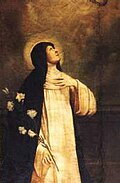 includes Stephana de Quinzanis Italian beatified
 -
 includes Theatine Church Catholic church in Munich, Germany
 -
 includes Theodoric of Freiberg German physicist
 - includes Third Order of Saint Dominic lay order of religious men and women
-
 includes Thomas Aquinas Italian Dominican friar, philosopher, Catholic priest, and Doctor of the Church (1225–1274)
 -
 includes Tomás de Torquemada Grand Inquisitor of Spain (1420-1498)
 -
 includes Tommaso Pio Boggiani Catholic cardinal (1863–1942)
 -
 includes Vincent Ferrer Spanish Dominican preacher and saint (1350–1419)
Transmission 1
What this means
Teaching passed from one person to another. Not biological ancestry and not automatic institutional succession.
Does not imply that the tradition began fully formed · that later adherents accept the attribution
Imported from Wikidata unless a tile says otherwise. Nothing here has been read by an editor.

Sources
Sources and evidence
Where every statement on this page comes from, and how each one stands.
4 statements on this record
- 4 Imported Taken from Wikidata as it stands. Nobody here has read it. 1 of them cite only Wikipedia: one source, counted once.
Only this record’s own statements. What other records say about it is counted on theirs.
Three layers, three licences
- Text
- Wikipedia · CC BY-SA 4.0, quoted, not merged
- Pictures
- Wikimedia Commons · each file’s own terms
Review
Not yet read by an editor here. Every relationship on this page is an import.
Disagreements are kept, not resolved, and a count of sources is not a confidence score.


Keep exploring
More from Christianity
Its branches, councils, saints, offices and buildings — and where they stopped recognising each other.