

Founded, kept
and handed on.
As the records give it
Overview
From Wikipedia, quoted unmodified under CC BY-SA 4.0; the article’s history is its list of authors.
Nearby
Places nearby
The nearest this collection holds, measured between recorded coordinates.
What this means
Computed from coordinates, not stated by any source. Nearness is geometry, not a connection: two sites a kilometre apart may never have shared a worshipper, a tradition or a century. Where either coordinate is recorded only to a district, the distance is rounded and says “about”.
-
 74 km away
Calder Abbey
Savigniac monastery in Cumbria, England, UK -
 76 km away
Dundrennan Abbey
abbey in Dumfries and Galloway, Scotland, UK -
 77 km away
Glenluce Abbey
monastery in Dumfries and Galloway, Scotland, UK -
.JPG/330px-Inch_Abbey%2C_Downpatrick%2C_March_2010_(03).JPG) 79 km away
79 km awayInch Abbey
Ruined monastery in County Down, Northern Ireland -
 86 km away
Movilla Abbey
abbey in the UK -
 87 km away
Furness Abbey
abbey in Cumbria, England, UK
More
More institutions in Christianity
The institutions this collection holds that are most widely recorded.
What this means
Listed because they are institutions in Christianity, as this one is — not because either record names the other. Being on the same shelf is not a connection, an influence or a sequence.
-
 from 1540 CE
Society of Jesus
male religious institute of the Roman Catholic Church -
_in_Duhok_(Nohaadra)_12.jpg/250px-The_Akitu%2C_Assyrian_New_Year%2C_festival_(2019)_in_Duhok_(Nohaadra)_12.jpg)
Assyrians
ethnic group native to Mesopotamia -
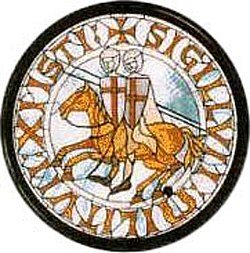 c. 16 January 1120 CE – 22 March 1312 CE
Knights Templar
medieval Christian military order, 1118–1312 -
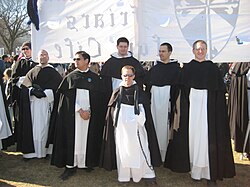 from 1215 CE
Dominican Order
Roman Catholic religious order -
 from 1190 CE
Teutonic Order
medieval military order founded c. 1190 -
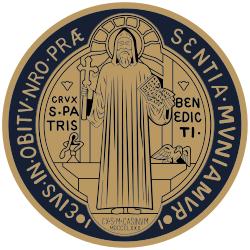 from 529 CE
Benedictines
Catholic monastic order
Connections
How Diocese of Sodor and Man connects
Grouped by the kind of relationship, because a successor is not a son and a shared symbol is not an influence.
Succession in office 1
What this means
Who held an office after whom. Not parentage, not discipleship, and not universally recognised — offices are contested.
Does not imply parentage · discipleship · an explanation of why the succession happened
Imported from Wikidata unless a tile says otherwise. Nothing here has been read by an editor.
Sources
Sources and evidence
Where every statement on this page comes from, and how each one stands.
3 statements on this record
- 3 Imported Taken from Wikidata as it stands. Nobody here has read it. 1 of them cite only Wikipedia: one source, counted once.
Only this record’s own statements. What other records say about it is counted on theirs.
Three layers, three licences
- Text
- Wikipedia · CC BY-SA 4.0, quoted, not merged
- Pictures
- Wikimedia Commons · each file’s own terms
Review
Not yet read by an editor here. Every relationship on this page is an import.
Disagreements are kept, not resolved, and a count of sources is not a confidence score.


Keep exploring
More from Christianity
Its branches, councils, saints, offices and buildings — and where they stopped recognising each other.