

Institution Christianity
Conventual Franciscans
Ordo Fratrum Minorum Conventualium la
Religious order of friars within the Catholic Church
- Dated from 13th century CE
- Also called Minorites, Order of Friars Minor Conventual, O.F.M.Conv.
Founded, kept
and handed on.
As the records give it
Overview
From Wikipedia, quoted unmodified under CC BY-SA 4.0; the article’s history is its list of authors.
Founders
Named as founders
Who the records name as founding it.
What this means
An attribution, usually recorded long afterwards and often contested — not a claim that it began fully formed, or that everyone who belongs to it accepts the attribution. An order, a church or a dynasty named as founder is listed by name rather than drawn: an arch is for a likeness.

Connections
How Conventual Franciscans connects
Grouped by the kind of relationship, because a successor is not a son and a shared symbol is not an influence.
Affiliation 11
What this means
Association with a tradition or school. Traditions branch, overlap and re-merge; this is not a clean single-origin tree.
Does not imply personal belief at every point in a life · the practice of a population
Imported from Wikidata unless a tile says otherwise. Nothing here has been read by an editor.
-
 includes Basilica di San Francesco basilica in Ravenna
 -
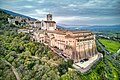 includes Basilica of San Francesco d'Assisi church in Assisi, Italy
 -
 includes Basilica of Santa Maria degli Angeli church in Assisi, Italy
 -
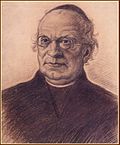 includes Bohuslav Matěj Černohorský Czech music educator, composer, organist and Roman Catholic priest (1684-1742)
 -
 includes Elias of Cortona Italian franciscan and politician
 -
 includes Julius II pope of the Catholic Church from 1503 to 1513 (1443–1513)
 -
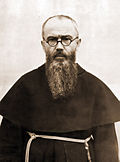 includes Maximilian Kolbe sixsevenish Conventual Franciscan friar, martyr and saint of the Roman Catholic Church (1894–1941)
 -
_-_Remote_view.jpg/120px-Sacro_Convento_(Assisi)_-_Remote_view.jpg) includes Sacro Convento Franciscan friary in Assisi, Umbria, Italy, part of the Basilica of San Francesco d'Assisi
includes Sacro Convento Franciscan friary in Assisi, Umbria, Italy, part of the Basilica of San Francesco d'Assisi -
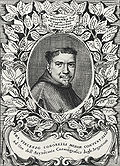
_Cath%C3%A9drale_Sainte-C%C3%A9cile_-_Tr%C3%A8sor_-_Portrait_du_pape_Sixte_V_-_PalissyIM81001477.jpg/120px-(Albi)_Cath%C3%A9drale_Sainte-C%C3%A9cile_-_Tr%C3%A8sor_-_Portrait_du_pape_Sixte_V_-_PalissyIM81001477.jpg) includes Sixtus V pope of the Catholic Church from 1585 to 1590
includes Sixtus V pope of the Catholic Church from 1585 to 1590

Succession in office 1
What this means
Who held an office after whom. Not parentage, not discipleship, and not universally recognised — offices are contested.
Does not imply parentage · discipleship · an explanation of why the succession happened
Imported from Wikidata unless a tile says otherwise. Nothing here has been read by an editor.

Transmission 1
What this means
Teaching passed from one person to another. Not biological ancestry and not automatic institutional succession.
Does not imply that the tradition began fully formed · that later adherents accept the attribution
Imported from Wikidata unless a tile says otherwise. Nothing here has been read by an editor.
_-_Facade.jpg/120px-Sant'Antonio_(Padua)_-_Facade.jpg)
Sources
Sources and evidence
Where every statement on this page comes from, and how each one stands.
3 statements on this record
- 3 Imported Taken from Wikidata as it stands. Nobody here has read it. 1 of them cite only Wikipedia: one source, counted once.
Only this record’s own statements. What other records say about it is counted on theirs.
Three layers, three licences
- Text
- Wikipedia · CC BY-SA 4.0, quoted, not merged
- Pictures
- Wikimedia Commons · each file’s own terms
Review
Not yet read by an editor here. Every relationship on this page is an import.
Disagreements are kept, not resolved, and a count of sources is not a confidence score.


Keep exploring
More from Christianity
Its branches, councils, saints, offices and buildings — and where they stopped recognising each other.