
_in_Duhok_(Nohaadra)_12.jpg/960px-The_Akitu%2C_Assyrian_New_Year%2C_festival_(2019)_in_Duhok_(Nohaadra)_12.jpg)
Institution Christianity
Assyrians
Assyrii (praesens aetas) la Ἀσσύριοι grc ܐܬܘܪ̈ܝܐ arc
Ethnic group native to Mesopotamia
- Also called Assyrians, Aisors, Suraye
Founded, kept
and handed on.
As the records give it
Connections
How Assyrians connects
Grouped by the kind of relationship, because a successor is not a son and a shared symbol is not an influence.
Affiliation 10
What this means
Association with a tradition or school. Traditions branch, overlap and re-merge; this is not a clean single-origin tree.
Does not imply that the culture was religiously uniform · personal belief at every point in a life · the practice of a population
Imported from Wikidata unless a tile says otherwise. Nothing here has been read by an editor.
-
 figures of Nergal underworld deity worshipped throughout Mesopotamia
 - belongs to Ancient Church of the East ancient Christian religious body from Assyria
-
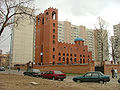 belongs to Assyrian Church of the East ancient Christian religious branch originated in Assyria
 - belongs to Assyrian Evangelical Church religious denomination
- belongs to Assyrian Pentecostal Church Christian denomination
-
 belongs to Chaldean Catholic Church Eastern Syriac particular church of the Catholic Church
 -
 belongs to Christianity Abrahamic monotheistic religion
 -
 belongs to Syriac Catholic Church Eastern Catholic church
 -
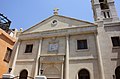 belongs to Syriac Orthodox Church Oriental Orthodox church

Sources
Sources and evidence
Where every statement on this page comes from, and how each one stands.
9 statements on this record
- 9 Imported Taken from Wikidata as it stands. Nobody here has read it. 4 of them cite only Wikipedia: one source, counted once.
Only this record’s own statements. What other records say about it is counted on theirs.
Three layers, three licences
- Text
- Wikipedia · CC BY-SA 4.0, quoted, not merged
- Pictures
- Wikimedia Commons · each file’s own terms
Review
Not yet read by an editor here. Every relationship on this page is an import.
Disagreements are kept, not resolved, and a count of sources is not a confidence score.


Keep exploring
More from Christianity
Its branches, councils, saints, offices and buildings — and where they stopped recognising each other.