

House
Rurikids
Ruling dynasty in Kievan Rus
- Dated 862 CE – 1598 CE
- Also called Rurik dynasty
A family
on the record,
reign by reign.
Documented kin
Members · 88
The house, member by member
One family drawn as a tree, then every member, oldest first where a date is recorded.
What this means
People whose own records place them in this house. Membership of a house is a family fact. It is not a religious affiliation and not a right to any office. “Child of” appears where a member’s recorded parent is also in the house — a documented human family, the same kind of claim as membership, and nothing more. Imported from Wikidata: nothing here has been read by an editor.
8 children in the house
-
 Vladimir of Novgorod 1020 CE – 1052 CE
 -
 Anastasia of Kyiv 1023 CE – 1074 CE
 -
 Iziaslav I of Kiev 1024 CE – 1078 CE
 -
 Anne of Kyiv c. 1025 CE – the 1070s CE
 -
 Elisiv of Kiev 1025 CE – 1066 CE
 -
 Sviatoslav II of Kiev 1027 CE – 1076 CE
 -
 Vsevolod I of Kiev 1030 CE – 1093 CE 2 children in the house
-
 Igor Yaroslavich 1036 CE – 1060 CE
Every member
People whose own records place them in this house.
-
 Yaropolk I of Kievuntil 11 June 978 CE · Child of Sviatoslav I of Kiev
 - Maria Nagayauntil 1608 CE · Russian tsaritsa
-
's_grave.jpg/330px-Tsarina_Anna_Koltovskaya_(nun_Daria)'s_grave.jpg) Anna Koltovskayauntil 5 April 1626 CE (Old Style) · Tsarina of All Russia
Anna Koltovskayauntil 5 April 1626 CE (Old Style) · Tsarina of All Russia -
 Rurik830 CE – 879 CE · Varangian chieftain (c. 830-879)
 -
 Igor of Kiev878 CE – 945 CE · Child of Rurik
 -
 Olga of Kievc. 890 CE – 11 July 969 CE · princess of Kiev, Orthodox saint (c. 890–925)
 -
 Sviatoslav I of Kievc. 942 CE – 972 CE · Child of Igor of Kiev
 -
 Oleg of the Drevlyans955 CE – 977 CE · Child of Sviatoslav I of Kiev
 -
 Vladimir the Greatc. 956 CE – 15 July 1015 CE · Child of Sviatoslav I of Kiev
 -
 Yaroslav the Wise978 CE – 20 February 1054 CE · Child of Vladimir the Great
 -
 Izyaslav of Polotskbetween 978 and 979 CE – 1001 CE · Child of Vladimir the Great
 -
 Sviatopolk I of Kievc. 979 CE – 24 July 1019 CE · Child of Vladimir the Great
 -
 Mstislav of Chernigov983 CE – 1036 CE · Child of Vladimir the Great
 -
 Sudislav984 CE – 1063 CE · Child of Vladimir the Great
 -
 Maria Dobroniega of Kievafter 1012 CE – 13 December 1087 CE · Child of Vladimir the Great
 - Vladimir of Novgorod1020 CE – 4 October 1052 CE · Child of Yaroslav the Wise
- Anastasia of Kyiv1023 CE – 1074 CE · Child of Yaroslav the Wise
- Iziaslav I of Kiev1024 CE – 3 October 1078 CE · Child of Yaroslav the Wise
Show 70 more
- Anne of Kyivc. 1025 CE – the 1070s CE · Child of Yaroslav the Wise
- Elisiv of Kiev1025 CE – 1066 CE · Child of Yaroslav the Wise
- Sviatoslav II of Kiev1027 CE – 27 December 1076 CE · Child of Yaroslav the Wise
- Vsevolod I of Kiev1030 CE – 10 April 1093 CE · Child of Yaroslav the Wise
- Igor Yaroslavich1036 CE – 1060 CE · Child of Yaroslav the Wise
-
 Vladimir II Monomakh1053 CE – 19 May 1125 CE · Child of Vsevolod I of Kiev
 -
 Boris Vyacheslavichc. 1054 CE – 3 October 1078 CE · Prince of Rus'
 -
 Eupraxia of Kiev1071 CE – 20 July 1109 CE · Child of Vsevolod I of Kiev
 -
 Mstislav I of KievFebruary 1076 CE – 14 April 1132 CE · Child of Vladimir II Monomakh
 -
 Yaropolk II of Kiev1082 CE – 18 February 1139 CE · Child of Vladimir II Monomakh
 -
 Viacheslav I of Kiev1083 CE – 2 February 1154 CE · Child of Vladimir II Monomakh
 -
 Yuri Dolgorukiythe 1090s CE – 15 May 1157 CE · Child of Vladimir II Monomakh
 -
 Malmfred of Kyivthe 1090s CE – 1137 CE · Child of Mstislav I of Kiev
 -
 Vsevolod II of Kievc. 1094 CE – 1 August 1146 CE · Grand Prince of Kiev
 -
 Iziaslav III of Kievthe 1100s CE – 6 March 1161 CE · Grand Prince of Kiev
 - Ingeborg of Kyivc. 1100 CE – 1137 CE · Child of Mstislav I of Kiev
-
 Mstislav II of Kiev12th century CE – 19 April 1170 CE · Grand Prince of Kiev
 -
 Mstislav III of Kyiv12th century CE – 2 June 1223 CE · Child of Roman I of Kiev
 -
 Vsevolod of Pskovc. 1103 CE – 11 February 1138 CE · Child of Mstislav I of Kiev
 -
 Rostislav I of Kiev1110 CE – 1167 CE · Child of Mstislav I of Kiev
 -
 Andrey Bogolyubskyc. 1111 CE – 29 June 1174 CE · Child of Yuri Dolgorukiy
 -
 Sviatoslav III of Kiev1123 CE – 27 July 1194 CE · Child of Vsevolod II of Kiev
 -
 Gleb of Kiev1125 CE – 20 January 1171 CE · Child of Yuri Dolgorukiy
 -
 Euphrosyne of Kyiv1130 CE – 1186 CE · Child of Mstislav I of Kiev
 -
 Roman I of Kievthe 1130s CE – 14 June 1180 CE · Child of Rostislav I of Kiev
 -
 Vladimir III Mstislavich1132 CE – 30 May 1171 CE · Child of Mstislav I of Kiev
 -
 Yaroslav II of Kiev1132 CE – 1180 CE · Grand Prince of Kiev
 -
 Rurik Rostislavich1137 CE – 1212 CE · Child of Rostislav I of Kiev
 -
 Mikhail I of Vladimir1145 CE – 20 June 1176 CE · Child of Yuri Dolgorukiy
 -
 Ingvar of Kiev1152 CE – 1220 CE · Child of Yaroslav II of Kiev
 -
.jpg/330px-Prince_Dmitry_(Vsevolod_Yurievich).jpg) Vsevolod III the Big Nest22 October 1154 CE – 12 April 1212 CE · Child of Yuri Dolgorukiy
Vsevolod III the Big Nest22 October 1154 CE – 12 April 1212 CE · Child of Yuri Dolgorukiy -
 Vsevolod IV of Kyiv1158 CE – August 1212 CE · Child of Sviatoslav III of Kiev
 -
 Rostislav II of Kyiv5 April 1173 CE – 3 March 1218 CE · Child of Rurik Rostislavich
 -
 Konstantin of Rostov18 May 1185 CE – 2 February 1218 CE · Child of Vsevolod III the Big Nest
 -
 Vladimir IV Rurikovich1187 CE – 3 March 1239 CE · Child of Rurik Rostislavich
 -
 Yuri II of Vladimir26 November 1188 CE – 4 March 1238 CE · Child of Vsevolod III the Big Nest
 -
 Yaroslav II of Vladimir8 February 1191 CE – 30 September 1246 CE · Child of Vsevolod III the Big Nest
 -
%2C_%D0%B8%D0%BB%D0%B8_%D0%AE%D1%80%D0%B8%D1%8F_II_(%D0%9C.%D0%A0._%D0%9C%D0%BE%D1%80%D0%BE%D0%B7%D0%BE%D0%B2%D0%B0%2C_%D0%A1.%D0%90._%D0%9A%D0%B0%D1%80%D1%82%D0%B0%D1%88%D0%BE%D0%B2%D0%B0).jpg/330px-%D0%9F%D1%80%D0%B5%D0%B4%D0%BF%D0%BE%D0%BB%D0%BE%D0%B6%D0%B8%D1%82%D0%B5%D0%BB%D1%8C%D0%BD%D0%BE%D0%B5_%D0%B8%D0%B7%D0%BE%D0%B1%D1%80%D0%B0%D0%B6%D0%B5%D0%BD%D0%B8%D0%B5_%D0%BA%D0%BD%D1%8F%D0%B7%D1%8F_%D0%A1%D0%B2%D1%8F%D1%82%D0%BE%D1%81%D0%BB%D0%B0%D0%B2%D0%B0_III_(%D0%BF%D0%BE_%D0%B2%D0%B5%D1%80%D1%81%D0%B8%D0%B8_%D0%90.%D0%92._%D0%A1%D1%82%D0%BE%D0%BB%D0%B5%D1%82%D0%BE%D0%B2%D0%B0)%2C_%D0%B8%D0%BB%D0%B8_%D0%AE%D1%80%D0%B8%D1%8F_II_(%D0%9C.%D0%A0._%D0%9C%D0%BE%D1%80%D0%BE%D0%B7%D0%BE%D0%B2%D0%B0%2C_%D0%A1.%D0%90._%D0%9A%D0%B0%D1%80%D1%82%D0%B0%D1%88%D0%BE%D0%B2%D0%B0).jpg) Sviatoslav IV of Vladimir27 March 1196 CE – 3 February 1252 CE · Child of Vsevolod III the Big Nest
Sviatoslav IV of Vladimir27 March 1196 CE – 3 February 1252 CE · Child of Vsevolod III the Big Nest -
 Alexander Nevsky13 May 1220 CE – 14 November 1263 CE · Child of Yaroslav II of Vladimir
 -
 Mikhail Khorobrit1229 CE – 1249 CE · Child of Yaroslav II of Vladimir
 -
 Yaroslav of Tver1230 CE – 16 September 1272 CE · Child of Yaroslav II of Vladimir
 -
 Vasily of Kostroma1241 CE – January 1276 CE · Child of Yaroslav II of Vladimir
 -
 Kunigunda of Halych1245 CE – 9 September 1285 CE · Queen consort of Bohemia
 -
 Gryfina of Halychc. 1248 CE – the 1300s CE · Polish queen
 -
 Dmitry of Pereslavlc. 1250 CE – 1294 CE · Child of Alexander Nevsky
 -
 Andrey of Gorodets1255 CE – 27 July 1304 CE · Child of Alexander Nevsky
 -
 Daniel of Moscow1261 CE – 5 March 1303 CE · Child of Alexander Nevsky
 -
 Mikhail of Tver1271 CE – 1318 CE · Child of Yaroslav of Tver
 -
.jpg/330px-%D0%AE%D1%80%D0%B8%D0%B9_III_%D0%9C%D0%BE%D1%81%D0%BA%D0%BE%D0%B2%D1%81%D0%BA%D0%B8%D0%B9_(%D1%81%D1%82%D0%B5%D0%BD%D0%BE%D0%BF%D0%B8%D1%81%D1%8C_%D0%90%D1%80%D1%85%D0%B0%D0%BD%D0%B3%D0%B5%D0%BB%D1%8C%D1%81%D0%BA%D0%BE%D0%B3%D0%BE_%D1%81%D0%BE%D0%B1%D0%BE%D1%80%D0%B0).jpg) Yury of Moscow1281 CE – 21 November 1325 CE · Child of Daniel of Moscow
Yury of Moscow1281 CE – 21 November 1325 CE · Child of Daniel of Moscow -
 Ivan I of Moscow1288 CE – 31 March 1340 CE · Child of Daniel of Moscow
 -
 Dmitry of Tver15 October 1299 CE – 15 September 1326 CE · Child of Mikhail of Tver
 -
 Aleksandr Mikhailovich of Tver7 October 1301 CE – 28 October 1339 CE · Child of Mikhail of Tver
 -
 Simeon of Moscow7 September 1316 CE – 27 April 1353 CE · Child of Ivan I of Moscow
 -
 Dmitry of Suzdal1322 CE – 5 July 1383 CE · Prince of Suzdal and Nizhny Novgorod
 -
 Ivan II of Moscow30 March 1326 CE – 13 November 1359 CE · Child of Ivan I of Moscow
 -
 Uliana of Tver1331 CE – 17 March 1392 CE · Child of Aleksandr Mikhailovich of Tver
 -
 Dmitry Donskoy12 October 1350 CE – 19 May 1389 CE · Child of Ivan II of Moscow
 -
 Vladimir the Bold15 July 1353 CE – 12 August 1410 CE · Russian prince
 -
 Vasily I of Moscow30 December 1371 CE – 27 February 1425 CE · Child of Dmitry Donskoy
 -
 Yury of Zvenigorod26 November 1374 CE – 5 June 1434 CE · Child of Dmitry Donskoy
 -
 Anna of Moscow1393 CE – August 1417 CE · Child of Vasily I of Moscow
 -
 Dmitry Shemyakabetween 1400 and 1422 CE – 17 July 1453 CE · Child of Yury of Zvenigorod
 -
 Vasily Kosoy1421 CE – 1448 CE · Child of Yury of Zvenigorod
 -
 Ivan III of Moscow22 January 1440 CE – 27 October 1505 CE · Grand Prince of Moscow and all Russia from 1462 to 1505
 -
 Vasili III of Moscow25 March 1479 CE – 3 December 1533 CE · Child of Ivan III of Moscow
 -
 Solomonia Saburova1490 CE – 18 December 1542 CE · Russian Orthodox saint and wife of Grand Prince Vasili III of Muscovy
 -
 Ivan the Terrible25 August 1530 CE – 18 March 1584 CE (Old Style) · Child of Vasili III of Moscow
 -
 Tsarevich Ivan Ivanovich of Russia28 March 1554 CE – 19 November 1581 CE · Child of Ivan the Terrible
 -
.jpg/330px-Feodor_I_of_Russia_(parsuna%2C_1630s%2C_Moscow_History_museum).jpg) Feodor I of Russia31 May 1557 CE – 7 January 1598 CE (Old Style) · Child of Ivan the Terrible
Feodor I of Russia31 May 1557 CE – 7 January 1598 CE (Old Style) · Child of Ivan the Terrible -
 Dmitry of Uglich19 October 1582 CE – 15 May 1591 CE (Old Style) · Child of Maria Nagaya
Succession
Offices held in the house
The members in each office, in order — a selection from the office’s whole line.
Grand Prince of Kiev
- 39 holders
- 7 gaps
- 18 undated
What this means
Who held an office after whom. Not parentage, not discipleship, and not universally recognised — offices are contested.
Does not imply recognition by every tradition · an uncontested claim · parentage · discipleship · an explanation of why the succession happened
Holding an office after someone says nothing about being related to them or taught by them. Where a line is also a family, both are on the holders’ own pages as separate sections.
A gap is a vacancy, an interregnum or a hole in the record; an overlap is rival claims or an office held by more than one at once. The records do not say which, so neither is resolved here. A gap shorter than two years sits inside the precision of year-dated records and is not marked. Only this house’s members are shown, so a gap between two of them may be a holder from outside it.
Why a succession happened is a historical argument. Where sources make one, it belongs in a reviewed connection with its citations — not in this order, and not in a predecessor field.
Recognition is never universal. Where a card names no recognising body, none is recorded — which is not the same as none.
Imported from Wikidata unless a card says otherwise. Nothing here has been read by an editor.
-
 945 CE – 972 CE Sviatoslav I of Kiev Prince of Kiev
 -
 972 CE – 978 CE Yaropolk I of Kiev Prince of Kiev
 -
Gap about 2 years before the next in this house
 11 June 980 CE – 15 July 1015 CE Vladimir the Great Grand Prince of Kiev
 -
 1015 CE – 1016 CE Sviatopolk I of Kiev grand prince of Kiev (978-1019)
 -
 1016 CE – 1018 CE Yaroslav the Wise Grand Prince of Kiev from 1019 to 1054
 - 1018 CE – 1019 CE Sviatopolk I of Kiev grand prince of Kiev (978-1019)
- 1019 CE – 20 February 1054 CE Yaroslav the Wise Grand Prince of Kiev from 1019 to 1054 Has references
-
 20 February 1054 CE – 1068 CE Iziaslav I of Kiev grand prince of Kiev (r. 1054–1068; 1069–1073; 1077–1078)
 - 1069 CE – 1073 CE Iziaslav I of Kiev grand prince of Kiev (r. 1054–1068; 1069–1073; 1077–1078)
-
Gap about 3 years before the next in this house
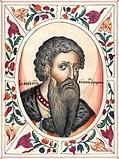 1076 CE – 1077 CE Vsevolod I of Kiev grand prince of Kiev (1030-1093)
 - 1077 CE – 3 October 1078 CE Iziaslav I of Kiev grand prince of Kiev (r. 1054–1068; 1069–1073; 1077–1078)
- 1078 CE – 1093 CE Vsevolod I of Kiev grand prince of Kiev (1030-1093)
-
Gap about 32 years before the next in this house
 1125 CE – 1132 CE Mstislav I of Kiev grand prince of Kiev (1076–1132)
 -
Gap about 32 years before the next in this house
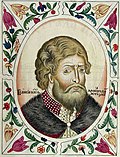
 1171 CE – 30 May 1171 CE Vladimir III Mstislavich grand prince of Kiev
Show 5 more holders
-
Gap about 2 years before the next in this house
.jpg/120px-Prince_Dmitry_(Vsevolod_Yurievich).jpg) February 1173 CE – 24 March 1173 CE Vsevolod III the Big Nest Grand Prince of Vladimir, 1176-1212
February 1173 CE – 24 March 1173 CE Vsevolod III the Big Nest Grand Prince of Vladimir, 1176-1212 -
 1173 CE Sviatoslav III of Kiev Grand Prince of Kiev
 -
Gap about 3 years before the next in this house
1176 CE – 1181 CE Sviatoslav III of Kiev Grand Prince of Kiev - 1181 CE – 1194 CE Sviatoslav III of Kiev Grand Prince of Kiev
-
Gap about 55 years before the next in this house
 1249 CE – 1263 CE Alexander Nevsky political and military figure of Kievan Rus' (1246–1263)
No dates recorded 18
-
 Dates unrecorded Iziaslav III of Kiev Grand Prince of Kiev
 -
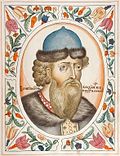 Dates unrecorded Vladimir II Monomakh Grand Prince of Kiev (1053-1125)
 -
 Dates unrecorded Sviatoslav II of Kiev grand prince of Kiev (1027–1076)
 -
 Dates unrecorded Viacheslav I of Kiev grand prince of Kiev
 -
 Dates unrecorded Ingvar of Kiev Russian prince (1152-1220)
 -
 Dates unrecorded Rostislav I of Kiev Grand Prince of Kiev (1110-1167)
 -
 Dates unrecorded Yaroslav II of Vladimir Grand Prince of Vladimir (1191-1246)
 -
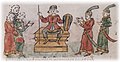 Dates unrecorded Roman I of Kiev Russian prince
 -
 Dates unrecorded Rurik Rostislavich grand prince of Kyiv
 -
 Dates unrecorded Gleb of Kiev Prince of Kursk
 -
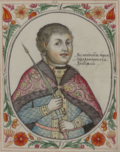
 Dates unrecorded Vsevolod II of Kiev Grand Prince of Kiev
Show 6 more
-
 Dates unrecorded Mstislav III of Kyiv Russian prince
 -
 Dates unrecorded Yaroslav II of Kiev Grand Prince of Kiev
 -
 Dates unrecorded Mstislav II of Kiev Grand Prince of Kiev
 -
 Dates unrecorded Rostislav II of Kyiv Grand Prince of Kyiv (1173-1218)
 -
 Dates unrecorded Vladimir IV Rurikovich Grand Prince of Kyiv
 -
 Dates unrecorded Vsevolod IV of Kyiv Ruler of Kyivan Rus'
Prince of Moscow
- 13 holders
- 1 overlap
- 3 gaps
What this means
Who held an office after whom. Not parentage, not discipleship, and not universally recognised — offices are contested.
Does not imply recognition by every tradition · an uncontested claim · parentage · discipleship · an explanation of why the succession happened
Holding an office after someone says nothing about being related to them or taught by them. Where a line is also a family, both are on the holders’ own pages as separate sections.
A gap is a vacancy, an interregnum or a hole in the record; an overlap is rival claims or an office held by more than one at once. The records do not say which, so neither is resolved here. A gap shorter than two years sits inside the precision of year-dated records and is not marked. Only this house’s members are shown, so a gap between two of them may be a holder from outside it.
Why a succession happened is a historical argument. Where sources make one, it belongs in a reviewed connection with its citations — not in this order, and not in a predecessor field.
Recognition is never universal. Where a card names no recognising body, none is recorded — which is not the same as none.
Imported from Wikidata unless a card says otherwise. Nothing here has been read by an editor.
-
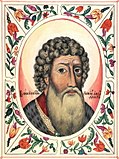 1263 CE – 5 March 1303 CE Daniel of Moscow Russian prince and saint (1261-1303)
 -
.jpg/120px-%D0%AE%D1%80%D0%B8%D0%B9_III_%D0%9C%D0%BE%D1%81%D0%BA%D0%BE%D0%B2%D1%81%D0%BA%D0%B8%D0%B9_(%D1%81%D1%82%D0%B5%D0%BD%D0%BE%D0%BF%D0%B8%D1%81%D1%8C_%D0%90%D1%80%D1%85%D0%B0%D0%BD%D0%B3%D0%B5%D0%BB%D1%8C%D1%81%D0%BA%D0%BE%D0%B3%D0%BE_%D1%81%D0%BE%D0%B1%D0%BE%D1%80%D0%B0).jpg) 5 March 1303 CE – 21 November 1325 CE Yury of Moscow Grand prince of Moscow (1281-1325)
5 March 1303 CE – 21 November 1325 CE Yury of Moscow Grand prince of Moscow (1281-1325) -
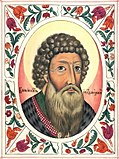 1325 CE – 31 March 1340 CE Ivan I of Moscow Prince of Moscow and Grand Prince of Vladimir
 -
 31 March 1340 CE – 27 April 1353 CE Simeon of Moscow Prince of Moscow and Grand Prince of Vladimir (1316-1353)
 -
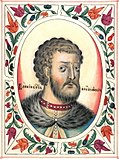 27 April 1353 CE – 13 November 1359 CE Ivan II of Moscow Grand Prince of Moscow (1326-1359)
 -
 1359 CE – 1389 CE Dmitry Donskoy Prince of Moscow
 -
 1389 CE – 1425 CE Vasily I of Moscow Grand Prince of Moscow (1372-1425)
 -
Gap about 8 years before the next in this house
 25 April 1433 CE – 28 September 1433 CE Yury of Zvenigorod Grand prince of Moscow
 - 31 March 1434 CE – 5 June 1434 CE Yury of Zvenigorod Grand prince of Moscow
-
 5 June 1434 CE – July 1434 CE Vasily Kosoy Grand Prince of Moscow
 -
Gap about 11 years before the next in this house
 7 July 1445 CE – 26 October 1445 CE Dmitry Shemyaka Grand Prince of Moscow
 -
Gap about 7 years before the next in this house
 4 June 1452 CE – 27 October 1505 CE Ivan III of Moscow Grand Prince of Moscow and all Russia from 1462 to 1505 Has references
 -
Overlap held at the same time as Ivan III of Moscow
 1502 CE – 1505 CE Vasili III of Moscow Grand Prince of Moscow and all Russia from 1505 to 1533
Grand Prince of Novgorod
- 13 holders
- 7 gaps
What this means
Who held an office after whom. Not parentage, not discipleship, and not universally recognised — offices are contested.
Does not imply recognition by every tradition · an uncontested claim · parentage · discipleship · an explanation of why the succession happened
Holding an office after someone says nothing about being related to them or taught by them. Where a line is also a family, both are on the holders’ own pages as separate sections.
A gap is a vacancy, an interregnum or a hole in the record; an overlap is rival claims or an office held by more than one at once. The records do not say which, so neither is resolved here. A gap shorter than two years sits inside the precision of year-dated records and is not marked. Only this house’s members are shown, so a gap between two of them may be a holder from outside it.
Why a succession happened is a historical argument. Where sources make one, it belongs in a reviewed connection with its citations — not in this order, and not in a predecessor field.
Recognition is never universal. Where a card names no recognising body, none is recorded — which is not the same as none.
Imported from Wikidata unless a card says otherwise. Nothing here has been read by an editor.
-
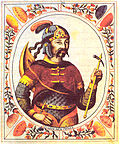 862 CE – 879 CE Rurik Varangian chieftain (c. 830-879)
 -
 879 CE – 945 CE Igor of Kiev prince of Kiev (877–945)
 - 945 CE – 969 CE Sviatoslav I of Kiev Prince of Kiev
- 970 CE – 988 CE Vladimir the Great Grand Prince of Kiev
-
Gap about 22 years before the next in this house
1010 CE – 1034 CE Yaroslav the Wise Grand Prince of Kiev from 1019 to 1054 -
 1034 CE – 1052 CE Vladimir of Novgorod eldest son of Yaroslav I the Wise of Kiev by Ingigerd, daughter of king Olof Skötkonung of Sweden (1020-1052)
 -
Gap about 176 years before the next in this house
1228 CE – 1229 CE Alexander Nevsky political and military figure of Kievan Rus' (1246–1263) -
Gap about 7 years before the next in this house
1236 CE – 1240 CE Alexander Nevsky political and military figure of Kievan Rus' (1246–1263) - 1241 CE – 1252 CE Alexander Nevsky political and military figure of Kievan Rus' (1246–1263)
-
Gap about 5 years before the next in this house
1257 CE – 1259 CE Alexander Nevsky political and military figure of Kievan Rus' (1246–1263) -
Gap about 63 years before the next in this house
1322 CE – 1325 CE Yury of Moscow Grand prince of Moscow (1281-1325) -
Gap about 3 years before the next in this house
1328 CE – 1337 CE Ivan I of Moscow Prince of Moscow and Grand Prince of Vladimir -
Gap about 18 years before the next in this house
1355 CE – 1359 CE Ivan II of Moscow Grand Prince of Moscow (1326-1359)
Prince of Chernigov
- 9 holders
- 1 gap
- 7 undated
What this means
Who held an office after whom. Not parentage, not discipleship, and not universally recognised — offices are contested.
Does not imply recognition by every tradition · an uncontested claim · parentage · discipleship · an explanation of why the succession happened
Holding an office after someone says nothing about being related to them or taught by them. Where a line is also a family, both are on the holders’ own pages as separate sections.
A gap is a vacancy, an interregnum or a hole in the record; an overlap is rival claims or an office held by more than one at once. The records do not say which, so neither is resolved here. A gap shorter than two years sits inside the precision of year-dated records and is not marked. Only this house’s members are shown, so a gap between two of them may be a holder from outside it.
Why a succession happened is a historical argument. Where sources make one, it belongs in a reviewed connection with its citations — not in this order, and not in a predecessor field.
Recognition is never universal. Where a card names no recognising body, none is recorded — which is not the same as none.
Imported from Wikidata unless a card says otherwise. Nothing here has been read by an editor.
- 1073 CE – 1078 CE Vsevolod I of Kiev grand prince of Kiev (1030-1093)
-
Gap about 86 years before the next in this house
1164 CE – 1180 CE Sviatoslav III of Kiev Grand Prince of Kiev
No dates recorded 7
- Dates unrecorded Iziaslav III of Kiev Grand Prince of Kiev
- Dates unrecorded Vladimir II Monomakh Grand Prince of Kiev (1053-1125)
- Dates unrecorded Sviatoslav II of Kiev grand prince of Kiev (1027–1076)
-
 Dates unrecorded Mstislav of Chernigov Prince of Tmutarakan and Prince of Chernigov
 - Dates unrecorded Rurik Rostislavich grand prince of Kyiv
- Dates unrecorded Vsevolod II of Kiev Grand Prince of Kiev
- Dates unrecorded Vsevolod IV of Kyiv Ruler of Kyivan Rus'
Chronology is not a full explanation
Why one member followed another takes evidence beyond the order of their dates. That both belonged to the house is not, on its own, that evidence.
Religious context · a separate claim
Affiliation
Counted from the members’ own statements — never the religion of anyone the house ruled.
What this means
Assembled from the members’ own statements, and counted. What a person was affiliated with, what a ruler paid for, what a state did and what a population practised are four separate kinds of claim. Only the first two are in the data at all, and they are kept apart here.
Affiliations recorded on members
-
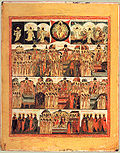 Eastern Orthodoxy 26 members
 -
 Eastern Orthodox Church 7 members
 - Slavic religion 5 members
-
 Christianity 4 members
 -
 paganism 1 member
 -
 Benedictines 1 member
 -
 Catholic Church 1 member
 -
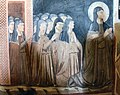 Poor Clares 1 member
 - Orthodox Christian ↗ 1 member
-
 Russian Orthodox Church 1 member
An affiliation recorded by a third party, often for one period of a life. It is not the religion of anyone this house ruled.
Connections
How Rurikids connects
Grouped by the kind of relationship, because a successor is not a son and a shared symbol is not an influence.
Transmission 1
What this means
Teaching passed from one person to another. Not biological ancestry and not automatic institutional succession.
Does not imply that the tradition began fully formed · that later adherents accept the attribution
Imported from Wikidata unless a tile says otherwise. Nothing here has been read by an editor.
Text 2
What this means
A work, its editions and its witnesses are distinct; their dates are not interchangeable.
Does not imply that the work is the only account · that the work is contemporary with what it describes
Imported from Wikidata unless a tile says otherwise. Nothing here has been read by an editor.

Sources
Sources and evidence
Where every statement on this page comes from, and how each one stands.
3 statements on this record
- 3 Imported Taken from Wikidata as it stands. Nobody here has read it. 1 of them cite only Wikipedia: one source, counted once.
Only this record’s own statements. What other records say about it is counted on theirs.
Three layers, three licences
- Text
- Wikipedia · CC BY-SA 4.0, quoted, not merged
- Pictures
- Wikimedia Commons · each file’s own terms
Review
Not yet read by an editor here. Every relationship on this page is an import.
Disagreements are kept, not resolved, and a count of sources is not a confidence score.
_08_(43582411254).jpg/960px-Hall_of_Kings_(Alhambra)_08_(43582411254).jpg)
_08_(43582411254).jpg)
Keep exploring
More houses, tradition by tradition
The directory lists every one on record, most widely recorded first.
A family on the record
is not a family in a myth.