
House Buddhist traditions
Jin dynasty
ཅིན་རྒྱལ་རབས། bo 晋朝 zh 晋 ja
Chinese dynasty (266–420)
- Dated 266 CE – 420 CE
- Also called Liang Jin, Jin Empire, 晉朝
A family
on the record,
reign by reign.
Documented kin
No members of this house are recorded in this collection yet — a zero, not a claim that it had none.
Connections
How Jin dynasty connects
Grouped by the kind of relationship, because a successor is not a son and a shared symbol is not an influence.
Affiliation 3
What this means
Association with a tradition or school. Traditions branch, overlap and re-merge; this is not a clean single-origin tree.
Does not imply a fixed roster · that every account of the tradition knows this figure · personal belief at every point in a life · the practice of a population
Imported from Wikidata unless a tile says otherwise. Nothing here has been read by an editor.
- is part of Early Imperial China historical period from 221 to 589 BCE
- is part of Wei, Jin, Southern and Northern dynasties period of Chinese history (220–589), beginning with the Three Kingdoms period, followed by the Western Jin dynasty, the Five Barbarians and Sixteen Kingdoms period, and the Northern and Southern Dynasties period
-
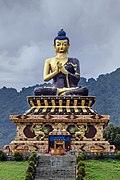 belongs to Buddhism Indian religion
Sources
Sources and evidence
Where every statement on this page comes from, and how each one stands.
3 statements on this record
- 3 Imported Taken from Wikidata as it stands. Nobody here has read it. 1 of them cite only Wikipedia: one source, counted once.
Only this record’s own statements. What other records say about it is counted on theirs.
Three layers, three licences
- Text
- Wikipedia · CC BY-SA 4.0, quoted, not merged
Review
Not yet read by an editor here. Every relationship on this page is an import.
Disagreements are kept, not resolved, and a count of sources is not a confidence score.


Keep exploring
More from Buddhist traditions
Theravāda, Mahāyāna and Vajrayāna, their figures, sutras, lineages and monasteries.