
House
House of Wittelsbach
German noble family; 1180–1918 monarchs of Bavaria; 1214–1803 counts palatine of the Rhine
- Dated from 1180 CE
- Also called Wittelsbach Dynasty, Wittelsbach, Wittelsbacher
A family
on the record,
reign by reign.
Documented kin

Members · 62
The house, member by member
One family drawn as a tree, then every member, oldest first where a date is recorded.
What this means
People whose own records place them in this house. Membership of a house is a family fact. It is not a religious affiliation and not a right to any office. “Child of” appears where a member’s recorded parent is also in the house — a documented human family, the same kind of claim as membership, and nothing more. Imported from Wikidata: nothing here has been read by an editor.
7 children in the house
-
 Louis V, Duke of Bavaria 1315 CE – 1361 CE
 -
.jpg/330px-Stephan_II._(Bayern).jpg) Stephen II of Bavaria 1319 CE – 1375 CE
Stephen II of Bavaria 1319 CE – 1375 CE -
 Louis II, Elector of Brandenburg 1328 CE – 1365 CE
 -
 William I, Duke of Bavaria 1330 CE – 1389 CE
 -
 Albert I, Duke of Bavaria 1336 CE – 1404 CE 1 child in the house
- Beatrice of Bavaria 1344 CE – 1359 CE
-
 Otto V, Duke of Bavaria 1346 CE – 1379 CE
Every member
People whose own records place them in this house.
-
 Otto I Wittelsbach, Duke of Bavariac. 1117 CE – 11 July 1183 CE · First Duke of Bavaria of the House of Wittelsbach
 -
.jpg/330px-Konrad_I._Erzbischof_von_Mainz_(cropped).jpg) Conrad of Wittelsbach1125 CE – 25 October 1200 CE · Archbishop of Mainz (d. 1200)
Conrad of Wittelsbach1125 CE – 25 October 1200 CE · Archbishop of Mainz (d. 1200) -
 Richardis of Bavaria1173 CE – 7 December 1231 CE · Child of Otto I Wittelsbach, Duke of Bavaria
 - Stephen I, Duke of Bavaria14 March 1271 CE – 10 December 1310 CE · Duke of Lower Bavaria
-
 Louis IV of Bavaria1 April 1282 CE – 11 October 1347 CE · Duke of Bavaria and Holy Roman Emperor
 - Louis V, Duke of BavariaMay 1315 CE – 18 September 1361 CE · Child of Louis IV of Bavaria
- Stephen II of Bavaria1319 CE – 13 May 1375 CE · Child of Louis IV of Bavaria
- Louis II, Elector of Brandenburg7 May 1328 CE – 17 May 1365 CE · Child of Louis IV of Bavaria
- William I, Duke of Bavaria12 May 1330 CE – 15 April 1389 CE · Child of Louis IV of Bavaria
- Albert I, Duke of Bavaria25 July 1336 CE – 13 December 1404 CE · Child of Louis IV of Bavaria
- Beatrice of Bavaria1344 CE – 25 December 1359 CE · Child of Louis IV of Bavaria
- Otto V, Duke of Bavaria1346 CE – 15 November 1379 CE · Child of Louis IV of Bavaria
-
 Rupert5 May 1352 CE – 18 May 1410 CE · King of Germany and Elector Palatine (1352-1410)
 -
.jpg/330px-Isabeau_de_Baviere_(detail).jpg) Isabeau of Bavariac. 1370 CE – 24 September 1435 CE · Queen Consort of France
Isabeau of Bavariac. 1370 CE – 24 September 1435 CE · Queen Consort of France -
 John III, Duke of Bavaria1375 CE – 6 January 1425 CE · Child of Albert I, Duke of Bavaria
 -
 Louis III, Elector Palatine23 January 1378 CE – 30 December 1436 CE · Child of Rupert
 -
 Elisabeth of Bavaria, Electress of Brandenburg1383 CE – 13 November 1442 CE · Princess of Bavaria-Landshut, by marriage, Princess of Brandenburg
 -
 Louis IV, Elector Palatine1 January 1424 CE – 13 August 1449 CE · Child of Louis III, Elector Palatine
Show 44 more
-
 Philip, Elector Palatine14 July 1448 CE – 28 February 1508 CE · Child of Louis IV, Elector Palatine
 -
 George the Rich, Duke of Bavaria15 August 1455 CE – 1 December 1503 CE · Last Duke of Bavaria-Landshut
 -
 Louis V2 July 1478 CE – 16 March 1544 CE · Child of Philip, Elector Palatine
 -
 Elisabeth of Bavaria1478 CE – 15 September 1504 CE · Child of George the Rich, Duke of Bavaria
 -
 Ruprecht of the Palatinate14 May 1481 CE – 20 August 1504 CE · Child of Philip, Elector Palatine
 -
 Frederick II, Elector Palatine9 December 1482 CE – 26 February 1556 CE · Child of Philip, Elector Palatine
 -
 Henry of the Palatinate15 February 1487 CE – 3 January 1552 CE · Child of Philip, Elector Palatine
 -
 Amalie of the Palatinate25 July 1490 CE – 6 January 1524 CE · Child of Philip, Elector Palatine
 -
.jpg/330px-Pfalzgraf_Wolfgang_(1494-1558).jpg) Wolfgang of the Palatinate31 October 1494 CE – 2 April 1558 CE · Child of Philip, Elector Palatine
Wolfgang of the Palatinate31 October 1494 CE – 2 April 1558 CE · Child of Philip, Elector Palatine -
 Otto Henry10 April 1502 CE – 12 February 1559 CE · Child of Ruprecht of the Palatinate
 -
 Frederick III of the Palatinate14 February 1515 CE – 26 October 1576 CE · Elector Palatine (1515-1576)
 -
 Richard, Count Palatine of Simmern25 July 1521 CE – 13 January 1598 CE · Count Palatine of Simmern
 -
 Maria Anna of Bavaria21 March 1551 CE – 29 April 1608 CE · Austrian archduchess (*1551-1608)
 -
 Ernest of Bavaria17 December 1554 CE – 17 February 1612 CE · Roman Catholic bishop (1554-1612)
 -
 Maria Anna of Bavaria18 December 1574 CE – 8 March 1616 CE · Consort of Ferdinand, who after her death became Emperor Ferdinand II; (1574-1616)
 -
%2C_Kurf%C3%BCrst_und_Erzbischof_von_K%C3%B6ln.jpg/330px-Ferdinand_von_Bayern_(1577-1650)%2C_Kurf%C3%BCrst_und_Erzbischof_von_K%C3%B6ln.jpg) Ferdinand of Bavaria6 October 1577 CE – 13 September 1650 CE · Archbishop of Cologne
Ferdinand of Bavaria6 October 1577 CE – 13 September 1650 CE · Archbishop of Cologne -
 Frederick V of the Palatinate26 August 1596 CE – 29 November 1632 CE · Elector Palatine (1610–23), and King of Bohemia (1619–20), the Winter King; died 1632
 -
 Philip William, Elector Palatine24 November 1615 CE – 2 September 1690 CE · German nobleman (1615-1690)
 -
 Charles I Louis, Elector Palatine22 December 1617 CE – 28 August 1680 CE · Child of Frederick V of the Palatinate
 -
 Elisabeth of the Palatinate26 December 1618 CE – 11 February 1680 CE · Child of Frederick V of the Palatinate
 -
 Prince Rupert of the Rhine17 December 1619 CE (Old Style) – 29 November 1682 CE · Child of Frederick V of the Palatinate
 -
 Louise Hollandine of the Palatinate18 April 1622 CE – 11 February 1709 CE · Child of Frederick V of the Palatinate
 -
%2C_studio_of_Gerrit_van_Honthorst.jpg/330px-Henriette_Marie_princess_Palatine_(1626-1651)%2C_studio_of_Gerrit_van_Honthorst.jpg) Henriette Marie of the Palatinate17 July 1626 CE – 18 September 1651 CE · Child of Frederick V of the Palatinate
Henriette Marie of the Palatinate17 July 1626 CE – 18 September 1651 CE · Child of Frederick V of the Palatinate -
 Sophia of Hanover14 October 1630 CE – 8 June 1714 CE · Child of Frederick V of the Palatinate
 -
 Charles II, Elector Palatine31 March 1651 CE – 26 May 1685 CE · Child of Charles I Louis, Elector Palatine
 -
 Johann Wilhelm, Elector Palatine19 April 1658 CE – 8 June 1716 CE · Child of Philip William, Elector Palatine
 -
 Louis Anton of Pfalz-Neuburg9 June 1660 CE – 4 May 1694 CE · Child of Philip William, Elector Palatine
 -
.jpg/330px-Karl_Philipp%2C_Kurf%C3%BCrst_(1716-1742).jpg) Charles III Philip, Elector Palatine4 November 1661 CE – 31 December 1742 CE · Child of Philip William, Elector Palatine
Charles III Philip, Elector Palatine4 November 1661 CE – 31 December 1742 CE · Child of Philip William, Elector Palatine -
 Maximilian II Emanuel, Elector of Bavaria11 July 1662 CE – 26 February 1726 CE · Ruler of the Electorate of Bavaria from 1679 to 1726 (lived 1662-1726)
 -
 Alexander Sigismund von der Pfalz-Neuburg16 April 1663 CE – 24 January 1737 CE · Child of Philip William, Elector Palatine
 -
 Count Palatine Francis Louis of Neuburg18 July 1664 CE – 6 April 1732 CE · Child of Philip William, Elector Palatine
 -
 Maria Anna of Neuburg28 October 1667 CE – 16 July 1740 CE · Child of Philip William, Elector Palatine
 -
 Joseph Clemens of Bavaria5 December 1671 CE – 12 November 1723 CE · Duke, Roman Catholic archbishop (1671-1723)
 -
._K%C3%B6nigliches_Schloss_Berchtesgaden.png/330px-Retrato_del_pr%C3%ADncipe_electoral_Jos%C3%A9_Fernando_de_Baviera%2C_obra_de_Joseph_Vivien_(1698)._K%C3%B6nigliches_Schloss_Berchtesgaden.png) Joseph Ferdinand of Bavaria28 October 1692 CE – 6 February 1699 CE · Child of Maximilian II Emanuel, Elector of Bavaria
Joseph Ferdinand of Bavaria28 October 1692 CE – 6 February 1699 CE · Child of Maximilian II Emanuel, Elector of Bavaria -
 Charles VII, Holy Roman Emperor6 August 1697 CE – 20 January 1745 CE · Child of Maximilian II Emanuel, Elector of Bavaria
 -
_by_Joseph_Vivien%2C_Munich%2C_1723-1724_AD%2C_oil_on_canvas_-_Hessisches_Landesmuseum_Darmstadt_-_Darmstadt%2C_Germany_-_DSC00629.jpg/330px-Ferdinand_Maria_Innozenz_von_Bayern_(1699-1738)_by_Joseph_Vivien%2C_Munich%2C_1723-1724_AD%2C_oil_on_canvas_-_Hessisches_Landesmuseum_Darmstadt_-_Darmstadt%2C_Germany_-_DSC00629.jpg) Ferdinand Maria Innocenz of Bavaria5 August 1699 CE – 9 December 1738 CE · Child of Maximilian II Emanuel, Elector of Bavaria
Ferdinand Maria Innocenz of Bavaria5 August 1699 CE – 9 December 1738 CE · Child of Maximilian II Emanuel, Elector of Bavaria -
 Clemens August of Bavaria17 August 1700 CE – 6 February 1761 CE · Child of Maximilian II Emanuel, Elector of Bavaria
 -
%2C_Portrait_of_the_Li%C3%A8ge_Prince-Bishop_John_Theodore_of_Bavaria.jpg/330px-Paul-Joseph_Delcloche_(attributed)%2C_Portrait_of_the_Li%C3%A8ge_Prince-Bishop_John_Theodore_of_Bavaria.jpg) John Theodore of Bavaria3 September 1703 CE – 27 January 1763 CE · Child of Maximilian II Emanuel, Elector of Bavaria
John Theodore of Bavaria3 September 1703 CE – 27 January 1763 CE · Child of Maximilian II Emanuel, Elector of Bavaria -
 Maria Antonia Walpurgis of Bavaria18 July 1724 CE – 23 April 1780 CE · Child of Charles VII, Holy Roman Emperor
 -
 Maximilian III Joseph, Elector of Bavaria28 March 1727 CE – 30 December 1777 CE · Child of Charles VII, Holy Roman Emperor
 -
 Charles II August, Duke of Zweibrücken29 October 1746 CE – 1 April 1795 CE · Duke of Zweibrücken, Count Palatine of Birkenfeld-Bischweiler (1746–1795)
 -
 Maximilian I Joseph of Bavaria27 May 1756 CE – 13 October 1825 CE · King of Bavaria
 -
 Princess Alexandra of Bavaria26 August 1826 CE – 21 September 1875 CE · Bavarian princess (1826–1875)
 -
 Infanta Maria José, Duchess in Bavaria19 March 1857 CE – 11 March 1943 CE · Portuguese and Bavarian Royal (1857–1943)
Succession
Offices held in the house
The members in each office, in order — a selection from the office’s whole line.
Prince-Elector
- 23 holders
- 4 overlapping pairs
- 18 undated
What this means
Who held an office after whom. Not parentage, not discipleship, and not universally recognised — offices are contested.
Does not imply recognition by every tradition · an uncontested claim · parentage · discipleship · an explanation of why the succession happened
Holding an office after someone says nothing about being related to them or taught by them. Where a line is also a family, both are on the holders’ own pages as separate sections.
A gap is a vacancy, an interregnum or a hole in the record; an overlap is rival claims or an office held by more than one at once. The records do not say which, so neither is resolved here. A gap shorter than two years sits inside the precision of year-dated records and is not marked. Only this house’s members are shown, so a gap between two of them may be a holder from outside it. This office’s tenures overlap throughout, so it is listed as a roll in order of start rather than drawn as a line.
Why a succession happened is a historical argument. Where sources make one, it belongs in a reviewed connection with its citations — not in this order, and not in a predecessor field.
Recognition is never universal. Where a card names no recognising body, none is recorded — which is not the same as none.
Imported from Wikidata unless a card says otherwise. Nothing here has been read by an editor.
-
 1356 CE – 15 November 1373 CE Otto V, Duke of Bavaria Duke of Bavaria
 -
%2C_Kurf%C3%BCrst_und_Erzbischof_von_K%C3%B6ln.jpg/120px-Ferdinand_von_Bayern_(1577-1650)%2C_Kurf%C3%BCrst_und_Erzbischof_von_K%C3%B6ln.jpg) from 1612 CE Ferdinand of Bavaria Archbishop of Cologne
from 1612 CE Ferdinand of Bavaria Archbishop of Cologne -
 1723 CE – 1761 CE Clemens August of Bavaria Catholic archbishop (1700-1761)
 -
 1799 CE – 1806 CE Maximilian I Joseph of Bavaria King of Bavaria
 - 1799 CE – 1806 CE Maximilian I Joseph of Bavaria King of Bavaria
No dates recorded 18
-
 Dates unrecorded Louis II, Elector of Brandenburg Duke of Bavaria
 -
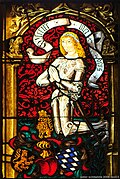 Dates unrecorded Philip, Elector Palatine Elector Palatine of the Rhine
 -
 Dates unrecorded Frederick II, Elector Palatine Prince-elector of the Palatinate from 1544 to 1556
 -
 Dates unrecorded Louis V Elector Palatine
 -
 Dates unrecorded Maximilian II Emanuel, Elector of Bavaria Ruler of the Electorate of Bavaria from 1679 to 1726 (lived 1662-1726)
 -
 Dates unrecorded Frederick III of the Palatinate Elector Palatine (1515-1576)
 -
 Dates unrecorded Joseph Clemens of Bavaria Duke, Roman Catholic archbishop (1671-1723)
 -
 Dates unrecorded Charles II, Elector Palatine Elector Palatine from 1680 to 1685
 -
 Dates unrecorded Ernest of Bavaria Roman Catholic bishop (1554-1612)
 -
 Dates unrecorded Maximilian III Joseph, Elector of Bavaria Duke of Bavaria (1727-1777)
 -
 Dates unrecorded Louis IV, Elector Palatine Elector Palatine
 -
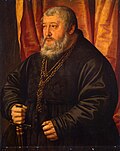 Dates unrecorded Otto Henry Count Palatine of Neuburg from 1505 to 1559
Show 6 more
-
 Dates unrecorded Rupert King of Germany and Elector Palatine (1352-1410)
 -
 Dates unrecorded Louis III, Elector Palatine Elector Palatine
 -
 Dates unrecorded Count Palatine Francis Louis of Neuburg Archbishop and Prince-Elector of Mainz and Trier, Prince-Bishop of Worms and Wrocław, Hochmeister of the Teutonic Order
 -
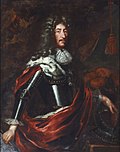 Dates unrecorded Philip William, Elector Palatine German nobleman (1615-1690)
 -
.jpg/120px-Karl_Philipp%2C_Kurf%C3%BCrst_(1716-1742).jpg) Dates unrecorded Charles III Philip, Elector Palatine Elector Palatine, Duke of Jülich and Berg and Count Palatine of Neuburg (1661-1742)
Dates unrecorded Charles III Philip, Elector Palatine Elector Palatine, Duke of Jülich and Berg and Count Palatine of Neuburg (1661-1742) -
 Dates unrecorded Johann Wilhelm, Elector Palatine German nobleman (1658–1716)
Elector Palatine
- 14 holders
- 1 gap
- 5 undated
What this means
Who held an office after whom. Not parentage, not discipleship, and not universally recognised — offices are contested.
Does not imply recognition by every tradition · an uncontested claim · parentage · discipleship · an explanation of why the succession happened
Holding an office after someone says nothing about being related to them or taught by them. Where a line is also a family, both are on the holders’ own pages as separate sections.
A gap is a vacancy, an interregnum or a hole in the record; an overlap is rival claims or an office held by more than one at once. The records do not say which, so neither is resolved here. A gap shorter than two years sits inside the precision of year-dated records and is not marked. Only this house’s members are shown, so a gap between two of them may be a holder from outside it.
Why a succession happened is a historical argument. Where sources make one, it belongs in a reviewed connection with its citations — not in this order, and not in a predecessor field.
Recognition is never universal. Where a card names no recognising body, none is recorded — which is not the same as none.
Imported from Wikidata unless a card says otherwise. Nothing here has been read by an editor.
- 1508 CE – 1544 CE Louis V Elector Palatine
- 1544 CE – 1556 CE Frederick II, Elector Palatine Prince-elector of the Palatinate from 1544 to 1556
- 1556 CE – 1559 CE Otto Henry Count Palatine of Neuburg from 1505 to 1559
- 1559 CE – 1576 CE Frederick III of the Palatinate Elector Palatine (1515-1576)
-
Gap about 72 years before the next in this house
 1648 CE – 1680 CE Charles I Louis, Elector Palatine Elector palatine of the Rhine (1617–1680)
 - 1680 CE – 1685 CE Charles II, Elector Palatine Elector Palatine from 1680 to 1685
- 1685 CE – 1690 CE Philip William, Elector Palatine German nobleman (1615-1690)
- 1690 CE – 1716 CE Johann Wilhelm, Elector Palatine German nobleman (1658–1716)
- 1716 CE – 1742 CE Charles III Philip, Elector Palatine Elector Palatine, Duke of Jülich and Berg and Count Palatine of Neuburg (1661-1742)
No dates recorded 5
- Dates unrecorded Philip, Elector Palatine Elector Palatine of the Rhine
- Dates unrecorded Philip, Elector Palatine Elector Palatine of the Rhine
- Dates unrecorded Louis IV, Elector Palatine Elector Palatine
- Dates unrecorded Rupert King of Germany and Elector Palatine (1352-1410)
- Dates unrecorded Louis III, Elector Palatine Elector Palatine
Duke of Bavaria
- 13 holders
- 2 overlaps
- 1 gap
- 7 undated
What this means
Who held an office after whom. Not parentage, not discipleship, and not universally recognised — offices are contested.
Does not imply recognition by every tradition · an uncontested claim · parentage · discipleship · an explanation of why the succession happened
Holding an office after someone says nothing about being related to them or taught by them. Where a line is also a family, both are on the holders’ own pages as separate sections.
A gap is a vacancy, an interregnum or a hole in the record; an overlap is rival claims or an office held by more than one at once. The records do not say which, so neither is resolved here. A gap shorter than two years sits inside the precision of year-dated records and is not marked. Only this house’s members are shown, so a gap between two of them may be a holder from outside it.
Why a succession happened is a historical argument. Where sources make one, it belongs in a reviewed connection with its citations — not in this order, and not in a predecessor field.
Recognition is never universal. Where a card names no recognising body, none is recorded — which is not the same as none.
Imported from Wikidata unless a card says otherwise. Nothing here has been read by an editor.
-
.jpg/120px-Stephan_II._(Bayern).jpg) 1347 CE – 1349 CE Stephen II of Bavaria Duke of Bavaria-Landshut
1347 CE – 1349 CE Stephen II of Bavaria Duke of Bavaria-Landshut -
Overlap held at the same time as Stephen II of Bavaria
1347 CE – 1349 CE Otto V, Duke of Bavaria Duke of Bavaria - 1349 CE – 1353 CE Stephen II of Bavaria Duke of Bavaria-Landshut
- 1353 CE – 1375 CE Stephen II of Bavaria Duke of Bavaria-Landshut
-
Overlap held at the same time as Stephen II of Bavaria
1363 CE Stephen II of Bavaria Duke of Bavaria-Landshut -
Gap about 54 years before the next in this house
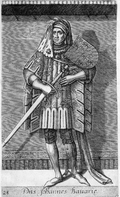 1417 CE – 1425 CE John III, Duke of Bavaria Duke of Bavaria-Straubing and count of Holland and Hainaut (1375–1425)
No dates recorded 7
-
 Dates unrecorded Louis IV of Bavaria Duke of Bavaria and Holy Roman Emperor
 - Dates unrecorded Louis II, Elector of Brandenburg Duke of Bavaria
-
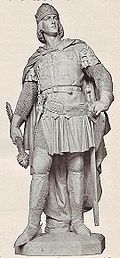 Dates unrecorded Louis V, Duke of Bavaria Duke of Bavaria, Margrave of Brandenburg, and Count of Tyrol
 -
 Dates unrecorded William I, Duke of Bavaria second son of Emperor Louis IV and Margaret II of Hainaut
 -
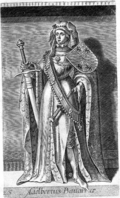 Dates unrecorded Albert I, Duke of Bavaria Count of Hainaut, Holland and Zeeland (1336-1404)
 -
 Dates unrecorded George the Rich, Duke of Bavaria Last Duke of Bavaria-Landshut
 -
 Dates unrecorded Otto I Wittelsbach, Duke of Bavaria First Duke of Bavaria of the House of Wittelsbach
Prince-Bishop
- 13 holders
- 32 overlapping pairs
- 4 undated
What this means
Who held an office after whom. Not parentage, not discipleship, and not universally recognised — offices are contested.
Does not imply recognition by every tradition · an uncontested claim · parentage · discipleship · an explanation of why the succession happened
Holding an office after someone says nothing about being related to them or taught by them. Where a line is also a family, both are on the holders’ own pages as separate sections.
A gap is a vacancy, an interregnum or a hole in the record; an overlap is rival claims or an office held by more than one at once. The records do not say which, so neither is resolved here. A gap shorter than two years sits inside the precision of year-dated records and is not marked. Only this house’s members are shown, so a gap between two of them may be a holder from outside it. This office’s tenures overlap throughout, so it is listed as a roll in order of start rather than drawn as a line.
Why a succession happened is a historical argument. Where sources make one, it belongs in a reviewed connection with its citations — not in this order, and not in a predecessor field.
Recognition is never universal. Where a card names no recognising body, none is recorded — which is not the same as none.
Imported from Wikidata unless a card says otherwise. Nothing here has been read by an editor.
- from 1612 CE Ferdinand of Bavaria Archbishop of Cologne
- from 1618 CE Ferdinand of Bavaria Archbishop of Cologne
-
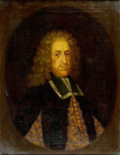 1690 CE – 1737 CE Alexander Sigismund von der Pfalz-Neuburg Roman Catholic bishop (1663-1737) Has references
 -
 from 12 November 1691 CE Louis Anton of Pfalz-Neuburg Roman Catholic bishop (1660-1694) Has references
 - 1716 CE – 1719 CE Clemens August of Bavaria Catholic archbishop (1700-1761)
- 1719 CE – 1761 CE Clemens August of Bavaria Catholic archbishop (1700-1761)
- 1719 CE – 1761 CE Clemens August of Bavaria Catholic archbishop (1700-1761)
- 1724 CE – 1761 CE Clemens August of Bavaria Catholic archbishop (1700-1761)
- 1728 CE – 1761 CE Clemens August of Bavaria Catholic archbishop (1700-1761)
No dates recorded 4
-
%2C_Portrait_of_the_Li%C3%A8ge_Prince-Bishop_John_Theodore_of_Bavaria.jpg/120px-Paul-Joseph_Delcloche_(attributed)%2C_Portrait_of_the_Li%C3%A8ge_Prince-Bishop_John_Theodore_of_Bavaria.jpg) Dates unrecorded John Theodore of Bavaria Roman Catholic bishop and cardinal
Dates unrecorded John Theodore of Bavaria Roman Catholic bishop and cardinal - Dates unrecorded Joseph Clemens of Bavaria Duke, Roman Catholic archbishop (1671-1723) Has references
- Dates unrecorded Count Palatine Francis Louis of Neuburg Archbishop and Prince-Elector of Mainz and Trier, Prince-Bishop of Worms and Wrocław, Hochmeister of the Teutonic Order Has references
Chronology is not a full explanation
Why one member followed another takes evidence beyond the order of their dates. That both belonged to the house is not, on its own, that evidence.
Religious context · a separate claim
Affiliation
Counted from the members’ own statements — never the religion of anyone the house ruled.
What this means
Assembled from the members’ own statements, and counted. What a person was affiliated with, what a ruler paid for, what a state did and what a population practised are four separate kinds of claim. Only the first two are in the data at all, and they are kept apart here.
Affiliations recorded on members
-
 Catholic Church 18 members
 - Catholicism 5 members
-
 Christianity 1 member
 -
 Protestantism 1 member
 -
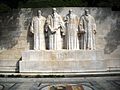 Reformed Christianity 1 member
 -
 Teutonic Order 1 member
An affiliation recorded by a third party, often for one period of a life. It is not the religion of anyone this house ruled.
Connections
How House of Wittelsbach connects
Grouped by the kind of relationship, because a successor is not a son and a shared symbol is not an influence.
Affiliation 1
What this means
Association with a tradition or school. Traditions branch, overlap and re-merge; this is not a clean single-origin tree.
Does not imply a fixed roster · that every account of the tradition knows this figure
Imported from Wikidata unless a tile says otherwise. Nothing here has been read by an editor.
Succession in office 1
What this means
Who held an office after whom. Not parentage, not discipleship, and not universally recognised — offices are contested.
Does not imply parentage · discipleship · an explanation of why the succession happened
Imported from Wikidata unless a tile says otherwise. Nothing here has been read by an editor.
.svg/120px-Royal_Coat_of_Arms_of_Greece_(accurate).svg.png)

Transmission 2
What this means
Teaching passed from one person to another. Not biological ancestry and not automatic institutional succession.
Does not imply that the tradition began fully formed · that later adherents accept the attribution
Imported from Wikidata unless a tile says otherwise. Nothing here has been read by an editor.
Sources
Sources and evidence
Where every statement on this page comes from, and how each one stands.
3 statements on this record
- 3 Imported Taken from Wikidata as it stands. Nobody here has read it. 3 of them cite only Wikipedia: one source, counted once.
Only this record’s own statements. What other records say about it is counted on theirs.
Three layers, three licences
- Text
- Wikipedia · CC BY-SA 4.0, quoted, not merged
- Pictures
- Wikimedia Commons · each file’s own terms
Review
Not yet read by an editor here. Every relationship on this page is an import.
Disagreements are kept, not resolved, and a count of sources is not a confidence score.
_08_(43582411254).jpg/960px-Hall_of_Kings_(Alhambra)_08_(43582411254).jpg)
_08_(43582411254).jpg)
Keep exploring
More houses, tradition by tradition
The directory lists every one on record, most widely recorded first.
A family on the record
is not a family in a myth.