
House
House of Wettin
Noble family
- Dated from 10th century CE
- Also called Wettiner
A family
on the record,
reign by reign.
Documented kin

Members · 46
The house, member by member
One family drawn as a tree, then every member, oldest first where a date is recorded.
What this means
People whose own records place them in this house. Membership of a house is a family fact. It is not a religious affiliation and not a right to any office. “Child of” appears where a member’s recorded parent is also in the house — a documented human family, the same kind of claim as membership, and nothing more. Imported from Wikidata: nothing here has been read by an editor.
11 children in the house
-
 Friedrich Christian I, Elector of Saxony 1722 CE – 1763 CE 4 children in the house
-
 Maria Amalia of Saxony 1724 CE – 1760 CE
 -
 Maria Anna Sophia of Saxony 1728 CE – 1797 CE
 -
 Prince Francis Xavier of Saxony 1730 CE – 1806 CE
 -
_Portrait_de_Marie-Jos%C3%A8phe_de_Saxe%2C_dauphine_de_France_-_Jean-Marc_Nattier_-_Mus%C3%A9e_des_Beaux-Arts_d'Agen.jpg/330px-(Agen)_Portrait_de_Marie-Jos%C3%A8phe_de_Saxe%2C_dauphine_de_France_-_Jean-Marc_Nattier_-_Mus%C3%A9e_des_Beaux-Arts_d'Agen.jpg) Marie Josèphe of Saxony 1731 CE – 1767 CE
Marie Josèphe of Saxony 1731 CE – 1767 CE -
 Charles of Saxony, Duke of Courland 1733 CE – 1796 CE
 -
.jpg/330px-Maurice_Quentin_de_La_Tour%2C_Princesse_Marie-Christine_de_Saxe_(c._1762-1763).jpg) Princess Maria Christina of Saxony 1735 CE – 1782 CE
Princess Maria Christina of Saxony 1735 CE – 1782 CE -
 Princess Maria Elisabeth of Saxony 1736 CE – 1818 CE
 -
 Albert Casimir, Duke of Teschen 1738 CE – 1822 CE
 -
 Clemens Wenceslaus of Saxony 1739 CE – 1812 CE
 -
 Maria Kunigunde of Saxony 1740 CE – 1826 CE
Every member
People whose own records place them in this house.
-
.jpg/330px-Dedo_III_(V.).jpg) Dedi III, Margrave of Lusatiauntil 16 August 1190 CE · Child of Conrad, Margrave of Meissen
Dedi III, Margrave of Lusatiauntil 16 August 1190 CE · Child of Conrad, Margrave of Meissen -
 Theodoric I of Wettinc. 920 CE – 976 CE · 916-976
 -
 Conrad, Margrave of Meissen1098 CE – 5 February 1157 CE · Margrave of Meissen
 - Adela of Meissen12th century CE – 23 October 1181 CE · Child of Conrad, Margrave of Meissen
-
 Otto II, Margrave of Meissen1125 CE – 18 February 1190 CE · Child of Conrad, Margrave of Meissen
 -
 Theodoric Ic. 1130 CE – 9 February 1185 CE · Child of Conrad, Margrave of Meissen
 -
 Agnes II19 June 1145 CE – 22 January 1203 CE · Child of Conrad, Margrave of Meissen
 -
 Agnes of Rochlitz1152 CE – 25 March 1195 CE · Child of Dedi III, Margrave of Lusatia
 -
_-_detail.tif/lossy-page1-330px-Elisabeth_of_Meissen-Thuringia_(fresca%2C_Heilsbronn)_-_detail.tif.jpg) Elisabeth of Meissen22 November 1329 CE – 21 April 1375 CE · Wife of Frederick V, Burgrave of Nuremberg
Elisabeth of Meissen22 November 1329 CE – 21 April 1375 CE · Wife of Frederick V, Burgrave of Nuremberg -
 Anna of Saxony, Electress of Brandenburg7 March 1437 CE – 31 October 1512 CE · Princess of Saxony by birth, by marriage Electress of Brandenburg
 -
 Margaret of Thuringia1449 CE – 13 July 1501 CE · Electress consort of Brandenburg
 -
 Magdalena of Saxony7 March 1507 CE – 25 January 1534 CE · princess of Saxony, Electress of Brandenburg (1507-1534)
 -
 Christian I, Elector of Saxony29 October 1560 CE – 25 September 1591 CE · German noble
 -
 John, Duke of Saxe-Weimar22 May 1570 CE – 31 October 1605 CE · Duke of Saxe-Weimar and Jena
 -
 Maria, Abbess of Quedlinburg7 October 1571 CE – 7 March 1610 CE · German abbess
 -
_-_Google_Art_Project.jpg/330px-Zacharias_Wehme_-_Prince_Elector_Christian_II_of_Saxony_(ca._1601-1606)_-_Google_Art_Project.jpg) Christian II of Saxony23 September 1583 CE – 23 June 1611 CE · Child of Christian I, Elector of Saxony
Christian II of Saxony23 September 1583 CE – 23 June 1611 CE · Child of Christian I, Elector of Saxony -
 Johann Georg I, Elector of Saxony5 March 1585 CE – 8 October 1656 CE · Child of Christian I, Elector of Saxony
 -
 John Ernest I, Duke of Saxe-Weimar21 February 1594 CE – 6 December 1626 CE · Child of John, Duke of Saxe-Weimar
Show 28 more
-
 William, Duke of Saxe-Weimar11 April 1598 CE – 17 May 1662 CE · Child of John, Duke of Saxe-Weimar
 -
 Albert IV, Duke of Saxe-Eisenach27 July 1599 CE – 20 December 1644 CE · Child of John, Duke of Saxe-Weimar
 -
 Ernest I, Duke of Saxe-Gotha25 December 1601 CE – 26 March 1675 CE · Child of John, Duke of Saxe-Weimar
 -
%2C_by_Michiel_van_Mierevelt.jpg/330px-Bernard_van_Saksen-Weimar_(1604-1639)%2C_by_Michiel_van_Mierevelt.jpg) Bernard of Saxe-Weimar16 August 1604 CE – 18 July 1639 CE · Child of John, Duke of Saxe-Weimar
Bernard of Saxe-Weimar16 August 1604 CE – 18 July 1639 CE · Child of John, Duke of Saxe-Weimar -
.jpg/330px-Johann_Georg_III._von_Sachsen_(Portr%C3%A4t).jpg) John George III of Saxony20 June 1647 CE – 12 September 1691 CE · Elector of Saxony from 1680 to 1691
John George III of Saxony20 June 1647 CE – 12 September 1691 CE · Elector of Saxony from 1680 to 1691 -
 John George IV, Elector of Saxony18 October 1668 CE – 27 April 1694 CE · Child of John George III of Saxony
 -
 Augustus II the Strong12 May 1670 CE – 1 February 1733 CE · Child of John George III of Saxony
 -
 Augustus III of Poland17 October 1696 CE – 5 October 1763 CE · Child of Augustus II the Strong
 -
 Maurice de Saxe28 October 1696 CE – 30 November 1750 CE · Child of Augustus II the Strong
 - Friedrich Christian I, Elector of Saxony5 September 1722 CE – 17 December 1763 CE · Child of Augustus III of Poland
- Maria Amalia of Saxony24 November 1724 CE – 27 September 1760 CE · Child of Augustus III of Poland
- Maria Anna Sophia of Saxony29 August 1728 CE – 17 February 1797 CE · Child of Augustus III of Poland
- Prince Francis Xavier of Saxony25 August 1730 CE – 21 June 1806 CE · Child of Augustus III of Poland
- Marie Josèphe of Saxony4 November 1731 CE – 13 March 1767 CE · Child of Augustus III of Poland
- Charles of Saxony, Duke of Courland13 July 1733 CE – 16 June 1796 CE · Child of Augustus III of Poland
- Princess Maria Christina of Saxony12 February 1735 CE – 19 November 1782 CE · Child of Augustus III of Poland
- Princess Maria Elisabeth of Saxony9 February 1736 CE – 24 December 1818 CE · Child of Augustus III of Poland
- Albert Casimir, Duke of Teschen11 July 1738 CE – 10 February 1822 CE · Child of Augustus III of Poland
- Clemens Wenceslaus of Saxony28 September 1739 CE – 27 July 1812 CE · Child of Augustus III of Poland
- Maria Kunigunde of Saxony10 November 1740 CE – 8 April 1826 CE · Child of Augustus III of Poland
-
 Friedrich August I of Saxony23 December 1750 CE – 5 May 1827 CE · Child of Friedrich Christian I, Elector of Saxony
 -
 Anton I of Saxony27 December 1755 CE – 6 June 1836 CE · Child of Friedrich Christian I, Elector of Saxony
 -
 Maria Amalia of Saxony, Duchess of Zweibrücken26 September 1757 CE – 20 April 1831 CE · Child of Friedrich Christian I, Elector of Saxony
 -
 Prince Maximilian of Saxony13 April 1759 CE – 3 January 1838 CE · Child of Friedrich Christian I, Elector of Saxony
 -
 Princess Maria Carolina of Parma22 November 1770 CE – 1 March 1804 CE · Italian princess (1770-1804)
 -
 Ernest I, Duke of Saxe-Coburg and Gotha2 January 1784 CE – 29 January 1844 CE · duke of Saxe-Coburg-Saalfeld (1784-1844)
 -
 Prince Ferdinand of Saxe-Coburg and Gotha28 March 1785 CE – 27 August 1851 CE · German prince (1785-1851)
 -
 Princess Maria Josepha of Saxony31 May 1867 CE – 28 May 1944 CE · Archduchess of Austria (1867-1944)
Succession
Offices held in the house
The members in each office, in order — a selection from the office’s whole line.
Prince-Elector
- 7 holders
- 6 undated
What this means
Who held an office after whom. Not parentage, not discipleship, and not universally recognised — offices are contested.
Does not imply recognition by every tradition · an uncontested claim · parentage · discipleship · an explanation of why the succession happened
Holding an office after someone says nothing about being related to them or taught by them. Where a line is also a family, both are on the holders’ own pages as separate sections.
A gap is a vacancy, an interregnum or a hole in the record; an overlap is rival claims or an office held by more than one at once. The records do not say which, so neither is resolved here. A gap shorter than two years sits inside the precision of year-dated records and is not marked. Only this house’s members are shown, so a gap between two of them may be a holder from outside it.
Why a succession happened is a historical argument. Where sources make one, it belongs in a reviewed connection with its citations — not in this order, and not in a predecessor field.
Recognition is never universal. Where a card names no recognising body, none is recorded — which is not the same as none.
Imported from Wikidata unless a card says otherwise. Nothing here has been read by an editor.
-
 1763 CE Friedrich Christian I, Elector of Saxony Elector of Saxony (1722-1763)
No dates recorded 6
-
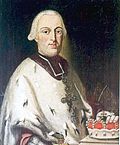 Dates unrecorded Clemens Wenceslaus of Saxony Roman Catholic archbishop (1739-1812)
 -
.jpg/120px-Johann_Georg_III._von_Sachsen_(Portr%C3%A4t).jpg) Dates unrecorded John George III of Saxony Elector of Saxony from 1680 to 1691
Dates unrecorded John George III of Saxony Elector of Saxony from 1680 to 1691 -
 Dates unrecorded John George IV, Elector of Saxony German noble (1668-1694)
 -
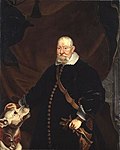 Dates unrecorded Johann Georg I, Elector of Saxony elector of Saxony
 -
_-_Google_Art_Project.jpg/120px-Zacharias_Wehme_-_Prince_Elector_Christian_II_of_Saxony_(ca._1601-1606)_-_Google_Art_Project.jpg) Dates unrecorded Christian II of Saxony Elector of Saxony from 1591 to 1611 (lived 1583-1611)
Dates unrecorded Christian II of Saxony Elector of Saxony from 1591 to 1611 (lived 1583-1611) -
 Dates unrecorded Christian I, Elector of Saxony German noble
Abbess
- 5 holders
- 1 gap
- 3 undated
What this means
Who held an office after whom. Not parentage, not discipleship, and not universally recognised — offices are contested.
Does not imply recognition by every tradition · an uncontested claim · parentage · discipleship · an explanation of why the succession happened
Holding an office after someone says nothing about being related to them or taught by them. Where a line is also a family, both are on the holders’ own pages as separate sections.
A gap is a vacancy, an interregnum or a hole in the record; an overlap is rival claims or an office held by more than one at once. The records do not say which, so neither is resolved here. A gap shorter than two years sits inside the precision of year-dated records and is not marked. Only this house’s members are shown, so a gap between two of them may be a holder from outside it.
Why a succession happened is a historical argument. Where sources make one, it belongs in a reviewed connection with its citations — not in this order, and not in a predecessor field.
Recognition is never universal. Where a card names no recognising body, none is recorded — which is not the same as none.
Imported from Wikidata unless a card says otherwise. Nothing here has been read by an editor.
-
 1184 CE – 1203 CE Agnes II Princess-Abbess of Quedlinburg, House of Wettin member (1139–1203) Has references
 -
Gap about 570 years before the next in this house
.jpg/120px-Maurice_Quentin_de_La_Tour%2C_Princesse_Marie-Christine_de_Saxe_(c._1762-1763).jpg) 1773 CE – 1782 CE Princess Maria Christina of Saxony Princess of Saxony and an Abbess (1735-1782)
1773 CE – 1782 CE Princess Maria Christina of Saxony Princess of Saxony and an Abbess (1735-1782)
No dates recorded 3
-
 Dates unrecorded Maria Amalia of Saxony, Duchess of Zweibrücken Saxon Royal
 -
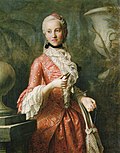 Dates unrecorded Maria Kunigunde of Saxony Princess of Saxony and Poland, abbess of Essen and Thorn (1740–1826)
 -
 Dates unrecorded Maria, Abbess of Quedlinburg German abbess
Prince-Elector of Saxony
- 3 holders
What this means
Who held an office after whom. Not parentage, not discipleship, and not universally recognised — offices are contested.
Does not imply recognition by every tradition · an uncontested claim · parentage · discipleship · an explanation of why the succession happened
Holding an office after someone says nothing about being related to them or taught by them. Where a line is also a family, both are on the holders’ own pages as separate sections.
A gap is a vacancy, an interregnum or a hole in the record; an overlap is rival claims or an office held by more than one at once. The records do not say which, so neither is resolved here. A gap shorter than two years sits inside the precision of year-dated records and is not marked. Only this house’s members are shown, so a gap between two of them may be a holder from outside it.
Why a succession happened is a historical argument. Where sources make one, it belongs in a reviewed connection with its citations — not in this order, and not in a predecessor field.
Recognition is never universal. Where a card names no recognising body, none is recorded — which is not the same as none.
Imported from Wikidata unless a card says otherwise. Nothing here has been read by an editor.
-
 27 April 1694 CE – 1 February 1733 CE Augustus II the Strong King of Poland, Grand Duke of Lithuania and Elector of Saxony (1670–1733)
 -
 1733 CE – 1763 CE Augustus III of Poland King of Poland, Elector of Saxony (1696-1763)
 -
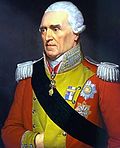 1763 CE – 1806 CE Friedrich August I of Saxony King of Saxony from 1806 to 1827 (1750-1827)
King of Poland
- 3 holders
- 1 gap
What this means
Who held an office after whom. Not parentage, not discipleship, and not universally recognised — offices are contested.
Does not imply recognition by every tradition · an uncontested claim · parentage · discipleship · an explanation of why the succession happened
Holding an office after someone says nothing about being related to them or taught by them. Where a line is also a family, both are on the holders’ own pages as separate sections.
A gap is a vacancy, an interregnum or a hole in the record; an overlap is rival claims or an office held by more than one at once. The records do not say which, so neither is resolved here. A gap shorter than two years sits inside the precision of year-dated records and is not marked. Only this house’s members are shown, so a gap between two of them may be a holder from outside it.
Why a succession happened is a historical argument. Where sources make one, it belongs in a reviewed connection with its citations — not in this order, and not in a predecessor field.
Recognition is never universal. Where a card names no recognising body, none is recorded — which is not the same as none.
Imported from Wikidata unless a card says otherwise. Nothing here has been read by an editor.
- 15 September 1697 CE – September 1706 CE Augustus II the Strong King of Poland, Grand Duke of Lithuania and Elector of Saxony (1670–1733)
-
Gap about 3 years before the next in this house
20 October 1709 CE – 1 February 1733 CE Augustus II the Strong King of Poland, Grand Duke of Lithuania and Elector of Saxony (1670–1733) - 5 October 1733 CE – 5 October 1763 CE Augustus III of Poland King of Poland, Elector of Saxony (1696-1763)
Chronology is not a full explanation
Why one member followed another takes evidence beyond the order of their dates. That both belonged to the house is not, on its own, that evidence.
Religious context · a separate claim
Affiliation
Counted from the members’ own statements — never the religion of anyone the house ruled.
What this means
Assembled from the members’ own statements, and counted. What a person was affiliated with, what a ruler paid for, what a state did and what a population practised are four separate kinds of claim. Only the first two are in the data at all, and they are kept apart here.
Affiliations recorded on members



An affiliation recorded by a third party, often for one period of a life. It is not the religion of anyone this house ruled.
Connections
How House of Wettin connects
Grouped by the kind of relationship, because a successor is not a son and a shared symbol is not an influence.
Affiliation 3
What this means
Association with a tradition or school. Traditions branch, overlap and re-merge; this is not a clean single-origin tree.
Does not imply a fixed roster · that every account of the tradition knows this figure
Imported from Wikidata unless a tile says otherwise. Nothing here has been read by an editor.

Transmission 1
What this means
Teaching passed from one person to another. Not biological ancestry and not automatic institutional succession.
Does not imply that the tradition began fully formed · that later adherents accept the attribution
Imported from Wikidata unless a tile says otherwise. Nothing here has been read by an editor.


Sources
Sources and evidence
Where every statement on this page comes from, and how each one stands.
1 statement on this record
- 1 Imported Taken from Wikidata as it stands. Nobody here has read it. 1 of it cites only Wikipedia: one source, counted once.
Only this record’s own statements. What other records say about it is counted on theirs.
Three layers, three licences
- Text
- Wikipedia · CC BY-SA 4.0, quoted, not merged
- Pictures
- Wikimedia Commons · each file’s own terms
Review
Not yet read by an editor here. Every relationship on this page is an import.
Disagreements are kept, not resolved, and a count of sources is not a confidence score.
_08_(43582411254).jpg/960px-Hall_of_Kings_(Alhambra)_08_(43582411254).jpg)
_08_(43582411254).jpg)
Keep exploring
More houses, tradition by tradition
The directory lists every one on record, most widely recorded first.
A family on the record
is not a family in a myth.