
A family
on the record,
reign by reign.
Documented kin

Members · 33
The house, member by member
One family drawn as a tree, then every member, oldest first where a date is recorded.
What this means
People whose own records place them in this house. Membership of a house is a family fact. It is not a religious affiliation and not a right to any office. “Child of” appears where a member’s recorded parent is also in the house — a documented human family, the same kind of claim as membership, and nothing more. Imported from Wikidata: nothing here has been read by an editor.

10 children in the house
-
_de'_Medici.jpg/330px-Agnolo_Bronzino_-_Maria_(di_Cosimo_I)_de'_Medici.jpg) Princess Maria de' Medici of Tuscany 1540 CE – 1557 CE
Princess Maria de' Medici of Tuscany 1540 CE – 1557 CE -
 Francesco I de' Medici 1541 CE – 1587 CE
 -
 Isabella de' Medici 1542 CE – 1576 CE
 -
_-_Cardinale_Giovanni_di_Cosimo_I_de'_Medici%2C_Arcivescovo_di_Pisa.jpg/330px-Lomi%2C_Baccio_(attr.)_-_Cardinale_Giovanni_di_Cosimo_I_de'_Medici%2C_Arcivescovo_di_Pisa.jpg) Giovanni de' Medici 1543 CE – 1562 CE
Giovanni de' Medici 1543 CE – 1562 CE -
 Lucrezia de' Medici 1545 CE – 1561 CE
 -
 Garzia de' Medici 1547 CE – 1562 CE
 -
 Ferdinando I de' Medici 1549 CE – 1609 CE 5 children in the house
-
 Pietro de' Medici 1554 CE – 1604 CE
 -
.jpg/330px-Don_Giovanni_de_Medici_(1567_-_1621).jpg) Don Giovanni de' Medici 1567 CE – 1621 CE
Don Giovanni de' Medici 1567 CE – 1621 CE -
%2C_by_Giovanni_Maria_Butteri.jpg/330px-Virginia_de'_Medici_(1568-1615)%2C_by_Giovanni_Maria_Butteri.jpg) Virginia de' Medici 1568 CE – 1615 CE
Virginia de' Medici 1568 CE – 1615 CE
Every member
People whose own records place them in this house.
-
 Carlo de' Medici1428 CE – 29 May 1492 CE · priest
 -
_-_Ritratto_di_Lorenzo_il_Magnifico_-_865_-_Uffizi_Gallery_(cropped).jpg/330px-Bottega_di_Agnolo_di_Cosimo%2C_detto_il_Bronzino_(Firenze_1503-1572)_-_Ritratto_di_Lorenzo_il_Magnifico_-_865_-_Uffizi_Gallery_(cropped).jpg) Lorenzo de' Medici1 January 1449 CE – 8 April 1492 CE · Italian politician, literary man and humanist
Lorenzo de' Medici1 January 1449 CE – 8 April 1492 CE · Italian politician, literary man and humanist -
 Giuliano de' Medici28 October 1453 CE – 26 April 1478 CE · Italian politician (1453-1478)
 -
 Clarice Orsinic. 1453 CE – 30 July 1488 CE · wife of Lorenzo de' Medici
 -
 Lucrezia de' Medici13 August 1470 CE – 25 November 1553 CE · Child of Lorenzo de' Medici
 -
 Piero the Unfortunate15 February 1472 CE – 28 December 1503 CE · Child of Lorenzo de' Medici
 -
 Maddalena de' Medici25 July 1473 CE – 2 December 1519 CE · Child of Lorenzo de' Medici
 -
 Leo X11 December 1475 CE – 1 December 1521 CE · Child of Lorenzo de' Medici
 -
 Clement VII26 May 1478 CE – 25 September 1534 CE · Child of Giuliano de' Medici
 -
 Contessina de' Medici16 January 1478 CE – 29 June 1515 CE · Child of Lorenzo de' Medici
 -
 Giuliano de' Medici, Duke of Nemours12 March 1479 CE – 17 March 1516 CE · Child of Lorenzo de' Medici
 -
.jpg/330px-Portrait_of_Pope_Pius_IV%2C_three-quarter-length%2C_seated_at_a_draped_table_(Circle_of_Scipione_Pulzone).jpg) Pius IV31 March 1499 CE – 9 December 1565 CE · pope of the Catholic Church from 1559 to 1565
Pius IV31 March 1499 CE – 9 December 1565 CE · pope of the Catholic Church from 1559 to 1565 -
 Alessandro de' Medici22 June 1510 CE – 6 January 1537 CE · Child of Clement VII
 -
.jpg/330px-Portrait_of_Cardinal_Ippolito_de'_Medici%2C_bust_length_(by_School_of_Cristofano_dell'Altissimo).jpg) Ippolito de' Medici19 April 1511 CE – 10 August 1535 CE · Child of Giuliano de' Medici, Duke of Nemours
Ippolito de' Medici19 April 1511 CE – 10 August 1535 CE · Child of Giuliano de' Medici, Duke of Nemours -
 Cosimo I de' Medici, Grand Duke of Tuscany12 June 1519 CE – 21 April 1574 CE · Duke of Florence (1519-1574)
 -
 Leo XI2 June 1535 CE – 27 April 1605 CE · pope of the Catholic Church in April 1605 (1535-1605)
 - Princess Maria de' Medici of Tuscany13 April 1540 CE – 29 November 1557 CE · Child of Cosimo I de' Medici, Grand Duke of Tuscany
- Francesco I de' Medici25 March 1541 CE – 17 October 1587 CE · Child of Cosimo I de' Medici, Grand Duke of Tuscany
Show 15 more
- Isabella de' Medici31 August 1542 CE – 16 July 1576 CE · Child of Cosimo I de' Medici, Grand Duke of Tuscany
- Giovanni de' Medici29 September 1543 CE – 20 November 1562 CE · Child of Cosimo I de' Medici, Grand Duke of Tuscany
- Lucrezia de' Medici14 February 1545 CE – 21 April 1561 CE · Child of Cosimo I de' Medici, Grand Duke of Tuscany
- Garzia de' Medici5 July 1547 CE – 6 December 1562 CE · Child of Cosimo I de' Medici, Grand Duke of Tuscany
- Ferdinando I de' Medici30 July 1549 CE – 17 February 1609 CE · Child of Cosimo I de' Medici, Grand Duke of Tuscany
- Pietro de' Medici13 June 1554 CE – 25 April 1604 CE · Child of Cosimo I de' Medici, Grand Duke of Tuscany
- Don Giovanni de' Medici23 May 1567 CE – 19 July 1621 CE · Child of Cosimo I de' Medici, Grand Duke of Tuscany
- Virginia de' Medici29 May 1568 CE – 15 January 1615 CE · Child of Cosimo I de' Medici, Grand Duke of Tuscany
-
 Cosimo II de' Medici12 May 1590 CE – 28 February 1621 CE · Child of Ferdinando I de' Medici
 -
 Catherine de' Medici2 May 1593 CE – 17 April 1629 CE · Child of Ferdinando I de' Medici
 -
 Carlo de' Medici19 March 1599 CE – 17 June 1666 CE · Child of Ferdinando I de' Medici
 -
 Princess Maria Maddalena de' Medici of Tuscany29 June 1600 CE – 28 December 1633 CE · Child of Ferdinando I de' Medici
 -
 Claudia de' Medici4 June 1604 CE – 25 December 1648 CE · Child of Ferdinando I de' Medici
 -
.jpg/330px-Giovan_Carlo_de'_Medici%2C_il_volterrano_(palatine_gallery).jpg) Gian Carlo de' Medici4 July 1611 CE – 22 January 1663 CE · Child of Cosimo II de' Medici
Gian Carlo de' Medici4 July 1611 CE – 22 January 1663 CE · Child of Cosimo II de' Medici -
 Leopoldo de' Medici6 November 1617 CE – 10 November 1675 CE · Child of Cosimo II de' Medici
Succession
Offices held in the house
The members in each office, in order — a selection from the office’s whole line.
Cardinal
- 9 holders
- 15 overlapping pairs
- 2 undated
What this means
Who held an office after whom. Not parentage, not discipleship, and not universally recognised — offices are contested.
Does not imply recognition by every tradition · an uncontested claim · parentage · discipleship · an explanation of why the succession happened
Holding an office after someone says nothing about being related to them or taught by them. Where a line is also a family, both are on the holders’ own pages as separate sections.
A gap is a vacancy, an interregnum or a hole in the record; an overlap is rival claims or an office held by more than one at once. The records do not say which, so neither is resolved here. A gap shorter than two years sits inside the precision of year-dated records and is not marked. Only this house’s members are shown, so a gap between two of them may be a holder from outside it. This office’s tenures overlap throughout, so it is listed as a roll in order of start rather than drawn as a line.
Why a succession happened is a historical argument. Where sources make one, it belongs in a reviewed connection with its citations — not in this order, and not in a predecessor field.
Recognition is never universal. Where a card names no recognising body, none is recorded — which is not the same as none.
Imported from Wikidata unless a card says otherwise. Nothing here has been read by an editor.
-
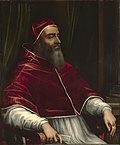 1513 CE – 1523 CE Clement VII pope of the Catholic Church from 1523 to 1534 (1478–1534) Has references
 -
 from 12 December 1667 CE Leopoldo de' Medici Italian cardinal, scholar, patron of the arts and Governor of Siena (1617-1675) Has references
.jpg/120px-Portrait_of_Cardinal_Ippolito_de'_Medici%2C_bust_length_(by_School_of_Cristofano_dell'Altissimo).jpg)
_-_Cardinale_Giovanni_di_Cosimo_I_de'_Medici%2C_Arcivescovo_di_Pisa.jpg/120px-Lomi%2C_Baccio_(attr.)_-_Cardinale_Giovanni_di_Cosimo_I_de'_Medici%2C_Arcivescovo_di_Pisa.jpg)

.jpg/120px-Giovan_Carlo_de'_Medici%2C_il_volterrano_(palatine_gallery).jpg)
No dates recorded 2
Pope
- 4 holders
- 3 gaps
What this means
Who held an office after whom. Not parentage, not discipleship, and not universally recognised — offices are contested.
Does not imply recognition by every tradition · an uncontested claim · parentage · discipleship · an explanation of why the succession happened
Holding an office after someone says nothing about being related to them or taught by them. Where a line is also a family, both are on the holders’ own pages as separate sections.
A gap is a vacancy, an interregnum or a hole in the record; an overlap is rival claims or an office held by more than one at once. The records do not say which, so neither is resolved here. A gap shorter than two years sits inside the precision of year-dated records and is not marked. Only this house’s members are shown, so a gap between two of them may be a holder from outside it.
Why a succession happened is a historical argument. Where sources make one, it belongs in a reviewed connection with its citations — not in this order, and not in a predecessor field.
Recognition is never universal. Where a card names no recognising body, none is recorded — which is not the same as none.
Imported from Wikidata unless a card says otherwise. Nothing here has been read by an editor.
-
Gap about 2 years before the next in this house
219th 29 November 1523 CE – 25 September 1534 CE Clement VII pope of the Catholic Church from 1523 to 1534 (1478–1534) Has references -
Gap about 26 years before the next in this house
.jpg/120px-Portrait_of_Pope_Pius_IV%2C_three-quarter-length%2C_seated_at_a_draped_table_(Circle_of_Scipione_Pulzone).jpg) 224th 4 January 1560 CE – 9 December 1565 CE Pius IV pope of the Catholic Church from 1559 to 1565 Has references
224th 4 January 1560 CE – 9 December 1565 CE Pius IV pope of the Catholic Church from 1559 to 1565 Has references -
Gap about 40 years before the next in this house
 232nd 1 April 1605 CE – 27 April 1605 CE Leo XI pope of the Catholic Church in April 1605 (1535-1605)
Abbot
- 3 holders
- 1 gap
- 1 undated
What this means
Who held an office after whom. Not parentage, not discipleship, and not universally recognised — offices are contested.
Does not imply recognition by every tradition · an uncontested claim · parentage · discipleship · an explanation of why the succession happened
Holding an office after someone says nothing about being related to them or taught by them. Where a line is also a family, both are on the holders’ own pages as separate sections.
A gap is a vacancy, an interregnum or a hole in the record; an overlap is rival claims or an office held by more than one at once. The records do not say which, so neither is resolved here. A gap shorter than two years sits inside the precision of year-dated records and is not marked. Only this house’s members are shown, so a gap between two of them may be a holder from outside it.
Why a succession happened is a historical argument. Where sources make one, it belongs in a reviewed connection with its citations — not in this order, and not in a predecessor field.
Recognition is never universal. Where a card names no recognising body, none is recorded — which is not the same as none.
Imported from Wikidata unless a card says otherwise. Nothing here has been read by an editor.
-
 1487 CE – 1495 CE Leo X pope from 1513 to 1521 (1475-1521)
 -
Gap about 21 years before the next in this house
1516 CE – 1521 CE Clement VII pope of the Catholic Church from 1523 to 1534 (1478–1534)
No dates recorded 1
-
 Dates unrecorded Carlo de' Medici priest
Cardinal-deacon
- 3 holders
- 1 undated
What this means
Who held an office after whom. Not parentage, not discipleship, and not universally recognised — offices are contested.
Does not imply recognition by every tradition · an uncontested claim · parentage · discipleship · an explanation of why the succession happened
Holding an office after someone says nothing about being related to them or taught by them. Where a line is also a family, both are on the holders’ own pages as separate sections.
A gap is a vacancy, an interregnum or a hole in the record; an overlap is rival claims or an office held by more than one at once. The records do not say which, so neither is resolved here. A gap shorter than two years sits inside the precision of year-dated records and is not marked. Only this house’s members are shown, so a gap between two of them may be a holder from outside it.
Why a succession happened is a historical argument. Where sources make one, it belongs in a reviewed connection with its citations — not in this order, and not in a predecessor field.
Recognition is never universal. Where a card names no recognising body, none is recorded — which is not the same as none.
Imported from Wikidata unless a card says otherwise. Nothing here has been read by an editor.
- 26 March 1489 CE – 9 March 1513 CE Leo X pope from 1513 to 1521 (1475-1521)
- 29 September 1513 CE – 26 June 1517 CE Clement VII pope of the Catholic Church from 1523 to 1534 (1478–1534)
No dates recorded 1
-
 Dates unrecorded Ferdinando I de' Medici Grand Duke of Tuscany (1549-1609)
Chronology is not a full explanation
Why one member followed another takes evidence beyond the order of their dates. That both belonged to the house is not, on its own, that evidence.
Religious context · a separate claim
Affiliation
Counted from the members’ own statements — never the religion of anyone the house ruled.
What this means
Assembled from the members’ own statements, and counted. What a person was affiliated with, what a ruler paid for, what a state did and what a population practised are four separate kinds of claim. Only the first two are in the data at all, and they are kept apart here.
Affiliations recorded on members

An affiliation recorded by a third party, often for one period of a life. It is not the religion of anyone this house ruled.
Connections
How House of Medici connects
Grouped by the kind of relationship, because a successor is not a son and a shared symbol is not an influence.
Attribute 1
What this means
A domain, symbol or epithet as sources record it.
Does not imply an exclusive domain · the same association in every account
Imported from Wikidata unless a tile says otherwise. Nothing here has been read by an editor.


Sources
Sources and evidence
Where every statement on this page comes from, and how each one stands.
0 statements on this record
This record makes no statements of its own yet, so there is nothing here to weigh.
Only this record’s own statements. What other records say about it is counted on theirs.
Three layers, three licences
- Text
- Wikipedia · CC BY-SA 4.0, quoted, not merged
- Pictures
- Wikimedia Commons · each file’s own terms
Review
Not yet read by an editor here. Every relationship on this page is an import.
Disagreements are kept, not resolved, and a count of sources is not a confidence score.
_08_(43582411254).jpg/960px-Hall_of_Kings_(Alhambra)_08_(43582411254).jpg)
_08_(43582411254).jpg)
Keep exploring
More houses, tradition by tradition
The directory lists every one on record, most widely recorded first.
A family on the record
is not a family in a myth.