
House
House of Habsburg-Lorraine
Austrian imperial dynasty
- Dated from 1736 CE
- Also called Hapsburg-Lorraine, Habsburg-Lorraine
A family
on the record,
reign by reign.
Documented kin

Members · 71
The house, member by member
One family drawn as a tree, then every member, oldest first where a date is recorded.
What this means
People whose own records place them in this house. Membership of a house is a family fact. It is not a religious affiliation and not a right to any office. “Child of” appears where a member’s recorded parent is also in the house — a documented human family, the same kind of claim as membership, and nothing more. Imported from Wikidata: nothing here has been read by an editor.
15 children in the house
-
.jpg/330px-Archduchess_Maria_Elisabeth_of_Austria%22_(1737-1740).jpg) Archduchess Maria Elisabeth of Austria 1737 CE – 1740 CE
Archduchess Maria Elisabeth of Austria 1737 CE – 1740 CE -
 Archduchess Maria Anna of Austria 1738 CE – 1789 CE
 -
 Archduchess Maria Carolina of Austria 1740 CE – 1741 CE
 -
 Joseph II, Holy Roman Emperor 1741 CE – 1790 CE
 -
 Maria Christina, Duchess of Teschen 1742 CE – 1798 CE 1 child in the house
-
 Archduchess Maria Elisabeth of Austria 1743 CE – 1808 CE
 -
 Archduke Charles Joseph of Austria 1745 CE – 1761 CE
 -
 Archduchess Maria Amalia of Austria 1746 CE – 1804 CE
 -
 Leopold II, Holy Roman Emperor 1747 CE – 1792 CE 14 children in the house
-
 Archduchess Maria Johanna Gabriela of Austria 1750 CE – 1762 CE
 -
 Archduchess Maria Josepha of Austria 1751 CE – 1767 CE
 -
 Maria Carolina of Austria 1752 CE – 1814 CE
 -
 Ferdinand Karl, Archduke of Austria-Este 1754 CE – 1806 CE
 -
 Marie Antoinette 1755 CE – 1793 CE
 -
 Archduke Maximilian Francis of Austria 1756 CE – 1801 CE
Every member
People whose own records place them in this house.
-
 Francis I, Holy Roman Emperor8 December 1708 CE – 18 August 1765 CE · Holy Roman Emperor and Grand Duke of Tuscany (1708-1765).
 - Archduchess Maria Elisabeth of Austria5 February 1737 CE – 7 June 1740 CE · Child of Francis I, Holy Roman Emperor
- Archduchess Maria Anna of Austria6 October 1738 CE – 19 November 1789 CE · Child of Francis I, Holy Roman Emperor
- Archduchess Maria Carolina of Austria12 January 1740 CE – 25 January 1741 CE · Child of Francis I, Holy Roman Emperor
- Joseph II, Holy Roman Emperor13 March 1741 CE – 20 February 1790 CE · Child of Francis I, Holy Roman Emperor
- Maria Christina, Duchess of Teschen13 May 1742 CE – 24 June 1798 CE · Child of Francis I, Holy Roman Emperor
- Archduchess Maria Elisabeth of Austria13 August 1743 CE – 22 September 1808 CE · Child of Francis I, Holy Roman Emperor
- Archduke Charles Joseph of Austria1 February 1745 CE – 18 January 1761 CE · Child of Francis I, Holy Roman Emperor
- Archduchess Maria Amalia of Austria26 February 1746 CE – 18 June 1804 CE · Child of Francis I, Holy Roman Emperor
- Leopold II, Holy Roman Emperor5 May 1747 CE – 1 March 1792 CE · Child of Francis I, Holy Roman Emperor
- Archduchess Maria Johanna Gabriela of Austria4 February 1750 CE – 23 December 1762 CE · Child of Francis I, Holy Roman Emperor
- Archduchess Maria Josepha of Austria19 March 1751 CE – 15 October 1767 CE · Child of Francis I, Holy Roman Emperor
- Maria Carolina of Austria13 August 1752 CE – 8 September 1814 CE · Child of Francis I, Holy Roman Emperor
- Ferdinand Karl, Archduke of Austria-Este1 June 1754 CE – 24 December 1806 CE · Child of Francis I, Holy Roman Emperor
- Marie Antoinette2 November 1755 CE – 16 October 1793 CE · Child of Francis I, Holy Roman Emperor
- Archduke Maximilian Francis of Austria8 December 1756 CE – 27 July 1801 CE · Child of Francis I, Holy Roman Emperor
-
.jpg/330px-Giannini%2C_Vincenzo_-_Portrait_of_Maria_Theresa_of_Austria_(1767%E2%80%931827).jpg) Maria Theresa of Austria, Queen of Saxony14 January 1767 CE – 7 November 1827 CE · Child of Leopold II, Holy Roman Emperor
Maria Theresa of Austria, Queen of Saxony14 January 1767 CE – 7 November 1827 CE · Child of Leopold II, Holy Roman Emperor -
 Francis II, Holy Roman Emperor12 February 1768 CE – 2 March 1835 CE · Child of Leopold II, Holy Roman Emperor
Show 53 more
-
%2C_Sohn_von_Leopold_II.%2C_in_seiner_Bibliothek_sitzend%2C_Kniest%C3%BCck.jpg/330px-Joseph_Dorffmeister_-_Gro%C3%9Fherzog_Ferdinand_III._(1769-1824)%2C_Sohn_von_Leopold_II.%2C_in_seiner_Bibliothek_sitzend%2C_Kniest%C3%BCck.jpg) Ferdinand III, Grand Duke of Tuscany6 May 1769 CE – 18 June 1824 CE · Child of Leopold II, Holy Roman Emperor
Ferdinand III, Grand Duke of Tuscany6 May 1769 CE – 18 June 1824 CE · Child of Leopold II, Holy Roman Emperor -
 Archduchess Maria Anna of Austria21 April 1770 CE – 1 October 1809 CE · Child of Leopold II, Holy Roman Emperor
 -
 Archduke Charles, Duke of Teschen5 September 1771 CE – 30 April 1847 CE · Child of Maria Christina, Duchess of Teschen
 -
 Archduke Alexander Leopold of Austria14 August 1772 CE – 12 July 1795 CE · Child of Leopold II, Holy Roman Emperor
 -
 Archduke Joseph, Palatine of Hungary9 March 1776 CE – 13 January 1847 CE · Child of Leopold II, Holy Roman Emperor
 -
 Maria Clementina of Austria, Duchess of Calabria24 April 1777 CE – 15 November 1801 CE · Child of Leopold II, Holy Roman Emperor
 -
 Archduke Anton Victor of Austria31 August 1779 CE – 2 April 1835 CE · Child of Leopold II, Holy Roman Emperor
 -
.JPG/330px-Maria_Amalia_of_Habsburg-Lorraine_(1780-1798).JPG) Archduchess Maria Amalia of Austria (1780-1798)15 October 1780 CE – 25 December 1798 CE · Child of Leopold II, Holy Roman Emperor
Archduchess Maria Amalia of Austria (1780-1798)15 October 1780 CE – 25 December 1798 CE · Child of Leopold II, Holy Roman Emperor -
 Archduke John of Austria20 January 1782 CE – 11 May 1859 CE · Child of Leopold II, Holy Roman Emperor
 -
 Archduke Rainer Joseph of Austria30 September 1783 CE – 16 January 1853 CE · Child of Leopold II, Holy Roman Emperor
 -
 Louis of Austria13 December 1784 CE – 21 December 1864 CE · Child of Leopold II, Holy Roman Emperor
 -
 Archduke Rudolf of Austria8 January 1788 CE – 24 July 1831 CE · Child of Leopold II, Holy Roman Emperor
 -
 Archduke Franz Karl of Austria17 December 1802 CE – 8 March 1878 CE · Child of Francis II, Holy Roman Emperor
 -
 Archduchess Maria Theresa of Austria-Teschen31 July 1816 CE – 8 August 1867 CE · Child of Archduke Charles, Duke of Teschen
 -
 Archduke Albrecht, Duke of Teschen3 August 1817 CE – 18 February 1895 CE · Child of Archduke Charles, Duke of Teschen
 -
 Archduke Stephen, Palatine of Hungary14 September 1817 CE – 19 February 1867 CE · Child of Archduke Joseph, Palatine of Hungary
 -
 Archduchess Hermine of Austria14 September 1817 CE – 13 February 1842 CE · Child of Archduke Joseph, Palatine of Hungary
 -
 Archduke Karl Ferdinand of Austria29 July 1818 CE – 20 November 1874 CE · Child of Archduke Charles, Duke of Teschen
 -
.jpg/330px-Erzherzog_Leopold_von_%C3%96sterreich_(1823-1898).jpg) Archduke Leopold Ludwig of Austria6 June 1823 CE – 24 May 1898 CE · Child of Archduke Rainer Joseph of Austria
Archduke Leopold Ludwig of Austria6 June 1823 CE – 24 May 1898 CE · Child of Archduke Rainer Joseph of Austria -
 Archduke Ernest of Austria8 August 1824 CE – 4 April 1899 CE · Child of Archduke Rainer Joseph of Austria
 -
%2C_by_Robert_Theer_(1808-1863).jpg/330px-Archduchess_Marie_Karoline_of_Austria_(1825-1915)%2C_by_Robert_Theer_(1808-1863).jpg) Archduchess Maria Karoline of Austria10 September 1825 CE – 17 July 1915 CE · Child of Archduke Charles, Duke of Teschen
Archduchess Maria Karoline of Austria10 September 1825 CE – 17 July 1915 CE · Child of Archduke Charles, Duke of Teschen -
.jpg/330px-Detail_Adolf_Dauthage_Sigmund_Erzherzog_von_%C3%96sterreich_1856_ubs_G_0948_III_(cropped).jpg) Archduke Sigismund of Austria7 January 1826 CE – 15 December 1891 CE · Child of Archduke Rainer Joseph of Austria
Archduke Sigismund of Austria7 January 1826 CE – 15 December 1891 CE · Child of Archduke Rainer Joseph of Austria -
 Archduke Rainer Ferdinand of Austria11 January 1827 CE – 27 January 1913 CE · Child of Archduke Rainer Joseph of Austria
 -
 Archduke Wilhelm Franz of Austria21 April 1827 CE – 29 July 1894 CE · Child of Archduke Charles, Duke of Teschen
 -
 Archduke Heinrich Anton of Austria9 May 1828 CE – 30 November 1891 CE · Child of Archduke Rainer Joseph of Austria
 -
 Maximilian I of Mexico6 July 1832 CE – 19 June 1867 CE · Child of Archduke Franz Karl of Austria
 -
 Archduke Karl Ludwig of Austria30 July 1833 CE – 19 May 1896 CE · Child of Archduke Franz Karl of Austria
 -
 Archduke Joseph Karl of Austria2 March 1833 CE – 13 June 1905 CE · Child of Archduke Joseph, Palatine of Hungary
 -
 Archduke Ludwig Viktor of Austria15 May 1842 CE – 18 January 1919 CE · Child of Archduke Franz Karl of Austria
 -
 Archduke Ludwig Salvator of Austria4 August 1847 CE – 12 October 1915 CE · Austrian archduke (1847-1915)
 -
 Archduke Johann Salvator of Austria25 November 1852 CE – c. 12 July 1890 CE · Austrian archduke (1852-1890)
 -
 Archduke Charles Stephen of Austria5 September 1860 CE – 7 April 1933 CE · Child of Archduke Karl Ferdinand of Austria
 -
 Archduchess Maria Theresa of Austria18 September 1862 CE – 10 May 1933 CE · (1862-1933)
 -
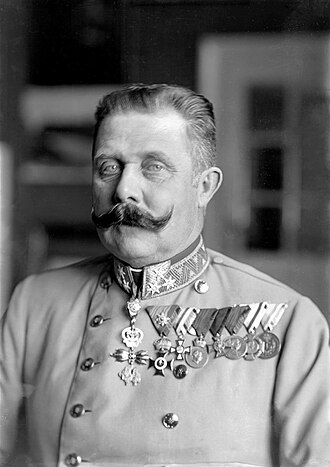 Archduke Franz Ferdinand of Austria18 December 1863 CE – 28 June 1914 CE · Child of Archduke Karl Ludwig of Austria
 -
 Archduke Otto of Austria21 April 1865 CE – 1 November 1906 CE · Child of Archduke Karl Ludwig of Austria
 -
 Archduke Franz Salvator of Austria21 August 1866 CE – 20 April 1939 CE · Austrian archduke (1866-1939)
 -
 Archduke Ferdinand Karl of Austria27 December 1868 CE – 10 March 1915 CE · Child of Archduke Karl Ludwig of Austria
 -
.jpg/330px-Margaretha_Sophie_von_%C3%96sterreich_(1870-1902).jpg) Archduchess Margarete Sophie of Austria13 May 1870 CE – 24 August 1902 CE · Child of Archduke Karl Ludwig of Austria
Archduchess Margarete Sophie of Austria13 May 1870 CE – 24 August 1902 CE · Child of Archduke Karl Ludwig of Austria -
 Archduchess Maria Annunciata of Austria31 July 1876 CE – 8 April 1961 CE · Child of Archduke Karl Ludwig of Austria
 -
 Archduchess Elisabeth Amalie of Austria7 July 1878 CE – 13 March 1960 CE · Child of Archduke Karl Ludwig of Austria
 -
 Archduchess Maria Immakulata of Austria3 September 1878 CE – 25 November 1968 CE · Austrian archduchess (1878-1968)
 -
 Charles I of Austria17 August 1887 CE – 1 April 1922 CE · Child of Archduke Otto of Austria
 -
 Archduke Karl Albrecht of Austria18 December 1888 CE – 17 March 1951 CE · Child of Archduchess Maria Theresa of Austria
 -
 Archduke Leo Karl of Austria5 July 1893 CE – 28 April 1939 CE · Child of Archduchess Maria Theresa of Austria
 -
 Archduke Wilhelm of Austria10 February 1895 CE – 18 August 1948 CE · Child of Archduchess Maria Theresa of Austria
 -
 Archduke Maximilian Eugen of Austria13 April 1895 CE – 19 January 1952 CE · Child of Archduke Otto of Austria
 -
.jpg/330px-Otto_von_Habsburg%2C_MEP_(1912%E2%80%932011).jpg) Otto von Habsburg20 November 1912 CE – 4 July 2011 CE · Child of Charles I of Austria
Otto von Habsburg20 November 1912 CE – 4 July 2011 CE · Child of Charles I of Austria -
 Archduchess Adelheid of Austria3 January 1914 CE – 3 October 1971 CE · Child of Charles I of Austria
 -
 Archduke Felix of Austria31 May 1916 CE – 6 September 2011 CE · Child of Charles I of Austria
 -
 Archduke Carl Ludwig of Austria10 March 1918 CE – 11 December 2007 CE · Child of Charles I of Austria
 -
 Archduke Rudolf of Austria5 September 1919 CE – 15 May 2010 CE · Child of Charles I of Austria
 -
 Duchess Charlotte, Duchess of Mecklenburg-Strelitz1 March 1921 CE – 23 July 1989 CE · Child of Charles I of Austria
 -
.jpg/330px-Archduchess_Elisabeth_of_Austria_(1922%E2%80%931993).jpg "Picture: lead image of the English Wikipedia article") Archduchess Elisabeth of Austria31 May 1922 CE – 6 January 1993 CE · Child of Charles I of Austria
Archduchess Elisabeth of Austria31 May 1922 CE – 6 January 1993 CE · Child of Charles I of Austria
Succession
Offices held in the house
The members in each office, in order — a selection from the office’s whole line.
Member of the House of Lords (Austria)
- 28 holders
- 334 overlapping pairs
What this means
Who held an office after whom. Not parentage, not discipleship, and not universally recognised — offices are contested.
Does not imply recognition by every tradition · an uncontested claim · parentage · discipleship · an explanation of why the succession happened
Holding an office after someone says nothing about being related to them or taught by them. Where a line is also a family, both are on the holders’ own pages as separate sections.
A gap is a vacancy, an interregnum or a hole in the record; an overlap is rival claims or an office held by more than one at once. The records do not say which, so neither is resolved here. A gap shorter than two years sits inside the precision of year-dated records and is not marked. Only this house’s members are shown, so a gap between two of them may be a holder from outside it. This office’s tenures overlap throughout, so it is listed as a roll in order of start rather than drawn as a line.
Why a succession happened is a historical argument. Where sources make one, it belongs in a reviewed connection with its citations — not in this order, and not in a predecessor field.
Recognition is never universal. Where a card names no recognising body, none is recorded — which is not the same as none.
Imported from Wikidata unless a card says otherwise. Nothing here has been read by an editor.
-
 from 18 April 1861 CE Louis of Austria Austrian archduke (1784–1864)
 -
 from 18 April 1861 CE Archduke Karl Ludwig of Austria Austrian archduke (1833–1896)
 -
 from 18 April 1861 CE Archduke Franz Karl of Austria Austrian archduke (1802-1878)
 -
 from 18 April 1861 CE Archduke Joseph Karl of Austria Austrian Imperial and Royal (1833-1905)
 -
 from 18 April 1861 CE Archduke Stephen, Palatine of Hungary archduke of Austria (1817-1867) Has references
 -
.jpg/120px-Detail_Adolf_Dauthage_Sigmund_Erzherzog_von_%C3%96sterreich_1856_ubs_G_0948_III_(cropped).jpg) from 18 April 1861 CE Archduke Sigismund of Austria Austrian archduke (1826-1891)
from 18 April 1861 CE Archduke Sigismund of Austria Austrian archduke (1826-1891) -
 from 18 April 1861 CE Archduke Rainer Ferdinand of Austria Archduke of Austria (1827-1913)
 -
 from 18 April 1861 CE Archduke Albrecht, Duke of Teschen Austrian officer (1817–1895)
 -
 from 18 April 1861 CE Archduke Karl Ferdinand of Austria Archduke of Austria (1818-1874)
 -
.jpg/120px-Erzherzog_Leopold_von_%C3%96sterreich_(1823-1898).jpg) from 18 April 1861 CE Archduke Leopold Ludwig of Austria Austrian archduke (1823-1898)
from 18 April 1861 CE Archduke Leopold Ludwig of Austria Austrian archduke (1823-1898) -
 from 18 April 1861 CE Archduke Wilhelm Franz of Austria Archduke of Austria (1827-1894)
 -
 18 April 1861 CE – 16 February 1868 CE Archduke Heinrich Anton of Austria Austrian archduke (1828-1891)
 -
 18 April 1861 CE – 9 April 1864 CE Maximilian I of Mexico emperor of Mexico (1832-1867)
 -
 from 14 October 1863 CE Archduke Ludwig Viktor of Austria Austrian archduke (1842-1919)
 -
 1869 CE – 16 October 1889 CE Archduke Johann Salvator of Austria Austrian archduke (1852-1890)

Show 12 more holders
-
 from 1871 CE Archduke Ludwig Salvator of Austria Austrian archduke (1847-1915)
 - 1872 CE – 30 November 1891 CE Archduke Heinrich Anton of Austria Austrian archduke (1828-1891)
-
 from 8 January 1884 CE Archduke Franz Ferdinand of Austria heir presumptive to the throne of Austria-Hungary (1863–1914)
 -
 from 1 October 1885 CE Archduke Otto of Austria Austrian archduke (1865-1906)
 -
 1 October 1885 CE – 1918 CE Archduke Charles Stephen of Austria Austrian admiral and noble (1860-1933)
 -
 6 January 1889 CE – 1918 CE Archduke Franz Salvator of Austria Austrian archduke (1866-1939)
 -
 6 January 1889 CE – 6 August 1911 CE Archduke Ferdinand Karl of Austria Austrian archduke (1868–1915)
 -
 13 August 1907 CE – 21 November 1916 CE Charles I of Austria Last monarch of Austria-Hungary (r. 1916–1918)
 -
 10 September 1910 CE – 1918 CE Archduke Karl Albrecht of Austria Austrian archduke (1888–1951)
 -
 5 December 1917 CE – 1918 CE Archduke Wilhelm of Austria Austrian archduke, Ukrainian militia officer (1895-1948)
 -
 5 December 1917 CE – 1918 CE Archduke Leo Karl of Austria Archduke of Austria (1893-1939)
 -
 12 May 1917 CE – 1918 CE Archduke Maximilian Eugen of Austria Austrian archduke (1895-1952)
Abbess of the Institution of Noble Ladies of the Prague Castle
- 5 holders
- 3 gaps
What this means
Who held an office after whom. Not parentage, not discipleship, and not universally recognised — offices are contested.
Does not imply recognition by every tradition · an uncontested claim · parentage · discipleship · an explanation of why the succession happened
Holding an office after someone says nothing about being related to them or taught by them. Where a line is also a family, both are on the holders’ own pages as separate sections.
A gap is a vacancy, an interregnum or a hole in the record; an overlap is rival claims or an office held by more than one at once. The records do not say which, so neither is resolved here. A gap shorter than two years sits inside the precision of year-dated records and is not marked. Only this house’s members are shown, so a gap between two of them may be a holder from outside it.
Why a succession happened is a historical argument. Where sources make one, it belongs in a reviewed connection with its citations — not in this order, and not in a predecessor field.
Recognition is never universal. Where a card names no recognising body, none is recorded — which is not the same as none.
Imported from Wikidata unless a card says otherwise. Nothing here has been read by an editor.
-
 7 September 1834 CE – 27 January 1837 CE Archduchess Maria Theresa of Austria-Teschen Queen Consort of Two Sicilies
 -
Gap about 2 years before the next in this house
 16 September 1839 CE – 13 February 1842 CE Archduchess Hermine of Austria Archduchess of Austria (1817-1842)
 -
Gap about 2 years before the next in this house
%2C_by_Robert_Theer_(1808-1863).jpg/120px-Archduchess_Marie_Karoline_of_Austria_(1825-1915)%2C_by_Robert_Theer_(1808-1863).jpg) 1844 CE – 1852 CE Archduchess Maria Karoline of Austria Archduchess of Austria (1825-1915)
1844 CE – 1852 CE Archduchess Maria Karoline of Austria Archduchess of Austria (1825-1915) -
Gap about 34 years before the next in this house
.jpg/120px-Margaretha_Sophie_von_%C3%96sterreich_(1870-1902).jpg) 1886 CE – 1893 CE Archduchess Margarete Sophie of Austria Austrian archduchess (1870-1902)
1886 CE – 1893 CE Archduchess Margarete Sophie of Austria Austrian archduchess (1870-1902) -
 31 May 1894 CE – 1 May 1919 CE Archduchess Maria Annunciata of Austria Archduchess of Austria (1876–1961)
Palatine of Hungary
- 5 holders
- 1 gap
What this means
Who held an office after whom. Not parentage, not discipleship, and not universally recognised — offices are contested.
Does not imply recognition by every tradition · an uncontested claim · parentage · discipleship · an explanation of why the succession happened
Holding an office after someone says nothing about being related to them or taught by them. Where a line is also a family, both are on the holders’ own pages as separate sections.
A gap is a vacancy, an interregnum or a hole in the record; an overlap is rival claims or an office held by more than one at once. The records do not say which, so neither is resolved here. A gap shorter than two years sits inside the precision of year-dated records and is not marked. Only this house’s members are shown, so a gap between two of them may be a holder from outside it.
Why a succession happened is a historical argument. Where sources make one, it belongs in a reviewed connection with its citations — not in this order, and not in a predecessor field.
Recognition is never universal. Where a card names no recognising body, none is recorded — which is not the same as none.
Imported from Wikidata unless a card says otherwise. Nothing here has been read by an editor.
-
 5 April 1732 CE – 20 June 1741 CE Francis I, Holy Roman Emperor Holy Roman Emperor and Grand Duke of Tuscany (1708-1765). Has references
 -
Gap about 49 years before the next in this house
 12 November 1790 CE – 12 July 1795 CE Archduke Alexander Leopold of Austria archduke of Austria (1772-1795) Has references
 -
 12 November 1796 CE – 13 January 1847 CE Archduke Joseph, Palatine of Hungary archduke of Austria (1776-1847) Has references
 - 13 January 1847 CE – 24 September 1848 CE Archduke Stephen, Palatine of Hungary archduke of Austria (1817-1867) Has references
- 24 September 1848 CE – 13 June 1905 CE Archduke Joseph Karl of Austria Austrian Imperial and Royal (1833-1905)
Prince-Elector
- 5 holders
- 5 undated
What this means
Who held an office after whom. Not parentage, not discipleship, and not universally recognised — offices are contested.
Does not imply recognition by every tradition · an uncontested claim · parentage · discipleship · an explanation of why the succession happened
Holding an office after someone says nothing about being related to them or taught by them. Where a line is also a family, both are on the holders’ own pages as separate sections.
A gap is a vacancy, an interregnum or a hole in the record; an overlap is rival claims or an office held by more than one at once. The records do not say which, so neither is resolved here. A gap shorter than two years sits inside the precision of year-dated records and is not marked. Only this house’s members are shown, so a gap between two of them may be a holder from outside it.
Why a succession happened is a historical argument. Where sources make one, it belongs in a reviewed connection with its citations — not in this order, and not in a predecessor field.
Recognition is never universal. Where a card names no recognising body, none is recorded — which is not the same as none.
Imported from Wikidata unless a card says otherwise. Nothing here has been read by an editor.
No dates recorded 5
-
 Dates unrecorded Archduke Maximilian Francis of Austria Austrian archduke, archbishop of Cologne
 -
 Dates unrecorded Leopold II, Holy Roman Emperor Holy Roman Emperor from 1790 to 1792
 -
 Dates unrecorded Joseph II, Holy Roman Emperor Holy Roman Emperor from 1765 to 1790, (1741-1790).
 -
 Dates unrecorded Francis II, Holy Roman Emperor also known as Francis I, Emperor of Austria (1768-1835)
 -
%2C_Sohn_von_Leopold_II.%2C_in_seiner_Bibliothek_sitzend%2C_Kniest%C3%BCck.jpg/120px-Joseph_Dorffmeister_-_Gro%C3%9Fherzog_Ferdinand_III._(1769-1824)%2C_Sohn_von_Leopold_II.%2C_in_seiner_Bibliothek_sitzend%2C_Kniest%C3%BCck.jpg) Dates unrecorded Ferdinand III, Grand Duke of Tuscany Grand Duke of Tuscany (1769-1824)
Dates unrecorded Ferdinand III, Grand Duke of Tuscany Grand Duke of Tuscany (1769-1824)
Chronology is not a full explanation
Why one member followed another takes evidence beyond the order of their dates. That both belonged to the house is not, on its own, that evidence.
Religious context · a separate claim
Affiliation
Counted from the members’ own statements — never the religion of anyone the house ruled.
What this means
Assembled from the members’ own statements, and counted. What a person was affiliated with, what a ruler paid for, what a state did and what a population practised are four separate kinds of claim. Only the first two are in the data at all, and they are kept apart here.
Affiliations recorded on members

An affiliation recorded by a third party, often for one period of a life. It is not the religion of anyone this house ruled.
Connections
How House of Habsburg-Lorraine connects
Grouped by the kind of relationship, because a successor is not a son and a shared symbol is not an influence.
Affiliation 2
What this means
Association with a tradition or school. Traditions branch, overlap and re-merge; this is not a clean single-origin tree.
Does not imply a fixed roster · that every account of the tradition knows this figure
Imported from Wikidata unless a tile says otherwise. Nothing here has been read by an editor.

Transmission 2
What this means
Teaching passed from one person to another. Not biological ancestry and not automatic institutional succession.
Does not imply that the tradition began fully formed · that later adherents accept the attribution
Imported from Wikidata unless a tile says otherwise. Nothing here has been read by an editor.
.jpg/120px-Kaiserin_Maria_Theresia_(HRR).jpg)

Sources
Sources and evidence
Where every statement on this page comes from, and how each one stands.
3 statements on this record
- 3 Imported Taken from Wikidata as it stands. Nobody here has read it. 2 of them cite only Wikipedia: one source, counted once.
Only this record’s own statements. What other records say about it is counted on theirs.
Three layers, three licences
- Text
- Wikipedia · CC BY-SA 4.0, quoted, not merged
- Pictures
- Wikimedia Commons · each file’s own terms
Review
Not yet read by an editor here. Every relationship on this page is an import.
Disagreements are kept, not resolved, and a count of sources is not a confidence score.
_08_(43582411254).jpg/960px-Hall_of_Kings_(Alhambra)_08_(43582411254).jpg)
_08_(43582411254).jpg)
Keep exploring
More houses, tradition by tradition
The directory lists every one on record, most widely recorded first.
A family on the record
is not a family in a myth.