
House
House of Estridsen
Dynasty that ruled Denmark from 1047 to 1412
- Also called Estridsen
A family
on the record,
reign by reign.
Documented kin

Members · 27
The house, member by member
One family drawn as a tree, then every member, oldest first where a date is recorded.
What this means
People whose own records place them in this house. Membership of a house is a family fact. It is not a religious affiliation and not a right to any office. “Child of” appears where a member’s recorded parent is also in the house — a documented human family, the same kind of claim as membership, and nothing more. Imported from Wikidata: nothing here has been read by an editor.
5 children in the house
-
 Harald III of Denmark 1041 CE – 1080 CE
 -
 Canute IV of Denmark 1043 CE – 1086 CE
 -
.jpeg/330px-Olaus_I_-_Det_kongelige_Bibliotek_(MP000080).jpeg) Olaf I of Denmark c. 1050 CE – 1095 CE
Olaf I of Denmark c. 1050 CE – 1095 CE -
 Eric I of Denmark c. 1056 CE – 1103 CE 3 children in the house
-
 Niels 1065 CE – 1134 CE
Every member
People whose own records place them in this house.
-
 Sweyn II of Denmark1020 CE – 28 April 1076 CE · King of Denmark from 1047 to 1076
 - Harald III of Denmark1041 CE – 17 April 1080 CE · Child of Sweyn II of Denmark
- Canute IV of Denmark1043 CE – 10 July 1086 CE · Child of Sweyn II of Denmark
- Olaf I of Denmarkc. 1050 CE – 18 August 1095 CE · Child of Sweyn II of Denmark
- Eric I of Denmarkc. 1056 CE – 10 July 1103 CE · Child of Sweyn II of Denmark
- Niels1065 CE – 25 June 1134 CE · Child of Sweyn II of Denmark
- Harald Kesja1080 CE – 1135 CE · Child of Eric I of Denmark
-
 Eric II of Denmark1090 CE – 18 September 1137 CE · Child of Eric I of Denmark
 -
 Canute Lavard12 March 1096 CE – 7 January 1131 CE · Child of Eric I of Denmark
 -
 Eric III of Denmark1100 CE – 20 November 1146 CE · Danish king
 - Christina of Denmark1118 CE – 1139 CE · Child of Canute Lavard
- Christina of Denmark1120 CE – 1170 CE · Queen of Sweden (1156–1160)
-
 Sweyn III of Denmark1125 CE – 23 October 1157 CE · Child of Eric II of Denmark
 -
 Valdemar I of Denmark14 January 1131 CE – 12 May 1182 CE · Child of Canute Lavard
 -
 Canute VI of Denmark1163 CE – 12 November 1202 CE · Child of Valdemar I of Denmark
 -
.jpg/330px-Valdemar_Sejr_(kongefrisen).jpg) Valdemar II of Denmark1170 CE – 28 March 1241 CE · Child of Valdemar I of Denmark
Valdemar II of Denmark1170 CE – 28 March 1241 CE · Child of Valdemar I of Denmark -
 Valdemar the Young1209 CE – 28 November 1231 CE · Child of Valdemar II of Denmark
 -
 Eric IV of Denmark1216 CE – 10 August 1250 CE · Child of Valdemar II of Denmark
Show 9 more
-
 Abel of Denmark1218 CE – 29 June 1252 CE · Child of Valdemar II of Denmark
 -
 Christopher I of Denmark1219 CE – 29 May 1259 CE · Child of Valdemar II of Denmark
 -
 Sophia of Denmark1241 CE – 1286 CE · Child of Eric IV of Denmark
 - Ingeborg of Denmark, Queen of Norway1244 CE – 1287 CE · Child of Eric IV of Denmark
-
 Eric V of Denmark1249 CE – 22 November 1286 CE · Child of Christopher I of Denmark
 -
.jpg/330px-Erik_Menved_(Sankt_Bendts_Kirke).jpg) Eric VI of Denmark1274 CE – 13 November 1319 CE · Child of Eric V of Denmark
Eric VI of Denmark1274 CE – 13 November 1319 CE · Child of Eric V of Denmark -
 Christopher II of Denmark29 September 1276 CE – 2 August 1332 CE · Child of Eric V of Denmark
 -
.jpg/330px-Birger_of_Sweden_%26_Margaret_of_Sweden_grave_2009_(1).jpg "Picture: their grave") Martha of Denmark1282 CE – 3 October 1341 CE · Child of Eric V of Denmark
Martha of Denmark1282 CE – 3 October 1341 CE · Child of Eric V of Denmark -
 Valdemar IV of Denmark1320 CE – 24 October 1375 CE · Child of Christopher II of Denmark
Succession
Offices held in the house
The members in each office, in order — a selection from the office’s whole line.
Monarch of Denmark
- 21 holders
- 1 overlap
- 3 gaps
What this means
Who held an office after whom. Not parentage, not discipleship, and not universally recognised — offices are contested.
Does not imply recognition by every tradition · an uncontested claim · parentage · discipleship · an explanation of why the succession happened
Holding an office after someone says nothing about being related to them or taught by them. Where a line is also a family, both are on the holders’ own pages as separate sections.
A gap is a vacancy, an interregnum or a hole in the record; an overlap is rival claims or an office held by more than one at once. The records do not say which, so neither is resolved here. A gap shorter than two years sits inside the precision of year-dated records and is not marked. Only this house’s members are shown, so a gap between two of them may be a holder from outside it.
Why a succession happened is a historical argument. Where sources make one, it belongs in a reviewed connection with its citations — not in this order, and not in a predecessor field.
Recognition is never universal. Where a card names no recognising body, none is recorded — which is not the same as none.
Imported from Wikidata unless a card says otherwise. Nothing here has been read by an editor.
-
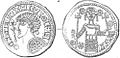 1047 CE – 28 April 1076 CE Sweyn II of Denmark King of Denmark from 1047 to 1076
 -
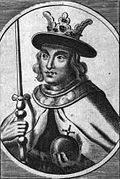 1076 CE – 17 April 1080 CE Harald III of Denmark 11th-century King of Denmark
 -
 1080 CE – 1086 CE Canute IV of Denmark King of Denmark from 1080 to 1086
 -
.jpeg/120px-Olaus_I_-_Det_kongelige_Bibliotek_(MP000080).jpeg) 10 July 1086 CE – 18 August 1095 CE Olaf I of Denmark King of Denmark
10 July 1086 CE – 18 August 1095 CE Olaf I of Denmark King of Denmark -
 1095 CE – 1103 CE Eric I of Denmark Danish monarch
 -
 1104 CE – 1134 CE Niels King of Denmark
 -
 1134 CE – 1137 CE Eric II of Denmark Danish monarch
 -
 1137 CE – 1146 CE Eric III of Denmark Danish king
 -
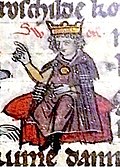 1146 CE – 1154 CE Sweyn III of Denmark King of Denmark
 -
 1154 CE – 1182 CE Valdemar I of Denmark King of Denmark
 -
 1182 CE – 1202 CE Canute VI of Denmark King of Denmark
 -
.jpg/120px-Valdemar_Sejr_(kongefrisen).jpg) 1202 CE – 1241 CE Valdemar II of Denmark King of Denmark from 1202 to 1241
1202 CE – 1241 CE Valdemar II of Denmark King of Denmark from 1202 to 1241 -
Overlap held at the same time as Valdemar II of Denmark
 1215 CE – 1231 CE Valdemar the Young Co-king of Denmark (1209-1231)
 -
Gap about 10 years before the next in this house
 1241 CE – 1250 CE Eric IV of Denmark King of Denmark (1216-1250)
 -
 1 November 1250 CE – 29 June 1252 CE Abel of Denmark King of Denmark
 -
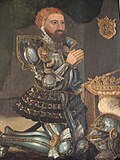 1252 CE – 1259 CE Christopher I of Denmark King of Denmark
Show 5 more holders
-
 1259 CE – 1286 CE Eric V of Denmark King of Denmark
 -
.jpg/120px-Erik_Menved_(Sankt_Bendts_Kirke).jpg) 1286 CE – 1319 CE Eric VI of Denmark King of Denmark
1286 CE – 1319 CE Eric VI of Denmark King of Denmark -
 1320 CE – 1326 CE Christopher II of Denmark King of Denmark
 -
Gap about 3 years before the next in this house
1329 CE – 1332 CE Christopher II of Denmark King of Denmark -
Gap about 8 years before the next in this house
 24 June 1340 CE – 24 October 1375 CE Valdemar IV of Denmark King of Denmark
Duke of Schleswig
- 2 holders
- 1 gap
What this means
Who held an office after whom. Not parentage, not discipleship, and not universally recognised — offices are contested.
Does not imply recognition by every tradition · an uncontested claim · parentage · discipleship · an explanation of why the succession happened
Holding an office after someone says nothing about being related to them or taught by them. Where a line is also a family, both are on the holders’ own pages as separate sections.
A gap is a vacancy, an interregnum or a hole in the record; an overlap is rival claims or an office held by more than one at once. The records do not say which, so neither is resolved here. A gap shorter than two years sits inside the precision of year-dated records and is not marked. Only this house’s members are shown, so a gap between two of them may be a holder from outside it.
Why a succession happened is a historical argument. Where sources make one, it belongs in a reviewed connection with its citations — not in this order, and not in a predecessor field.
Recognition is never universal. Where a card names no recognising body, none is recorded — which is not the same as none.
Imported from Wikidata unless a card says otherwise. Nothing here has been read by an editor.
- 1183 CE – 1216 CE Valdemar II of Denmark King of Denmark from 1202 to 1241
-
Gap about 16 years before the next in this house
1232 CE – 1252 CE Abel of Denmark King of Denmark
Chronology is not a full explanation
Why one member followed another takes evidence beyond the order of their dates. That both belonged to the house is not, on its own, that evidence.
Religious context · a separate claim
Affiliation
Counted from the members’ own statements — never the religion of anyone the house ruled.
What this means
Assembled from the members’ own statements, and counted. What a person was affiliated with, what a ruler paid for, what a state did and what a population practised are four separate kinds of claim. Only the first two are in the data at all, and they are kept apart here.
Affiliations recorded on members


An affiliation recorded by a third party, often for one period of a life. It is not the religion of anyone this house ruled.
Connections
How House of Estridsen connects
Grouped by the kind of relationship, because a successor is not a son and a shared symbol is not an influence.
Affiliation 1
What this means
Association with a tradition or school. Traditions branch, overlap and re-merge; this is not a clean single-origin tree.
Does not imply a fixed roster · that every account of the tradition knows this figure
Imported from Wikidata unless a tile says otherwise. Nothing here has been read by an editor.
Transmission 1
What this means
Teaching passed from one person to another. Not biological ancestry and not automatic institutional succession.
Does not imply that the tradition began fully formed · that later adherents accept the attribution
Imported from Wikidata unless a tile says otherwise. Nothing here has been read by an editor.
Sources
Sources and evidence
Where every statement on this page comes from, and how each one stands.
2 statements on this record
- 2 Imported Taken from Wikidata as it stands. Nobody here has read it. 2 of them cite only Wikipedia: one source, counted once.
Only this record’s own statements. What other records say about it is counted on theirs.
Three layers, three licences
- Text
- Wikipedia · CC BY-SA 4.0, quoted, not merged
- Pictures
- Wikimedia Commons · each file’s own terms
Review
Not yet read by an editor here. Every relationship on this page is an import.
Disagreements are kept, not resolved, and a count of sources is not a confidence score.
_08_(43582411254).jpg/960px-Hall_of_Kings_(Alhambra)_08_(43582411254).jpg)
_08_(43582411254).jpg)
Keep exploring
More houses, tradition by tradition
The directory lists every one on record, most widely recorded first.
A family on the record
is not a family in a myth.