
House
House of Battenberg
Cadet branch of the House of Hesse-Darmstadt
- Dated from 1851 CE
A family
on the record,
reign by reign.
Documented kin

Members · 6
The house, member by member
One family drawn as a tree, then every member, oldest first where a date is recorded.
What this means
People whose own records place them in this house. Membership of a house is a family fact. It is not a religious affiliation and not a right to any office. “Child of” appears where a member’s recorded parent is also in the house — a documented human family, the same kind of claim as membership, and nothing more. Imported from Wikidata: nothing here has been read by an editor.
2 children in the house
-
 Princess Alice of Battenberg 1885 CE – 1969 CE
 -
 George Mountbatten, 2nd Marquess of Milford Haven 1892 CE – 1938 CE
Every member
People whose own records place them in this house.
-
 Prince Louis of Battenberg24 May 1854 CE – 11 September 1921 CE · Nobleman and naval officer (1854–1921)
 -
 Alexander of Battenberg5 April 1857 CE – 17 November 1893 CE · Bulgarian ruler (1857–1893)
 -
 Prince Henry of Battenberg5 October 1858 CE – 20 January 1896 CE · husband of Princess Beatrice of the United Kingdom (1858-1896)
 -
 Princess Anna of Montenegro18 August 1874 CE – 22 April 1971 CE · Montenegrin princess and composer (1874-1971)
 - Princess Alice of Battenberg25 February 1885 CE – 5 December 1969 CE · Child of Prince Louis of Battenberg
- George Mountbatten, 2nd Marquess of Milford Haven6 November 1892 CE – 8 April 1938 CE · Child of Prince Louis of Battenberg
Succession
Offices held in the house
The members in each office, in order — a selection from the office’s whole line.
Member of the House of Lords
- 2 holders
- 2 undated
What this means
Who held an office after whom. Not parentage, not discipleship, and not universally recognised — offices are contested.
Does not imply recognition by every tradition · an uncontested claim · parentage · discipleship · an explanation of why the succession happened
Holding an office after someone says nothing about being related to them or taught by them. Where a line is also a family, both are on the holders’ own pages as separate sections.
A gap is a vacancy, an interregnum or a hole in the record; an overlap is rival claims or an office held by more than one at once. The records do not say which, so neither is resolved here. A gap shorter than two years sits inside the precision of year-dated records and is not marked. Only this house’s members are shown, so a gap between two of them may be a holder from outside it.
Why a succession happened is a historical argument. Where sources make one, it belongs in a reviewed connection with its citations — not in this order, and not in a predecessor field.
Recognition is never universal. Where a card names no recognising body, none is recorded — which is not the same as none.
Imported from Wikidata unless a card says otherwise. Nothing here has been read by an editor.
No dates recorded 2
-
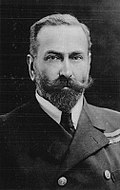 Dates unrecorded Prince Louis of Battenberg Nobleman and naval officer (1854–1921)
 -
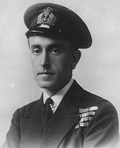 Dates unrecorded George Mountbatten, 2nd Marquess of Milford Haven Royal Navy officer (1892–1938)
Member of the Privy Council of the United Kingdom
- 2 holders
- 2 undated
What this means
Who held an office after whom. Not parentage, not discipleship, and not universally recognised — offices are contested.
Does not imply recognition by every tradition · an uncontested claim · parentage · discipleship · an explanation of why the succession happened
Holding an office after someone says nothing about being related to them or taught by them. Where a line is also a family, both are on the holders’ own pages as separate sections.
A gap is a vacancy, an interregnum or a hole in the record; an overlap is rival claims or an office held by more than one at once. The records do not say which, so neither is resolved here. A gap shorter than two years sits inside the precision of year-dated records and is not marked. Only this house’s members are shown, so a gap between two of them may be a holder from outside it.
Why a succession happened is a historical argument. Where sources make one, it belongs in a reviewed connection with its citations — not in this order, and not in a predecessor field.
Recognition is never universal. Where a card names no recognising body, none is recorded — which is not the same as none.
Imported from Wikidata unless a card says otherwise. Nothing here has been read by an editor.
No dates recorded 2
- Dates unrecorded Prince Louis of Battenberg Nobleman and naval officer (1854–1921)
-
 Dates unrecorded Prince Henry of Battenberg husband of Princess Beatrice of the United Kingdom (1858-1896)
Chronology is not a full explanation
Why one member followed another takes evidence beyond the order of their dates. That both belonged to the house is not, on its own, that evidence.
Religious context · a separate claim
Affiliation
Counted from the members’ own statements — never the religion of anyone the house ruled.
What this means
Assembled from the members’ own statements, and counted. What a person was affiliated with, what a ruler paid for, what a state did and what a population practised are four separate kinds of claim. Only the first two are in the data at all, and they are kept apart here.
Affiliations recorded on members
-
 Lutheranism 1 member
 -
 Anglican Communion 1 member
 -
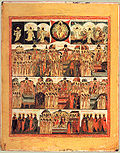 Eastern Orthodoxy 1 member
 -
 Russian Orthodox Church 1 member
An affiliation recorded by a third party, often for one period of a life. It is not the religion of anyone this house ruled.
Connections
How House of Battenberg connects
Grouped by the kind of relationship, because a successor is not a son and a shared symbol is not an influence.
Affiliation 2
What this means
Association with a tradition or school. Traditions branch, overlap and re-merge; this is not a clean single-origin tree.
Does not imply a fixed roster · that every account of the tradition knows this figure
Imported from Wikidata unless a tile says otherwise. Nothing here has been read by an editor.
.svg/120px-Arms_of_the_house_of_Hesse_(1200-1450).svg.png)


Transmission 1
What this means
Teaching passed from one person to another. Not biological ancestry and not automatic institutional succession.
Does not imply that the tradition began fully formed · that later adherents accept the attribution
Imported from Wikidata unless a tile says otherwise. Nothing here has been read by an editor.
Sources
Sources and evidence
Where every statement on this page comes from, and how each one stands.
2 statements on this record
- 2 Imported Taken from Wikidata as it stands. Nobody here has read it. 2 of them cite only Wikipedia: one source, counted once.
Only this record’s own statements. What other records say about it is counted on theirs.
Three layers, three licences
- Text
- Wikipedia · CC BY-SA 4.0, quoted, not merged
- Pictures
- Wikimedia Commons · each file’s own terms
Review
Not yet read by an editor here. Every relationship on this page is an import.
Disagreements are kept, not resolved, and a count of sources is not a confidence score.
_08_(43582411254).jpg/960px-Hall_of_Kings_(Alhambra)_08_(43582411254).jpg)
_08_(43582411254).jpg)
Keep exploring
More houses, tradition by tradition
The directory lists every one on record, most widely recorded first.
A family on the record
is not a family in a myth.