

A family
on the record,
reign by reign.
Documented kin
Members · 33
The house, member by member
One family drawn as a tree, then every member, oldest first where a date is recorded.
What this means
People whose own records place them in this house. Membership of a house is a family fact. It is not a religious affiliation and not a right to any office. “Child of” appears where a member’s recorded parent is also in the house — a documented human family, the same kind of claim as membership, and nothing more. Imported from Wikidata: nothing here has been read by an editor.

6 children in the house
-
 Anna Maria of Hungary 1204 CE – 1237 CE
 -
.jpg/330px-B%C3%A9la_IV_(Chronica_Hungarorum).jpg) Béla IV of Hungary 1206 CE – 1270 CE 6 children in the house
Béla IV of Hungary 1206 CE – 1270 CE 6 children in the house
-
%2C_G%C3%B6d%C3%B6ll%C5%91.JPG/330px-K%C3%A1lm%C3%A1n_herceg_lovas_szobra_(05)%2C_G%C3%B6d%C3%B6ll%C5%91.JPG) Coloman of Galicia-Lodomeria 1208 CE – 1241 CE
Coloman of Galicia-Lodomeria 1208 CE – 1241 CE - Andrew of Hungary 1210 CE – 1233 CE
-
 Violant of Hungary 1215 CE – 1251 CE
 - Stephen the Posthumous 1236 CE – 1271 CE
Every member
People whose own records place them in this house.
-
 Álmos, Grand Prince of the Magyarsc. 820 CE – c. 895 CE · kende or gyula of the Hungarians (fl. 9. century)
 -
 Árpádc. 845 CE – 907 CE · Child of Álmos, Grand Prince of the Magyars
 -
 Gézac. 940 CE – 997 CE · Grand Prince of the Hungarians (c.940–997)
 -
 Stephen I of Hungaryc. 975 CE – 15 August 1038 CE · Child of Géza
 -
 Saint Emeric of Hungary1000 CE – 2 September 1031 CE · Child of Stephen I of Hungary
 -
 Béla I of Hungaryc. 1016 CE – 11 September 1063 CE · King of Hungary (1016-1063)
 -
 Ladislaus I of Hungary27 June 1040 CE – 29 July 1095 CE · Child of Béla I of Hungary
 -
 Géza I of Hungaryc. 1040 CE – 25 April 1077 CE · Child of Béla I of Hungary
 -
 Helen of Hungary1050 CE – 1091 CE · Child of Béla I of Hungary
 - Sophia of Hungary1050 CE – 18 June 1095 CE · Child of Béla I of Hungary
-
.jpg/330px-Irina_(st_Sofia).jpg) Irene of Hungary1088 CE – 13 August 1134 CE · Child of Ladislaus I of Hungary
Irene of Hungary1088 CE – 13 August 1134 CE · Child of Ladislaus I of Hungary -
 Béla III of Hungary1148 CE – 23 April 1196 CE · King of Hungary and Croatia from 1172 to 1196
 -
 Agnes of Antioch1154 CE – 1184 CE · Queen consort of Hungary (1154–1184)
 -
 Andrew II of Hungary1175 CE – 26 October 1235 CE · Child of Agnes of Antioch
 -
 Constance of Hungary17 February 1180 CE – 6 December 1240 CE · Child of Béla III of Hungary
 - Anna Maria of Hungary1204 CE – 1237 CE · Child of Andrew II of Hungary
- Béla IV of Hungary29 November 1206 CE – 3 May 1270 CE · Child of Andrew II of Hungary
- Coloman of Galicia-Lodomeria1208 CE – May 1241 CE · Child of Andrew II of Hungary
Show 15 more
- Andrew of Hungary1210 CE – 1233 CE · Child of Andrew II of Hungary
- Violant of Hungary1215 CE – 12 October 1251 CE · Child of Andrew II of Hungary
-
 Kinga of Poland5 March 1224 CE – 24 July 1292 CE · Child of Béla IV of Hungary
 -
 Anna of Hungary1226 CE – c. 1285 CE · Child of Béla IV of Hungary
 -
 Yolanda of Poland1235 CE – 11 June 1298 CE · Child of Béla IV of Hungary
 - Stephen the Posthumous1236 CE – 1271 CE · Child of Andrew II of Hungary
-
 Elizabeth of Hungary, Duchess of Bavaria1236 CE – 24 October 1271 CE · Child of Béla IV of Hungary
 -
 Constance of Hungary, Queen of Galicia1237 CE – 1302 CE · Child of Béla IV of Hungary
 -
.jpg/330px-Stephan_V_(Chronica_Hungarorum).jpg) Stephen V of Hungary18 October 1239 CE – 6 August 1272 CE · Child of Béla IV of Hungary
Stephen V of Hungary18 October 1239 CE – 6 August 1272 CE · Child of Béla IV of Hungary -
 Elizabeth the Cuman1240 CE – 1290 CE · Hungarian queen consort
 -
%2C_*~1255%2C_%E2%80%A0vor_1323_.jpg/330px-Elisabeth_von_Ungarn_(die_Selige)%2C_*~1255%2C_%E2%80%A0vor_1323_.jpg) Elizabeth of Hungary, Queen of Serbiac. 1255 CE – 1322 CE · Child of Stephen V of Hungary
Elizabeth of Hungary, Queen of Serbiac. 1255 CE – 1322 CE · Child of Stephen V of Hungary -
 Catherine of Hungary, Queen of Serbiac. 1256 CE – after 1314 CE · Child of Stephen V of Hungary
 -
 Mary of Hungary1257 CE – 25 March 1323 CE · Child of Stephen V of Hungary
 - Anna of Hungaryc. 1260 CE – c. 1281 CE · Child of Stephen V of Hungary
-
.jpg/330px-Ladislaus_IV_(Chronica_Hungarorum).jpg) Ladislaus IV of Hungary5 August 1262 CE – 10 July 1290 CE · Child of Stephen V of Hungary
Ladislaus IV of Hungary5 August 1262 CE – 10 July 1290 CE · Child of Stephen V of Hungary
Succession
Offices held in the house
The members in each office, in order — a selection from the office’s whole line.
Apostolic King of Hungary
- 8 holders
- 3 gaps
What this means
Who held an office after whom. Not parentage, not discipleship, and not universally recognised — offices are contested.
Does not imply recognition by every tradition · an uncontested claim · parentage · discipleship · an explanation of why the succession happened
Holding an office after someone says nothing about being related to them or taught by them. Where a line is also a family, both are on the holders’ own pages as separate sections.
A gap is a vacancy, an interregnum or a hole in the record; an overlap is rival claims or an office held by more than one at once. The records do not say which, so neither is resolved here. A gap shorter than two years sits inside the precision of year-dated records and is not marked. Only this house’s members are shown, so a gap between two of them may be a holder from outside it.
Why a succession happened is a historical argument. Where sources make one, it belongs in a reviewed connection with its citations — not in this order, and not in a predecessor field.
Recognition is never universal. Where a card names no recognising body, none is recorded — which is not the same as none.
Imported from Wikidata unless a card says otherwise. Nothing here has been read by an editor.
-
 1000 CE – 1038 CE Stephen I of Hungary 11th-century king of Hungary and saint
 -
Gap about 22 years before the next in this house
 1060 CE – 1063 CE Béla I of Hungary King of Hungary (1016-1063)
 -
Gap about 11 years before the next in this house
-
Gap about 110 years before the next in this house
-
.jpg/120px-Ladislaus_IV_(Chronica_Hungarorum).jpg) 1272 CE – 1290 CE Ladislaus IV of Hungary King of Hungary (1262-1290)
1272 CE – 1290 CE Ladislaus IV of Hungary King of Hungary (1262-1290)


.jpg/120px-B%C3%A9la_IV_(Chronica_Hungarorum).jpg)
.jpg/120px-Stephan_V_(Chronica_Hungarorum).jpg)
Queen consort
- 3 holders
- 2 overlaps
- 1 gap
What this means
Who held an office after whom. Not parentage, not discipleship, and not universally recognised — offices are contested.
Does not imply recognition by every tradition · an uncontested claim · parentage · discipleship · an explanation of why the succession happened
Holding an office after someone says nothing about being related to them or taught by them. Where a line is also a family, both are on the holders’ own pages as separate sections.
A gap is a vacancy, an interregnum or a hole in the record; an overlap is rival claims or an office held by more than one at once. The records do not say which, so neither is resolved here. A gap shorter than two years sits inside the precision of year-dated records and is not marked. Only this house’s members are shown, so a gap between two of them may be a holder from outside it.
Why a succession happened is a historical argument. Where sources make one, it belongs in a reviewed connection with its citations — not in this order, and not in a predecessor field.
Recognition is never universal. Where a card names no recognising body, none is recorded — which is not the same as none.
Imported from Wikidata unless a card says otherwise. Nothing here has been read by an editor.
-
 1243 CE – 1279 CE Kinga of Poland Polish royal; later Poor Clare abbess
 -
Overlap held at the same time as Kinga of Poland
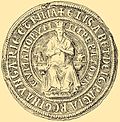 1270 CE – 1272 CE Elizabeth the Cuman Hungarian queen consort
 -
Gap about 4 years before the next in this house
Overlap held at the same time as Kinga of Poland
 1276 CE – 1282 CE Catherine of Hungary, Queen of Serbia consort of Serbia
Abbess
- 2 holders
- 2 undated
What this means
Who held an office after whom. Not parentage, not discipleship, and not universally recognised — offices are contested.
Does not imply recognition by every tradition · an uncontested claim · parentage · discipleship · an explanation of why the succession happened
Holding an office after someone says nothing about being related to them or taught by them. Where a line is also a family, both are on the holders’ own pages as separate sections.
A gap is a vacancy, an interregnum or a hole in the record; an overlap is rival claims or an office held by more than one at once. The records do not say which, so neither is resolved here. A gap shorter than two years sits inside the precision of year-dated records and is not marked. Only this house’s members are shown, so a gap between two of them may be a holder from outside it.
Why a succession happened is a historical argument. Where sources make one, it belongs in a reviewed connection with its citations — not in this order, and not in a predecessor field.
Recognition is never universal. Where a card names no recognising body, none is recorded — which is not the same as none.
Imported from Wikidata unless a card says otherwise. Nothing here has been read by an editor.
No dates recorded 2
-
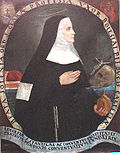 Dates unrecorded Yolanda of Poland Princess of Hungary and Duchess of Poland, later abbess
 -
%2C_*~1255%2C_%E2%80%A0vor_1323_.jpg/120px-Elisabeth_von_Ungarn_(die_Selige)%2C_*~1255%2C_%E2%80%A0vor_1323_.jpg) Dates unrecorded Elizabeth of Hungary, Queen of Serbia Queen of Serbia
Dates unrecorded Elizabeth of Hungary, Queen of Serbia Queen of Serbia
Duke
- 2 holders
- 1 undated
What this means
Who held an office after whom. Not parentage, not discipleship, and not universally recognised — offices are contested.
Does not imply recognition by every tradition · an uncontested claim · parentage · discipleship · an explanation of why the succession happened
Holding an office after someone says nothing about being related to them or taught by them. Where a line is also a family, both are on the holders’ own pages as separate sections.
A gap is a vacancy, an interregnum or a hole in the record; an overlap is rival claims or an office held by more than one at once. The records do not say which, so neither is resolved here. A gap shorter than two years sits inside the precision of year-dated records and is not marked. Only this house’s members are shown, so a gap between two of them may be a holder from outside it.
Why a succession happened is a historical argument. Where sources make one, it belongs in a reviewed connection with its citations — not in this order, and not in a predecessor field.
Recognition is never universal. Where a card names no recognising body, none is recorded — which is not the same as none.
Imported from Wikidata unless a card says otherwise. Nothing here has been read by an editor.
-
 10th century CE – 997 CE Géza Grand Prince of the Hungarians (c.940–997)
No dates recorded 1
- Dates unrecorded Stephen the Posthumous Hungarian prince, duke of Slavonia (*1236-†1271)
Chronology is not a full explanation
Why one member followed another takes evidence beyond the order of their dates. That both belonged to the house is not, on its own, that evidence.
Religious context · a separate claim
Affiliation
Counted from the members’ own statements — never the religion of anyone the house ruled.
What this means
Assembled from the members’ own statements, and counted. What a person was affiliated with, what a ruler paid for, what a state did and what a population practised are four separate kinds of claim. Only the first two are in the data at all, and they are kept apart here.
Affiliations recorded on members
-
 Catholic Church 4 members
 -
 Christianity 3 members
 -
 Tengrism 1 member
 - Hungarian mythology ↗ 1 member
- Third Order of Saint Francis ↗ 1 member
- Sisters Clarists of the Rule of Urban IV ↗ 1 member
-
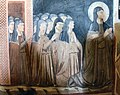 Poor Clares 1 member
An affiliation recorded by a third party, often for one period of a life. It is not the religion of anyone this house ruled.
Connections
How Árpád dynasty connects
Grouped by the kind of relationship, because a successor is not a son and a shared symbol is not an influence.
Transmission 2
What this means
Teaching passed from one person to another. Not biological ancestry and not automatic institutional succession.
Does not imply that the tradition began fully formed · that later adherents accept the attribution
Imported from Wikidata unless a tile says otherwise. Nothing here has been read by an editor.


Sources
Sources and evidence
Where every statement on this page comes from, and how each one stands.
2 statements on this record
- 2 Imported Taken from Wikidata as it stands. Nobody here has read it. 2 of them cite only Wikipedia: one source, counted once.
Only this record’s own statements. What other records say about it is counted on theirs.
Three layers, three licences
- Text
- Wikipedia · CC BY-SA 4.0, quoted, not merged
- Pictures
- Wikimedia Commons · each file’s own terms
Review
Not yet read by an editor here. Every relationship on this page is an import.
Disagreements are kept, not resolved, and a count of sources is not a confidence score.
_08_(43582411254).jpg/960px-Hall_of_Kings_(Alhambra)_08_(43582411254).jpg)
_08_(43582411254).jpg)
Keep exploring
More houses, tradition by tradition
The directory lists every one on record, most widely recorded first.
A family on the record
is not a family in a myth.