
.JPG/960px-National_Museum_of_Iran_Darafsh_(784).JPG)
Figure Iranian traditions
Xerxes I
خشایارشا یکم fa
Fifth Achaemenid emperor (486–465 BC)
- Child of Darius I and Atossa
- Married to Amestris
- Dated 519 BCE – August 465 BCE
King of Kings
pharaoh
Offices on record
Overview
From Wikipedia, quoted unmodified under CC BY-SA 4.0; the article’s history is its list of authors.
Life
Roles and affiliation
Holding an office is not parentage and not discipleship.
What this means
As the records give them: every row is a third party’s statement, not a self-description, and a role or an affiliation is often held for one period of a life only. An affiliation is not a belief, and this site does not ask anyone about theirs. For an office: which one, for how long, and where the records give an ordinal or the holders either side. Recognition of a tenure is never universal: contested lines appear as overlapping tenures rather than as one corrected sequence.

Offices held 2
- October 486 BCE – August 465 BCE King of Kings jurisdiction: Achaemenid Empire Succeeded Darius I · Succeeded by Artaxerxes I
-
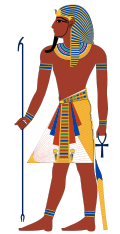 Dates unrecorded pharaoh
Family
The family of Xerxes I
Parents, spouses and children as the records give them.
Documented family only. A teacher, a successor or a patron is never drawn in this tree.
The family as a list · 23
Family 23
What this means
A documented human family relationship. Not a succession mechanism, and not religious transmission.
Does not imply a right to an office · transmission of a teaching · a religious affiliation held by the whole house · continuous rule · a shared religious affiliation
Imported from Wikidata unless a tile says otherwise. Nothing here has been read by an editor.
- child of (mother) Atossa Persian Achaemenid empress (550–475 BC)
-
 child of (child) Darius I The fourth and greatest Achaemenid emperor (522–486 BC)
 - of the house Achaemenid dynasty Achemenid dynasty of Persia (705–330 BC)
- parent of (child) Amytis Achaemenid princess
- parent of (child) Arsames 5th-century BC Persian satrap of Egypt
- parent of (child) Artarius satrap of Babylon and achaemenid prince
- parent of (child) Artaxerxes I sixth Achaemenid emperor (475–424 BC)
- parent of (child) Darius Crown Prince of Achaemenid Persia (died 465 BC)
- parent of (child) Histaspes Second son of Xerxes I of Persia
- parent of (child) Rhodogune
- parent of (child) Tithraustes achaemenid prince, son of Xerxes I
- sibling of Abrocomes son of King Darius I (died 480 BC)
- sibling of Achaemenes 5th-century BC Achaemenid satrap of Egypt
- sibling of Ariabignes Persian admiral and prince (died 480 BC)
- sibling of Ariamenes
- sibling of Arsamenes ancient Persian prince
- sibling of Arsames ancient Persian prince
- sibling of Artazostre Persian princess, daughter of Darius I
- sibling of Artobazanes
- sibling of Gobryas Prince of Achaemenid Dynasty
- sibling of Hystaspes son of Darius the Great
- sibling of Masistes Persian prince (died c. 478 BC)
- married to Amestris Achaemenid Empire Queen consort (died c. 424 BC)
Connections
How Xerxes I connects
Grouped by the kind of relationship, because a successor is not a son and a shared symbol is not an influence.
Succession in office 1
What this means
Who held an office after whom. Not parentage, not discipleship, and not universally recognised — offices are contested.
Does not imply parentage · discipleship · an explanation of why the succession happened
Imported from Wikidata unless a tile says otherwise. Nothing here has been read by an editor.
Identification 1
What this means
One figure treated as another in some context. Not literal identity in all contexts, and usually a claim by a third party.
Does not imply literal identity in all contexts · that either tradition made the identification
Imported from Wikidata unless a tile says otherwise. Nothing here has been read by an editor.
%3B_Tintoretto%2C_Jacopo.jpg/120px-Esther_before_Ahasuerus_(1547-48)%3B_Tintoretto%2C_Jacopo.jpg)
Sources
Sources and evidence
Where every statement on this page comes from, and how each one stands.
28 statements on this record
- 1 Has references The statement cites something outside Wikimedia. That citation has not been checked here.
- 27 Imported Taken from Wikidata as it stands. Nobody here has read it. 3 of them cite only Wikipedia: one source, counted once.
Only this record’s own statements. What other records say about it is counted on theirs.
Three layers, three licences
- Text
- Wikipedia · CC BY-SA 4.0, quoted, not merged
- Pictures
- Wikimedia Commons · each file’s own terms
Review
Not yet read by an editor here. Every relationship on this page is an import.
Disagreements are kept, not resolved, and a count of sources is not a confidence score.


Keep exploring
More from Iranian traditions
Zoroastrianism, the Mithraic mysteries, Manichaeism, Yazidism and the Mandaeans.