

Figure Christianity
Victoria
Queen of the United Kingdom from 1837 to 1901 (1819-1901)
- Child of Prince Edward, Duke of Kent and Strathearn and Princess Victoria of Saxe-Coburg-Saalfeld
- Married to Prince Albert of Saxe-Coburg and Gotha
- Dated 24 May 1819 CE – 22 January 1901 CE
monarch of Canada
Emperor of India
Offices on record
Overview
From Wikipedia, quoted unmodified under CC BY-SA 4.0; the article’s history is its list of authors.
Life
Roles and affiliation
Holding an office is not parentage and not discipleship.
What this means
As the records give them: every row is a third party’s statement, not a self-description, and a role or an affiliation is often held for one period of a life only. An affiliation is not a belief, and this site does not ask anyone about theirs. For an office: which one, for how long, and where the records give an ordinal or the holders either side. Recognition of a tenure is never universal: contested lines appear as overlapping tenures rather than as one corrected sequence.
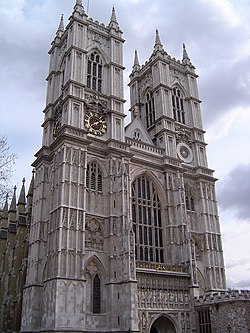
Offices held 3
- 20 June 1837 CE – 22 January 1901 CE monarch of the United Kingdom of Great Britain and Ireland Succeeded William IV · Succeeded by Edward VII Has references
Family
The family of Victoria
Parents, spouses and children as the records give them.
Documented family only. A teacher, a successor or a patron is never drawn in this tree.
The family as a list · 17
Family 17
What this means
A documented human family relationship. Not a succession mechanism, and not religious transmission.
Does not imply a right to an office · transmission of a teaching · a religious affiliation held by the whole house · continuous rule · a shared religious affiliation
Imported from Wikidata unless a tile says otherwise. Nothing here has been read by an editor.
-
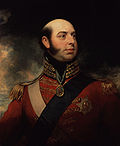 child of (child) Prince Edward, Duke of Kent and Strathearn British prince (1767-1820); fourth son of George III
 - child of (mother) Princess Victoria of Saxe-Coburg-Saalfeld German princess (1786–1861)
-
 of the house House of Hanover European royal dynasty of German origin
 - parent of (child) Princess Beatrice of the United Kingdom youngest child of Queen Victoria and Prince Albert (1857–1944)
- parent of (child) Princess Louise, Duchess of Argyll Viceregal consort of Canada (1848–1939)
- parent of (child) Princess Helena of the United Kingdom Member of the House of Schleswig-Holstein-Sonderburg-Augustenburg (1846–1923)
- parent of (child) Victoria, Princess Royal British princess (1840-1901), Empress of Germany and Queen consort of Prussia from March to June 1888
-
 parent of (mother) Alfred, Duke of Saxe-Coburg and Gotha Duke of Saxe-Coburg and Gotha from 1893 to 1900 (1844–1900)
 -
.jpg/120px-King-Edward-VII_(cropped).jpg) parent of (mother) Edward VII King of the United Kingdom from 1901 to 1910
parent of (mother) Edward VII King of the United Kingdom from 1901 to 1910 -
 parent of (mother) Prince Arthur, Duke of Connaught and Strathearn British prince (1850–1942), Governor General of Canada from 1911 to 1916
 -
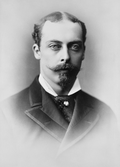 parent of (mother) Prince Leopold, Duke of Albany Member of the House of Saxe-Coburg and Gotha
 -
 parent of (mother) Princess Alice of the United Kingdom Grand Duchess of Hesse and by Rhine from 1877 to 1878
 - sibling of Adelaide Dubus illegitimate half-sister of Queen Victoria
- sibling of Edward Schencker Scheener English civil servant and half-brother of Queen Victoria
- sibling of Feodora of Leiningen German princess (1807–1872); maternal half-sister of Queen Victoria
- sibling of Prince Karl, 3rd Prince of Leiningen German prince (1804-1856); maternal half-brother of Queen Victoria
-
_%E2%80%93_Royal_Collection_%E2%80%93_unframed_(detail)_FXD.jpg/120px-Portrait_of_Prince_Albert_(by_Roger_Fenton)_%E2%80%93_Royal_Collection_%E2%80%93_unframed_(detail)_FXD.jpg) married to Prince Albert of Saxe-Coburg and Gotha Consort of Queen Victoria from 1840 to 1861 (1819–1861)
married to Prince Albert of Saxe-Coburg and Gotha Consort of Queen Victoria from 1840 to 1861 (1819–1861)
Transmission
Teachers and students
Teaching passed from one person to another, in the direction of the arrows — not ancestry, and not succession.
What this means
In the direction the records give it. This is not biological ancestry and it is not institutional succession: a student who inherited no office still received the teaching, and an heir who received the office may have been taught by someone else entirely. It does not imply that teacher and student agreed.
Studied under 1
 Victoria Queen of the United Kingdom from 1837 to 1901 (1819-1901)
 Connections
How Victoria connects
Grouped by the kind of relationship, because a successor is not a son and a shared symbol is not an influence.
Recorded events and days 1
What this means
Events Wikidata records in a subject’s history, and the day a festival is kept. Not a complete history, and the day a festival falls on is not when it began.
Does not imply that these are all the events in its history · that Wikidata ranks the events by importance
Imported from Wikidata unless a tile says otherwise. Nothing here has been read by an editor.
Sources
Sources and evidence
Where every statement on this page comes from, and how each one stands.
23 statements on this record
- 15 Has references The statement cites something outside Wikimedia. That citation has not been checked here.
- 8 Imported Taken from Wikidata as it stands. Nobody here has read it. 1 of them cite only Wikipedia: one source, counted once.
Only this record’s own statements. What other records say about it is counted on theirs.
Three layers, three licences
- Text
- Wikipedia · CC BY-SA 4.0, quoted, not merged
- Pictures
- Wikimedia Commons · each file’s own terms
Review
Not yet read by an editor here. Every relationship on this page is an import.
Disagreements are kept, not resolved, and a count of sources is not a confidence score.


Keep exploring
More from Christianity
Its branches, councils, saints, offices and buildings — and where they stopped recognising each other.