

Figure Buddhist traditions
Tri Songdetsen
ཆོས་རྒྱལ་ཁྲི་སྲོང་ལྡེ་བཙན། bo 赤松德贊 zh ティソン・デツェン ja
Emperor of Tibet
- Child of Me Agtsom and Princess Jincheng
- Married to Yeshe Tsogyel
- Dated c. 742 CE – c. 797 CE
A life on the record,
dated by its sources.
Roles, not beliefs
Overview
From Wikipedia, quoted unmodified under CC BY-SA 4.0; the article’s history is its list of authors.
Life
Roles and affiliation
Holding an office is not parentage and not discipleship.
What this means
As the records give them: every row is a third party’s statement, not a self-description, and a role or an affiliation is often held for one period of a life only. An affiliation is not a belief, and this site does not ask anyone about theirs. For an office: which one, for how long, and where the records give an ordinal or the holders either side. Recognition of a tenure is never universal: contested lines appear as overlapping tenures rather than as one corrected sequence.

Offices held 1
Family
The family of Tri Songdetsen
Parents, spouses and children as the records give them.
Documented family only. A teacher, a successor or a patron is never drawn in this tree.
The family as a list · 6
Family 6
What this means
A documented human family relationship. Not a succession mechanism, and not religious transmission.
Does not imply a right to an office · transmission of a teaching · a shared religious affiliation
Imported from Wikidata unless a tile says otherwise. Nothing here has been read by an editor.
- child of (father) Me Agtsom Tibetan emperor
- child of (mother) Princess Jincheng Chinese princess, Tibetan empress
- parent of (child) Muné Tsenpo tsenpo (emperor) of Tibetan Empire
- parent of (child) Mutik Tsenpo emperor of Tibet
- parent of (child) Sadnalegs Tibetan emperor (761-815)
-
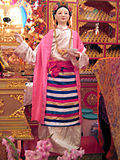 married to Yeshe Tsogyel Semi-mythical female deity in Tibetan Buddhism
Transmission
Teachers and students
Teaching passed from one person to another, in the direction of the arrows — not ancestry, and not succession.
What this means
In the direction the records give it. This is not biological ancestry and it is not institutional succession: a student who inherited no office still received the teaching, and an heir who received the office may have been taught by someone else entirely. It does not imply that teacher and student agreed.
Studied under 2
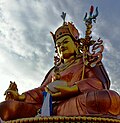
 Tri Songdetsen Emperor of Tibet
 Also recorded as a teacher: 1 more record with no English name
Sources
Sources and evidence
Where every statement on this page comes from, and how each one stands.
12 statements on this record
- 6 Has references The statement cites something outside Wikimedia. That citation has not been checked here.
- 6 Imported Taken from Wikidata as it stands. Nobody here has read it.
Only this record’s own statements. What other records say about it is counted on theirs.
Three layers, three licences
- Text
- Wikipedia · CC BY-SA 4.0, quoted, not merged
- Pictures
- Wikimedia Commons · each file’s own terms
Review
Not yet read by an editor here. Every relationship on this page is an import.
Disagreements are kept, not resolved, and a count of sources is not a confidence score.


Keep exploring
More from Buddhist traditions
Theravāda, Mahāyāna and Vajrayāna, their figures, sutras, lineages and monasteries.