

Figure
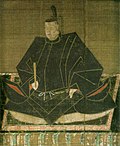
Tokugawa Ieyasu
Founder and first shogun of the Tokugawa shogunate of Japan (1543–1616)
- Child of Matsudaira Hirotada and Odai no kata
- Married to Okaji no Kata, Tsukiyama-dono, Asahihime and 19 more
- Dated 31 January 1543 CE – 1 June 1616 CE
shogun
Udaijin
ōgosho
Offices on record
Overview
From Wikipedia, quoted unmodified under CC BY-SA 4.0; the article’s history is its list of authors.
Life
4 offices on record
Holding an office is not parentage and not discipleship.
What this means
As the records give them: every row is a third party’s statement, not a self-description, and a role or an affiliation is often held for one period of a life only. An affiliation is not a belief, and this site does not ask anyone about theirs. For an office: which one, for how long, and where the records give an ordinal or the holders either side. Recognition of a tenure is never universal: contested lines appear as overlapping tenures rather than as one corrected sequence.
- from 1605 CE ōgosho
- 21 March 1616 CE – 17 April 1616 CE Daijō-daijin
Family
The family of Tokugawa Ieyasu
Parents, spouses and children as the records give them.
Documented family only. A teacher, a successor or a patron is never drawn in this tree.
The family as a list · 53
Family 53
What this means
A documented human family relationship. Not a succession mechanism, and not religious transmission.
Does not imply a right to an office · transmission of a teaching · a religious affiliation held by the whole house · continuous rule · a marriage · a shared religious affiliation
Imported from Wikidata unless a tile says otherwise. Nothing here has been read by an editor.
-
 child of (child) Matsudaira Hirotada samurai of the Sengoku period; father of Tokugawa Ieyasu
 - child of (mother) Odai no kata mother of Tokugawa Ieyasu
-
 of the house Tokugawa clan noble family
 -
 of the house Matsudaira clan Japanese samurai clan
 - of the house Tokugawa family
- parent of (child) Furi-hime daughter of Tokugawa Ieyasu
- parent of (child) Ichi-hime daughter of Tokugawa Ieyasu
- parent of (child) Kame-hime eldest daughter of Tokugawa Ieyasu
- parent of (adoptive) Mate-hime adopted daughter of Tokugawa Ieyasu
- parent of (child) Matsudaira Matsuchiyo son of Tokugawa Ieyasu
-
 parent of (father) Matsudaira Nobuyasu [松平信康] son of Tokugawa Ieyasu
 - parent of (child) Matsudaira Senchiyo son of Tokugawa Ieyasu
-
 parent of (father) Matsudaira Tadateru Japanese feudal lord (1592–1683)
 -
 parent of (father) Matsudaira Tadayoshi [松平忠吉] son of Tokugawa Ieyasu
 - parent of (child) Matsuhime
- parent of (child) Nagami Sadachika
- parent of (child) Suzuki Ichizō
- parent of (child) Takeda Nobuyoshi son of Tokugawa Ieyasu. nominal successor of Takeda clan
- parent of (adoptive) Tobai-in Wife of Ii Naomasa
- parent of (child) Toku-hime daughter of Tokugawa Ieyasu; wife of Hōjō Ujinao, Ikeda Terumasa
- parent of (child) Tokugawa Hidetada The second shogun of the Tokugawa shogunate of Japan (1579–1632)
- parent of (child) Tokugawa Yorifusa daimyo of the early Edo period; 1st lord of Mito, founder of Mito branch (1603-1661)
-
 parent of (father) Tokugawa Yorinobu daimyo of the early Edo period; 1st lord of Kishu, founder of Kii branch
 -
 parent of (father) Tokugawa Yoshinao daimyo
Show all 53
-
 parent of (father) Yūki Hideyasu Japanese daimyo who lived during the Azuchi-Momoyama and early Edo periods
 - partner of Lady Saigō Japanese consort
- sibling of Ichiba-hime half-sisiter of Tokugawa Ieyasu
- sibling of Matsudaira Sadakatsu [松平定勝] daimyo; half brother of Tokugawa Ieyasu
- sibling of Matsudaira Yasumoto daimyo of the early Edo period; stepbrother of Tokugawa Ieyasu
- sibling of Matsudaira Yasutoshi daimyo of the early Edo period; stepbrother of Tokugawa Ieyasu
- sibling of Takehime half-sister of Tokugawa Ieyasu
- married to Asahihime Japanese noble (1543–1590)
- married to Chaa no Tsubone Japanese concubine of Tokugawa Ieyasu
- married to Chōshō-in concubine of Tokugawa Ieyasu. mother of Yūki Hideyasu
- married to Fushoin
- married to Kame no kata concubine Tokugawa Ieyasu
- married to Lady Acha Japanese noblewoman (1555-1637)
- married to Lady Saigō Japanese consort
- married to Okaji no Kata concubine of Tokugawa Ieyasu
- married to Rengein
- married to Ryoūn-in
- married to Sanjōshi
- married to Seiei-in
- married to Seiunin 1581-1660 wife of Tokugawa Ieyasu
- married to Shimoyama-dono concubine of Tokugawa Ieyasu
- married to Shinjuin
- married to Sutsien-si
- married to Taieiin
- married to Tsukiyama-dono Japanese noble
- married to Yōgen-in concubine of Tokugawa Ieyasu
- married to Yōju-in concubine of Tokugawa Ieyasu; mother of Tokugawa Yorinobu and Yorifusa
- married to 松平重吉の娘 (徳川家康側室)
- married to 法光院
Religious context
What the records tie them to
Founded, supported, associated with — as third parties recorded it.
What this means
A founding is an attribution, usually contested, and not a claim that the tradition began fully formed. Patronage is an act, not a belief: it says nothing about the religion of a population, and nothing about the patron’s own practice in every period of a life. Domains are as sources record them — for a saint, usually a patronage — rarely exclusive, and not the same in every account.

Connections
How Tokugawa Ieyasu connects
Grouped by the kind of relationship, because a successor is not a son and a shared symbol is not an influence.
Affiliation 1
What this means
Association with a tradition or school. Traditions branch, overlap and re-merge; this is not a clean single-origin tree.
Does not imply a fixed roster · that every account of the tradition knows this figure
Imported from Wikidata unless a tile says otherwise. Nothing here has been read by an editor.
Succession in office 2
What this means
Who held an office after whom. Not parentage, not discipleship, and not universally recognised — offices are contested.
Does not imply parentage · discipleship · an explanation of why the succession happened
Imported from Wikidata unless a tile says otherwise. Nothing here has been read by an editor.
Identification 1
What this means
One figure treated as another in some context. Not literal identity in all contexts, and usually a claim by a third party.
Does not imply literal identity in all contexts · that either tradition made the identification
Imported from Wikidata unless a tile says otherwise. Nothing here has been read by an editor.
Sources
Sources and evidence
Where every statement on this page comes from, and how each one stands.
61 statements on this record
- 59 Imported Taken from Wikidata as it stands. Nobody here has read it. 25 of them cite only Wikipedia: one source, counted once.
- 2 Hedged in the source The source said circa, allegedly or presumably. This does not turn that into a date.
Only this record’s own statements. What other records say about it is counted on theirs.
Three layers, three licences
- Text
- Wikipedia · CC BY-SA 4.0, quoted, not merged
- Pictures
- Wikimedia Commons · each file’s own terms
Review
Not yet read by an editor here. Every relationship on this page is an import.
Disagreements are kept, not resolved, and a count of sources is not a confidence score.


Keep exploring
More figures, tradition by tradition
The directory lists every one on record, most widely recorded first.
People on the record,
and people in the telling.