

Figure South Asian traditions
Kali
कलि sa கலிபுருஷன் ta
Satan demon in Hindu mythology
- Consort of Alakshmi, Durukti
A life on the record,
dated by its sources.
Roles, not beliefs
Overview
From Wikipedia, quoted unmodified under CC BY-SA 4.0; the article’s history is its list of authors.
Family
The family of Kali
Parents, consorts and children as the accounts give them. Choose a consort to see the children the stories give the two.
Accounts differ about a god’s family. Where they name different parents, the tree sets them side by side instead of choosing one.
The family as a list · 4
Kinship in an account 4
What this means
Parentage as a named source tells it. Not an independently established biological relationship, and different accounts disagree.
Does not imply an independently established biological relationship · agreement between accounts · marriage as a legal institution · exclusivity, or a single canonical pairing · shared parentage in every account · descent from the same generation in a single tree
Imported from Wikidata unless a tile says otherwise. Nothing here has been read by an editor.
-
 parent of (father) Jaya-Vijaya door guardians of the god Vishnu
 -
 partner of (spouse) Alakshmi The elder sister of Lakshmi and the Hindu goddess of misfortune and the second wife of Kali (demon)
 - partner of (spouse) Durukti The sister-turned-wife and queen of Kali (demon)
- sibling of Durukti The sister-turned-wife and queen of Kali (demon)
Texts
In the texts
Works this figure appears in. A work’s date is the source’s, not this figure’s.
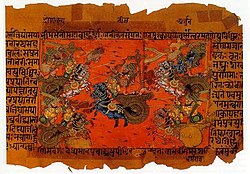

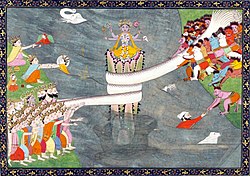
Sources
Sources and evidence
Where every statement on this page comes from, and how each one stands.
7 statements on this record
- 7 Imported Taken from Wikidata as it stands. Nobody here has read it.
Only this record’s own statements. What other records say about it is counted on theirs.
Three layers, three licences
- Text
- Wikipedia · CC BY-SA 4.0, quoted, not merged
- Pictures
- Wikimedia Commons · each file’s own terms
Review
Not yet read by an editor here. Every relationship on this page is an import.
Computed Worked out here, not stated by any source: 1 collection membership. Each is marked where it is shown.
Disagreements are kept, not resolved, and a count of sources is not a confidence score.
.jpeg/960px-UgrataraTemple2_(cropped).jpeg)
.jpeg)
Keep exploring
More from South Asian traditions
Hinduism and its schools, Jainism, Sikhism, and the Vedic material behind them.