

Figure Buddhist traditions
Go-Sai
後西 zh 後西天皇 ja
Emperor of Japan
- Child of Emperor Go-Mizunoo and Kushige Takako
- Married to Princess Akiko, Seikanji Tomoko, Iwakura Tomo'oki 's daughter and 3 more
- Dated 1 January 1638 CE – 22 March 1685 CE
A life on the record,
dated by its sources.
Roles, not beliefs
Overview
From Wikipedia, quoted unmodified under CC BY-SA 4.0; the article’s history is its list of authors.
Life
One office on record
Holding an office is not parentage and not discipleship.
What this means
As the records give them: every row is a third party’s statement, not a self-description, and a role or an affiliation is often held for one period of a life only. An affiliation is not a belief, and this site does not ask anyone about theirs. For an office: which one, for how long, and where the records give an ordinal or the holders either side. Recognition of a tenure is never universal: contested lines appear as overlapping tenures rather than as one corrected sequence.
-
 5 January 1655 CE – 5 March 1663 CE Emperor of Japan Succeeded Go-Kōmyō · Succeeded by Emperor Reigen
Family
The family of Go-Sai
Parents, spouses and children as the records give them.
Documented family only. A teacher, a successor or a patron is never drawn in this tree.
The family as a list · 34
Family 34
What this means
A documented human family relationship. Not a succession mechanism, and not religious transmission.
Does not imply a right to an office · transmission of a teaching · a religious affiliation held by the whole house · continuous rule · a shared religious affiliation
Imported from Wikidata unless a tile says otherwise. Nothing here has been read by an editor.
-
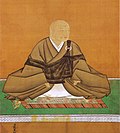 child of (child) Emperor Go-Mizunoo emperor of Japan from 1611 to 1629
 - child of (mother) Kushige Takako court lady of Japanese emperor Go-Mizunoo
-
 of the house Imperial House of Japan members of the extended family of the reigning Emperor of Japan
 - parent of (child) Arisugawa-no-miya Yukihito-shinnō member of Japanese royal family in Edo period
- parent of (child) Hachijō-no-miya Naohito-shinnō member of Japanese royal family in Edo period
- parent of (child) Hachijō-no-miya Osahito-shinnō member of Japanese royal family in Edo period (1655-1675)
- parent of (child) Kōben-hosshinnō Japanese princely priest in the Edo period (1669-1716)
- parent of (child) Masuko-naishin'nō
- parent of (child) Rihō-joō
- sibling of Akiko-naishinnō daughter of emperor Go-Mizunoo
- sibling of Bunchi-joō daughter of Japanese emperor Go-Mizunoo
- sibling of Bunsatsu-nyoō daughter of emperor Go-Mizunoo
-
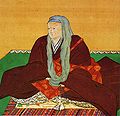 sibling of Emperor Reigen emperor of Japan
 -
 sibling of Empress Meishō empress of Japan (1624-1696)
 -
 sibling of Go-Kōmyō emperor of Japan (1633–1654)
 - sibling of Gyōjo-hosshinnō son of Emperor Go-Mizunoo; princely priest in the Edo period
- sibling of Kamo-no-miya son of Japanese Emperor Go-Mizunoo
- sibling of Niinomiya daughter of emperor Go-Mizunoo
- sibling of Onna Ni no miya daughter of Japanese emperor Go-Mizunoo
- sibling of Richū-joō Japanese nun, daughter of emperor Go-Mizunoo
- sibling of Shōjō-hosshinnō Japanese princely priest in the Edo period
- sibling of Shuchō-hosshinnō Japanese princely priest in the Edo period
- sibling of Sōchō-joō daughter of Japanese emperor Go-Mizunoo
- sibling of Sukehito-shinnō son of Go-Mizunoo
Show all 34
- sibling of Teruko-naishinnō daughter of emperor Go-Mizunoo
- sibling of Tsuneko-naishinnō daughter of emperor Go-Mizunoo
- sibling of Yasuhito, Prince Hachijō Japanese prince (1643-1665)
- sibling of Yoshiko-naishinnō daughter of emperor Go-Mizunoo (1632-1696)
- married to Azechi no Tsubone
- married to Iwakura Tomo'oki 's daughter
- married to Princess Akiko spouse of Emperor Go-Sai and mother of Imperial Prince Osahito
- married to Seikanji Tomoko est. 1649 - 1695
- married to Umekōji Sadako
- married to 右京局
Sources
Sources and evidence
Where every statement on this page comes from, and how each one stands.
35 statements on this record
- 35 Imported Taken from Wikidata as it stands. Nobody here has read it. 8 of them cite only Wikipedia: one source, counted once.
Only this record’s own statements. What other records say about it is counted on theirs.
Three layers, three licences
- Text
- Wikipedia · CC BY-SA 4.0, quoted, not merged
- Pictures
- Wikimedia Commons · each file’s own terms
Review
Not yet read by an editor here. Every relationship on this page is an import.
Disagreements are kept, not resolved, and a count of sources is not a confidence score.


Keep exploring
More from Buddhist traditions
Theravāda, Mahāyāna and Vajrayāna, their figures, sutras, lineages and monasteries.