

Figure East Asian traditions
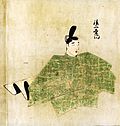
Go-Daigo
後醍醐天皇 zh 고다이고 천황 ko
96th emperor of Japan (r. 1318–1339)
- Child of Go-Uda and Fujiwara no Chūshi
- Married to Minbukyō no Sanmi, Saionji Kishi, Shunshi-naishinnō and 17 more
- Dated 26 November 1288 CE – 19 September 1339 CE
Dazai-no-sochi
Emperor of Japan
Offices on record
Overview
From Wikipedia, quoted unmodified under CC BY-SA 4.0; the article’s history is its list of authors.
Life
Roles and affiliation
Holding an office is not parentage and not discipleship.
What this means
As the records give them: every row is a third party’s statement, not a self-description, and a role or an affiliation is often held for one period of a life only. An affiliation is not a belief, and this site does not ask anyone about theirs. For an office: which one, for how long, and where the records give an ordinal or the holders either side. Recognition of a tenure is never universal: contested lines appear as overlapping tenures rather than as one corrected sequence.
Belonged to
- Belonged to
Neo-Confucianism
philosophical school of Confucianism mainly influenced by Zhu Xi -
 Belonged to
Rinzai school
one of three sects of Zen in Japanese Buddhism - Belonged to
Shingon Risshu
a comparatively small medieval sect of Buddhism in Japan that arose in the Kamakura period as an offshoot of Shingon Buddhism - Belonged to
Ise Shintō
Offices held 2
- 12 April 1304 CE – 15 June 1307 CE Dazai-no-sochi
-
 29 March 1318 CE – 18 September 1339 CE Emperor of Japan Succeeded Emperor Hanazono · Succeeded by Go-Murakami , Kōgon
Family
The family of Go-Daigo
Parents, spouses and children as the records give them.
Documented family only. A teacher, a successor or a patron is never drawn in this tree.
The family as a list · 47
Family 47
What this means
A documented human family relationship. Not a succession mechanism, and not religious transmission.
Does not imply a right to an office · transmission of a teaching · a religious affiliation held by the whole house · continuous rule · a shared religious affiliation
Imported from Wikidata unless a tile says otherwise. Nothing here has been read by an editor.
- child of (mother) Fujiwara no Chūshi
-
 child of (child) Go-Uda Emperor of Japan
 - of the house Daikakuji line
-
 parent of (father) Go-Murakami emperor of Japan
 - parent of (child) Hōnin-hosshinnō Japanese princely priest in the Nanbokucho period
- parent of (child) Jisshi Tōin
- parent of (child) Kaneyoshi-shinnō son of emperor Go-Daigo
- parent of (child) Kanshi-naishinnō daughter of emperor Go-Daigo, Saigū of Ise Grand Shrine
- parent of (child) Kōshō-ōji son of emperor Go-Daigo
- parent of (child) Mitsuyoshi-shinnō son of emperor Go-Daigo
-
 parent of (father) Moriyoshi-shinnō Japanese prince in the Nanbokucho period
 - parent of (child) Mumon Gensen
- parent of (child) Muneyoshi-shinnō son of Japanese emperor Go-Daigo
- parent of (father) Nariyoshi-shinnō Japanese prince
- parent of (child) Noriko-naishinno daughter of Emperor Go-Murakami entitled Empress
- parent of (child) Sachiko-naishinnō daughter of emperor Go-Daigo
- parent of (child) Shōjo-hosshinnō Japanese princely priest in the Nanbokucho period
- parent of (child) Sonchin-hosshinnō Japanese princely priest during the Kamakura period
- parent of (child) Takayoshi-shinnō son of emperor Go-Daigo
- parent of (child) Tsuneyoshi-shinnō son of emperor Go-Daigo
- parent of (child) Yoyoshi-shinnō son of emperor Go-Daigo
- parent of (child) 後醍醐天皇の皇女 (六条有房の室)
- parent of (child) 後醍醐天皇の皇女 (関白基嗣公室)
- sibling of Baishi-naishinnō daughter of emperor Go-Uda
Show all 47
-
 sibling of Go-Nijō 94th emperor of Japan
 - sibling of Shōen-hosshinnō son of emperor Go-Uda; princely priest in the Kamakura period Japan
- sibling of Shōshi-naishinnō [奨子] daughter of emperor Go-Uda
- married to Ano Renshi
- married to Jisshi Tōin
- married to Kishi-naishinnō
- married to Kōtōnonaishi
- married to Minbukyō no Sanmi
- married to Nijō Ishi poet of the Nijō school, consort of then-Crown Prince Takaharu (the later Emperor Go-daigo)
- married to Nijō Tōshi
- married to Saionji Kishi Empress consort of Japan
- married to Shunshi-naishinnō [珣子] Empress consort of Go-Daigo; daughter of emperor Go-Fushimi
- married to Yūgimonin no Ichijō no Tsubone
- married to 二条栄子
- married to 五辻親子
- married to 吉田定房の女 (後醍醐天皇の後宮)
- married to 堀口貞義の女? (後醍醐天皇の後宮?女御?)
- married to 大納言典侍 (北畠師重の娘)
- married to 大納言局 (後醍醐天皇の後宮)
- married to 少納言内侍
- married to 新按察典侍
- married to 権中納言局 (洞院公泰の娘)
- married to 洞院守子
Sources
Sources and evidence
Where every statement on this page comes from, and how each one stands.
53 statements on this record
- 1 Has references The statement cites something outside Wikimedia. That citation has not been checked here.
- 49 Imported Taken from Wikidata as it stands. Nobody here has read it. 27 of them cite only Wikipedia: one source, counted once.
- 3 Hedged in the source The source said circa, allegedly or presumably. This does not turn that into a date.
Only this record’s own statements. What other records say about it is counted on theirs.
Three layers, three licences
- Text
- Wikipedia · CC BY-SA 4.0, quoted, not merged
- Pictures
- Wikimedia Commons · each file’s own terms
Review
Not yet read by an editor here. Every relationship on this page is an import.
Disagreements are kept, not resolved, and a count of sources is not a confidence score.


Keep exploring
More from East Asian traditions
Daoism, Confucian practice, Chinese folk religion, Shinto and Korean tradition.