
_(cropped).jpg/960px-Ch%C3%A2teau_de_Bussy-Rabutin_-_Saint_Fran%C3%A7ois_de_Sales%2C_%C3%A9v%C3%AAque_de_Gen%C3%A8ve_(bgw19_0375)_(cropped).jpg)
Figure Christianity
Francis de Sales
Franciscus Salesius la
French bishop, saint, writer and Doctor of the Church (1567-1622)
- Child of François de Sales de Boisy and Françoise de Sionnaz de Vallières
- Dated 21 August 1567 CE – 28 December 1622 CE
- Recognised as Catholic saint, 19 April 1665 CE
coadjutor bishop
titular bishop
Offices on record
Overview
From Wikipedia, quoted unmodified under CC BY-SA 4.0; the article’s history is its list of authors.
Life
Roles and affiliation
Holding an office is not parentage and not discipleship.
What this means
As the records give them: every row is a third party’s statement, not a self-description, and a role or an affiliation is often held for one period of a life only. An affiliation is not a belief, and this site does not ask anyone about theirs. For an office: which one, for how long, and where the records give an ordinal or the holders either side. Recognition of a tenure is never universal: contested lines appear as overlapping tenures rather than as one corrected sequence.
Belonged to
-
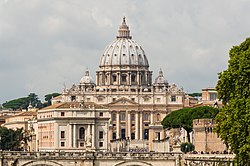 Belonged to
Catholic Church
largest Christian Church, made up of 24 autonomous Churches in communion with the Pope, part of the Latin Church aka Latin Christianity a.k.a. western ChristianityHas references - Belonged to
Catholicism
Christian doctrine professed by the Catholic ChurchHas references -
 Belonged to
Oratory of Saint Philip Neri
society of apostolic life for Catholic priests
Offices held 3
- 17 September 1602 CE – 28 December 1622 CE Roman Catholic Bishop of Geneva Succeeded by Jean-François de Sales Has references
Family
The family of Francis de Sales
Parents, spouses and children as the records give them.
Documented family only. A teacher, a successor or a patron is never drawn in this tree.
The family as a list · 4
Family 4
What this means
A documented human family relationship. Not a succession mechanism, and not religious transmission.
Does not imply a right to an office · transmission of a teaching · a religious affiliation held by the whole house · continuous rule · a shared religious affiliation
Imported from Wikidata unless a tile says otherwise. Nothing here has been read by an editor.
Religious context
What the records tie them to
Founded, supported, associated with — as third parties recorded it.
What this means
A founding is an attribution, usually contested, and not a claim that the tradition began fully formed. Patronage is an act, not a belief: it says nothing about the religion of a population, and nothing about the patron’s own practice in every period of a life. Domains are as sources record them — for a saint, usually a patronage — rarely exclusive, and not the same in every account.

Texts
In the texts
Works this figure appears in. A work’s date is the source’s, not this figure’s.
Sources
Sources and evidence
Where every statement on this page comes from, and how each one stands.
13 statements on this record
- 12 Has references The statement cites something outside Wikimedia. That citation has not been checked here.
- 1 Imported Taken from Wikidata as it stands. Nobody here has read it. 1 of it cites only Wikipedia: one source, counted once.
Only this record’s own statements. What other records say about it is counted on theirs.
Three layers, three licences
- Text
- Wikipedia · CC BY-SA 4.0, quoted, not merged
- Pictures
- Wikimedia Commons · each file’s own terms
Review
Not yet read by an editor here. Every relationship on this page is an import.
Disagreements are kept, not resolved, and a count of sources is not a confidence score.


Keep exploring
More from Christianity
Its branches, councils, saints, offices and buildings — and where they stopped recognising each other.