

Figure Christianity
Emmanuel Joseph Sieyès
Emanuel Iosephus Sieyès la
French priest and statesman (1748-1836)
- Dated 3 May 1748 CE – 20 June 1836 CE
member
president
directeur
Offices on record
Overview
From Wikipedia, quoted unmodified under CC BY-SA 4.0; the article’s history is its list of authors.
Life
Roles and affiliation
Holding an office is not parentage and not discipleship.
What this means
As the records give them: every row is a third party’s statement, not a self-description, and a role or an affiliation is often held for one period of a life only. An affiliation is not a belief, and this site does not ask anyone about theirs. For an office: which one, for how long, and where the records give an ordinal or the holders either side. Recognition of a tenure is never universal: contested lines appear as overlapping tenures rather than as one corrected sequence.
Offices held 6
- 5 May 1789 CE – 9 July 1798 CE member
- 20 April 1795 CE – 5 May 1795 CE President of the National Convention Number 66 in the sequence
- 21 November 1797 CE – 20 December 1797 CE president
- 17 June 1798 CE – 10 November 1799 CE directeur
- 28 January 1803 CE – 21 March 1816 CE seat 31 of the Académie française
- Dates unrecorded ambassador
Family
The family of Emmanuel Joseph Sieyès
Parents, spouses and children as the records give them.
Documented family only. A teacher, a successor or a patron is never drawn in this tree.
The family as a list · 2
Family 2
What this means
A documented human family relationship. Not a succession mechanism, and not religious transmission.
Does not imply a shared religious affiliation
Imported from Wikidata unless a tile says otherwise. Nothing here has been read by an editor.
Connections
How Emmanuel Joseph Sieyès connects
Grouped by the kind of relationship, because a successor is not a son and a shared symbol is not an influence.
Documented influence 10
What this means
A transmission argued from evidence. Not shared symbols, and not a short path through a database.
Does not imply shared symbols as evidence · a short path through a database
Imported from Wikidata unless a tile says otherwise. Nothing here has been read by an editor.
-
 was influenced by Anne Robert Jacques Turgot French economist and statesman (1727–1781)
 -
 was influenced by David Hume Scottish philosopher, economist, and historian (1711-1776)
 -
 was influenced by Edward Gibbon English historian and politician (1737–1794)
 - was influenced by encyclopédistes contributors to the development of the Encyclopédie from June 1751 to December 1765
-
 was influenced by Étienne Bonnot de Condillac French academic
 -
 was influenced by François Quesnay French economist (1694–1774)
 -
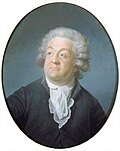 was influenced by Honoré Gabriel Riqueti, comte de Mirabeau French writer, orator and statesman (1749-1791)
 - was influenced by جان جاك روسو Genevan philosopher, writer, and composer (1712-1778)
- was influenced by جون لوك English philosopher and physician (1632-1704)
Sources
Sources and evidence
Where every statement on this page comes from, and how each one stands.
21 statements on this record
- 11 Has references The statement cites something outside Wikimedia. That citation has not been checked here.
- 10 Imported Taken from Wikidata as it stands. Nobody here has read it. 1 of them cite only Wikipedia: one source, counted once.
Only this record’s own statements. What other records say about it is counted on theirs.
Three layers, three licences
- Text
- Wikipedia · CC BY-SA 4.0, quoted, not merged
- Pictures
- Wikimedia Commons · each file’s own terms
Review
Not yet read by an editor here. Every relationship on this page is an import.
Disagreements are kept, not resolved, and a count of sources is not a confidence score.


Keep exploring
More from Christianity
Its branches, councils, saints, offices and buildings — and where they stopped recognising each other.